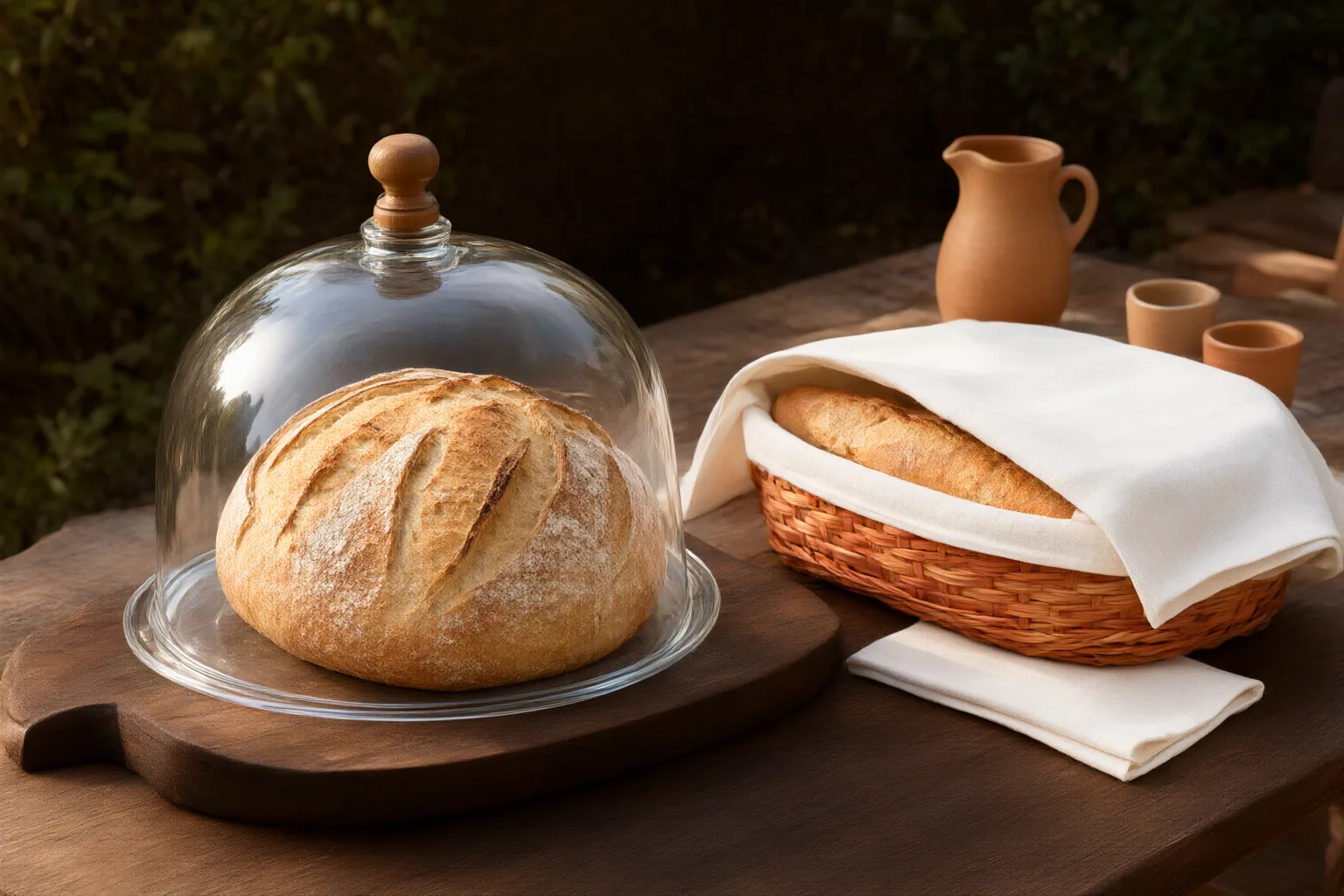
Keep outdoor bread protected by placing it on a clean platter under a properly fitted cover, accounting for wind, and returning the cover promptly after each serving. The goal is to limit exposure without making access unnecessarily difficult for guests.
Choose a Cover That Fits the Bread Platter
Start with the platter rather than the cover style: the cover should be large enough to enclose the serving dish completely. A cover that does not fit can leave bread exposed around the edges.
Fine-mesh covers offer airflow and visibility while providing a barrier against insects. They can be convenient when guests need to see and reach the bread, but their size, weight, and cleaning requirements still matter. A lidded serving dish is another option when a firmer enclosure is preferred. Cling wrap or aluminum foil can also cover food, although they generally need to be removed and replaced whenever someone takes bread.
Choose according to the gathering’s needs rather than assuming one method is universally best. Consider whether guests can lift and replace the cover easily, whether the bread remains visible, and whether the cover can be cleaned after use. These are practical distinctions drawn from general outdoor-food guidance, not comparative test results.
Set Up a Stable, Clean Serving Area
Use clean dishes and utensils from the beginning, and cover the bread promptly once it is ready to serve. This limits avoidable exposure to pests and airborne contaminants while also reducing opportunities for cross-contamination.
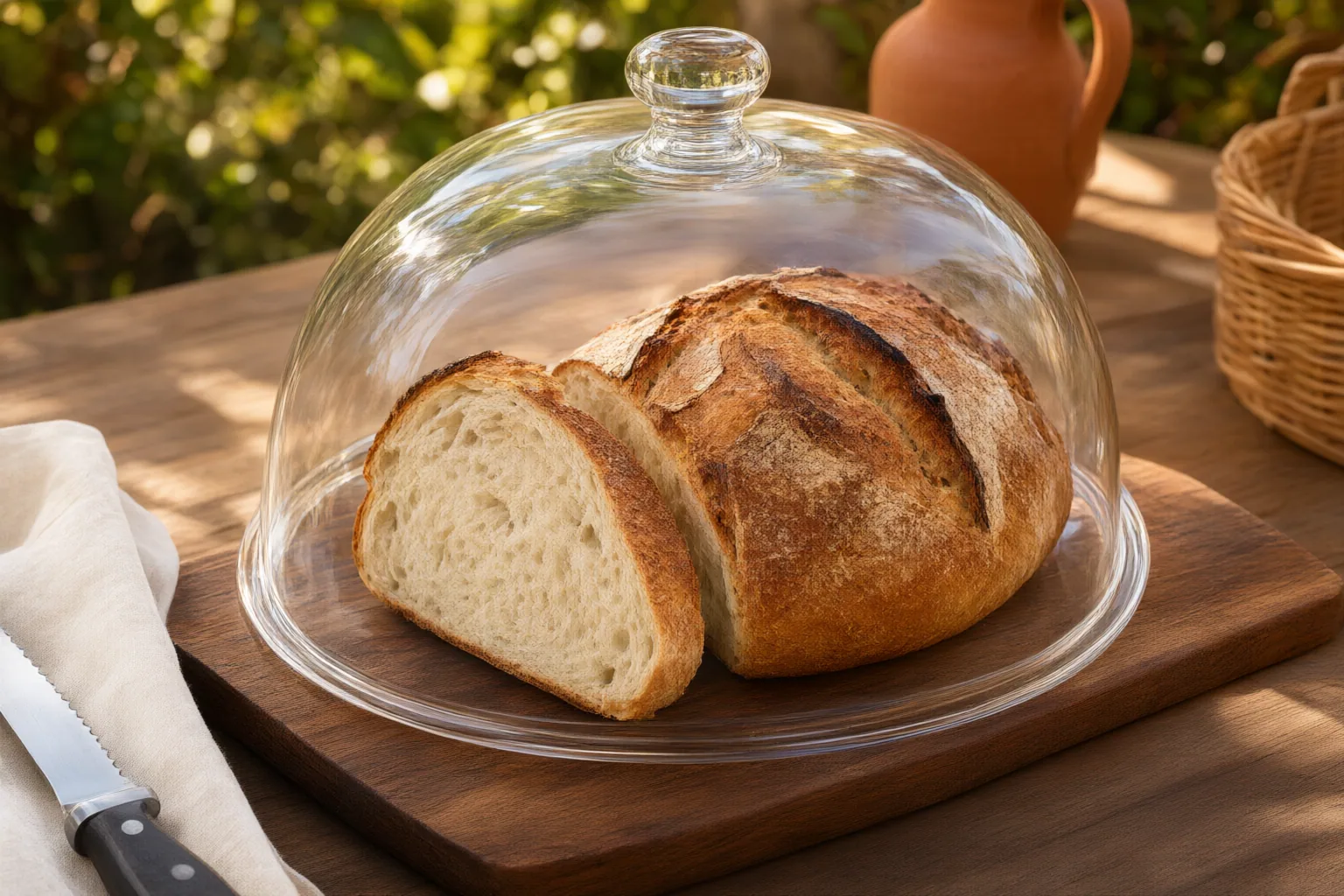
Before guests arrive, place the filled platter where it will be served and confirm that the chosen cover encloses it without resting awkwardly at the edges. Check how easily the cover can be lifted and returned. A manageable setup is important because a cover only provides a barrier while it is actually over the food.
Wind and changing weather deserve attention. Lightweight coverings may be disturbed in breezy conditions, so a heavier material may be more suitable where wind is expected. The available sources do not establish a universal wind-resistance standard; the practical step is to assess the cover’s stability in the actual serving area. If it shifts or exposes part of the platter, select a more stable covering arrangement before serving begins.
Keep Bread Covered Between Servings
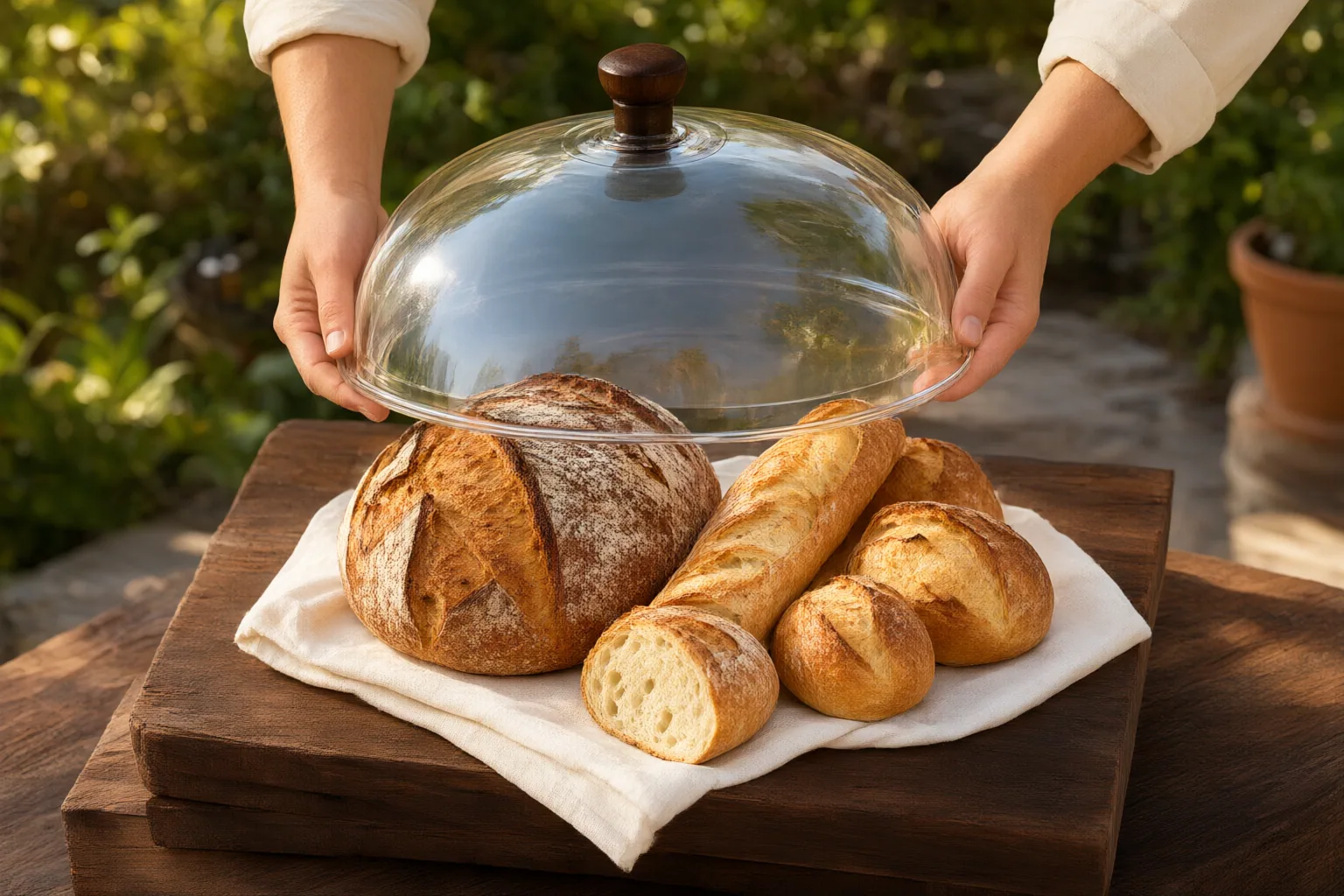
Follow a simple routine throughout the gathering: keep the bread covered, lift the cover only when someone needs access, and return it immediately afterward. Avoid leaving the platter open between visits to the serving area. This approach maintains a physical barrier against insects and reduces the time in which dust or other airborne contaminants can reach the bread.
Make the routine easy for guests. Position the cover so it can be lifted and replaced without moving the platter, and keep clean serving utensils with the bread. If cling wrap or foil is used, recognize that repeated removal and replacement may be less convenient than lifting a mesh cover or rigid lid. That difference is a practical consideration, not evidence that one option performs better in every setting.
This routine is synthesized from general guidance about covering food outdoors. It should be understood as a practical bread-serving approach rather than a tested, bread-specific food-safety protocol.
Conclusion
A practical outdoor bread setup has three essentials: a clean cover that fully fits the platter, enough stability for the expected conditions, and a routine of replacing the cover after every serving. Fine mesh, a lidded dish, cling wrap, or foil may be suitable depending on the desired visibility, airflow, access, and cleaning needs.
No cover should be assumed to block every possible contaminant or remain stable in all weather. Before guests arrive, assemble the complete serving setup, confirm that the cover encloses the platter, test whether it stays in place, and make sure it can be lifted and returned easily.
Disclosures and limitations
- This article was prepared with AI assistance using only the supplied research sources. Those sources provide general outdoor-food guidance rather than bread-specific studies or guidance from official food-safety authorities.
- No product records, prices, ratings, availability information, affiliate links, or paid product recommendations were supplied or included.
Related reading
- Practical Bread Tips and Safe Access Guides
- How to Verify Halal Certification Information on Packaged Bread in Indonesia
Sources
- 5 Best Solutions for Safeguarding Home from Insects & Dust — DoorVisual
- Covering Food for an Outdoor Party: A Comprehensive Guide – PanFlavor — PanFlavor
- Perfectly Covered: How to Safeguard Your Food for an Outdoor Party – Decor With Style — Decor With Style
- Best Outdoor Food Covers 2024 — Garden Gate