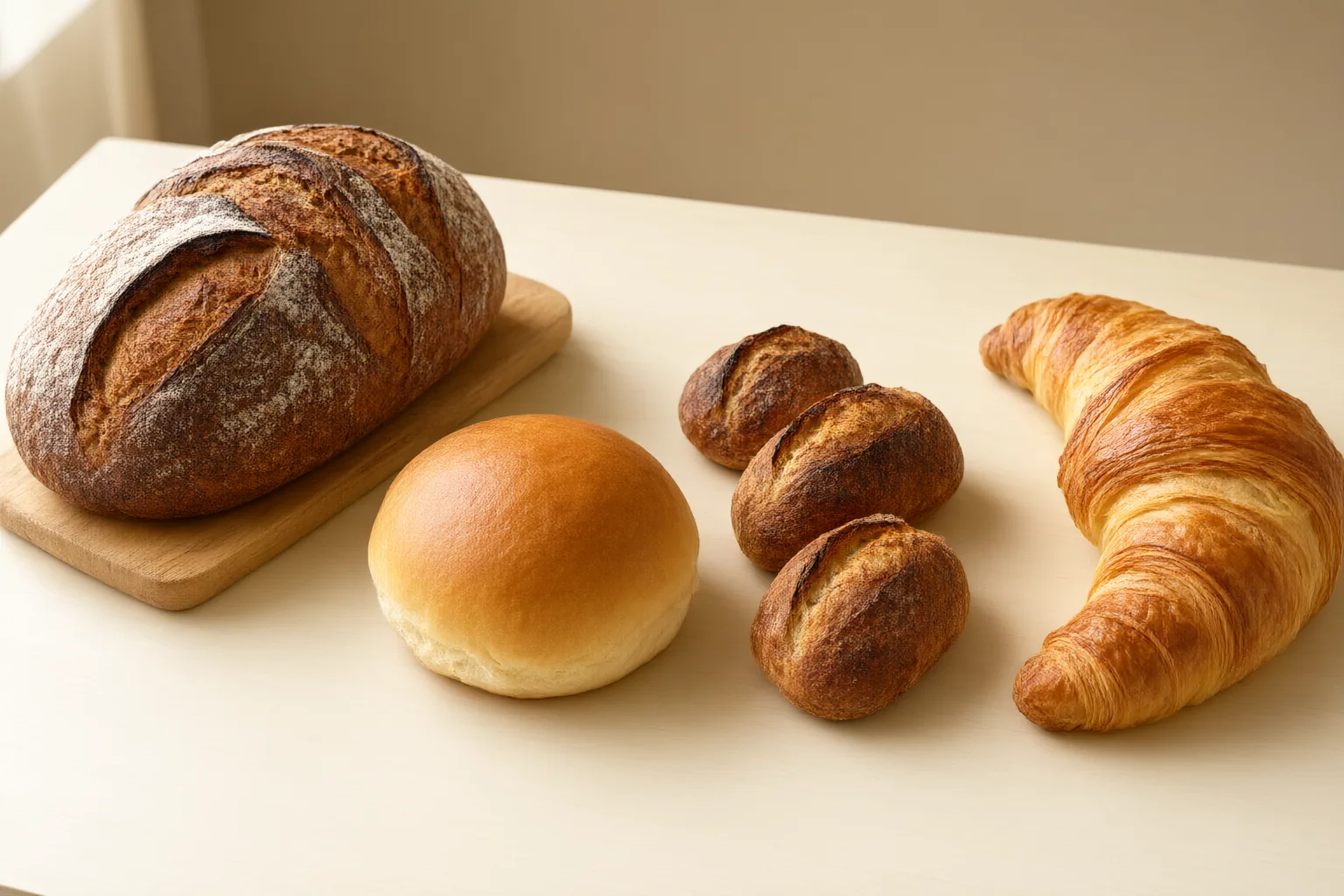
To tell a loaf, bun, roll, or pastry apart, look beyond the label. Compare the item’s shape, portion size, serving format, and visible texture, remembering that these general cues do not confirm how Kampoeng Roti classifies any particular product.
The Quick Visual Differences
Four practical cues can make a bakery catalog easier to scan: shape, size, serving format, and texture. A loaf is commonly long or rectangular and intended to be sliced. Buns and rolls are generally smaller, individually portioned bread items, although their names can overlap. Pastries are associated with rich or flaky dough and may be filled or shaped.
Start with the item’s overall form. A larger rectangular bread presented for slicing points toward a loaf, while a small standalone portion may be described as a bun or roll. Visible layers or a flaky-looking structure can suggest pastry. These clues are useful for browsing, but they are not rigid rules or verified Kampoeng Roti catalog classifications. The supplied information does not identify or categorize any specific product from the brand.
How to Recognize a Loaf or Pastry
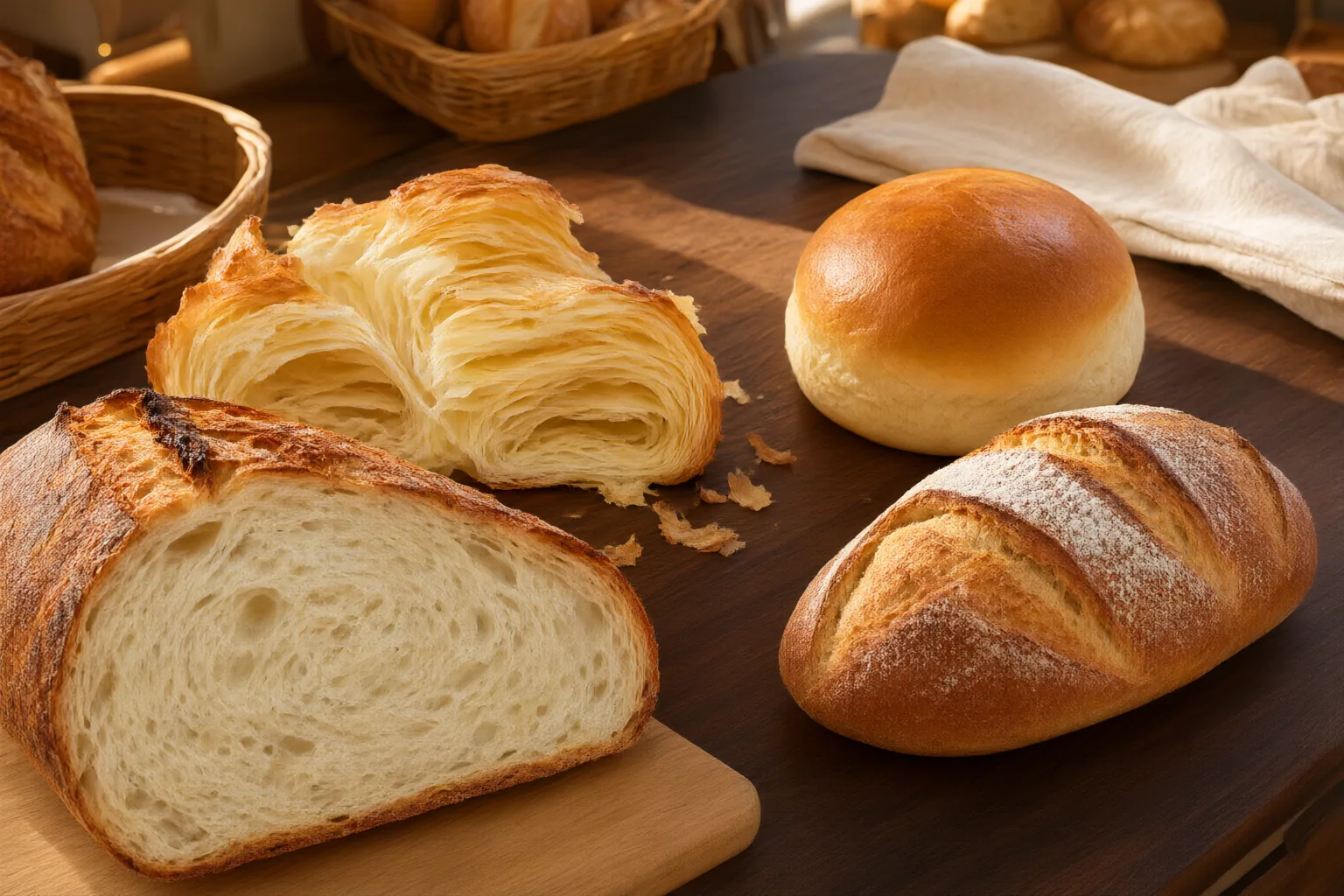
A loaf is most readily suggested by its shape and serving method. One bakery terminology guide defines it as bread baked in a long or rectangular form and sliced for serving. When viewing a product, consider whether it appears to be one larger unit from which several slices or portions would be cut. Shape alone is not conclusive, so the displayed serving format matters too.
Pastry is distinguished more by dough character and construction than by portion size. The terminology guide associates pastry with rich or flaky dough that may be filled or shaped, listing croissants and Danish pastries as layered or flaky examples. Visible layering or flakiness can therefore be a useful cue. However, appearance does not establish ingredients, allergens, or an official product category. Those details cannot be inferred from a photograph or general definition and should be checked against current product-specific information.
Why Buns and Rolls Can Be Harder to Separate
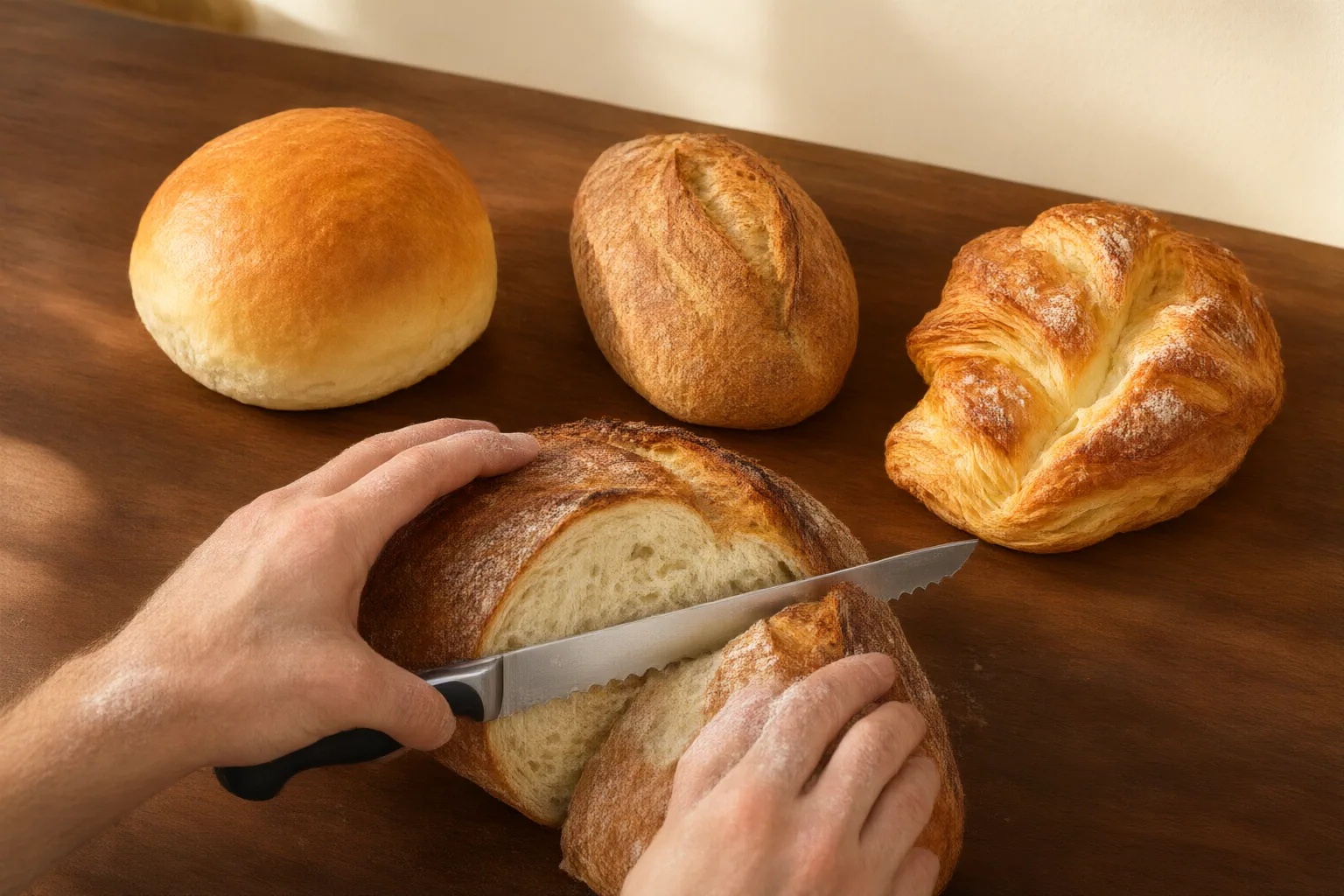
Buns and rolls have the greatest overlap. One source describes a bread roll as a small, often round loaf that can be eaten whole, split for a filling, or used for a sandwich. It also describes a bun as a type of bread or bread roll that may be sweet. Another terminology guide calls a bun a small, soft, usually round bread item, while describing a roll as an individually baked bread portion often served with meals.
Because these descriptions share size, shape, and individual presentation, the label may not settle the question. Regional dialect and customary usage can also cause similar products to receive different names, even when a term does not match an original technical definition.
When a label is ambiguous, consider the presentation and apparent intended use. Is it a small individual portion? Is it shown whole, split for a filling, or served alongside a meal? Does the description emphasize softness or sweetness? These observations may help interpret the name, but they still cannot verify the official category, ingredients, or intended use of a particular Kampoeng Roti item.
Conclusion
Use a simple sequence when browsing: first check whether the item is a larger long or rectangular form intended for slicing; next decide whether it is a small individual bread portion; then look for a rich, layered, or flaky appearance associated with pastry. For small round items, treat “bun” and “roll” as potentially overlapping labels rather than absolute categories.
These cues organize what you can see, but they do not supply missing product facts. Before choosing, compare the label with the shape, portion, serving format, and visible texture, then confirm the classification, ingredients, allergens, availability, and price through current official Kampoeng Roti information.
Disclosures and limitations
- This article was prepared with AI assistance using only the supplied general bakery terminology sources. It does not report firsthand product use or verified Kampoeng Roti catalog details, and its browsing guidance is not a product recommendation or evidence of an affiliate relationship.
Related reading
Sources
- List of bread rolls – Wikipedia — en.wikipedia.org
- 100+ Bakery Items Names List with their Pictures — Vocabineer