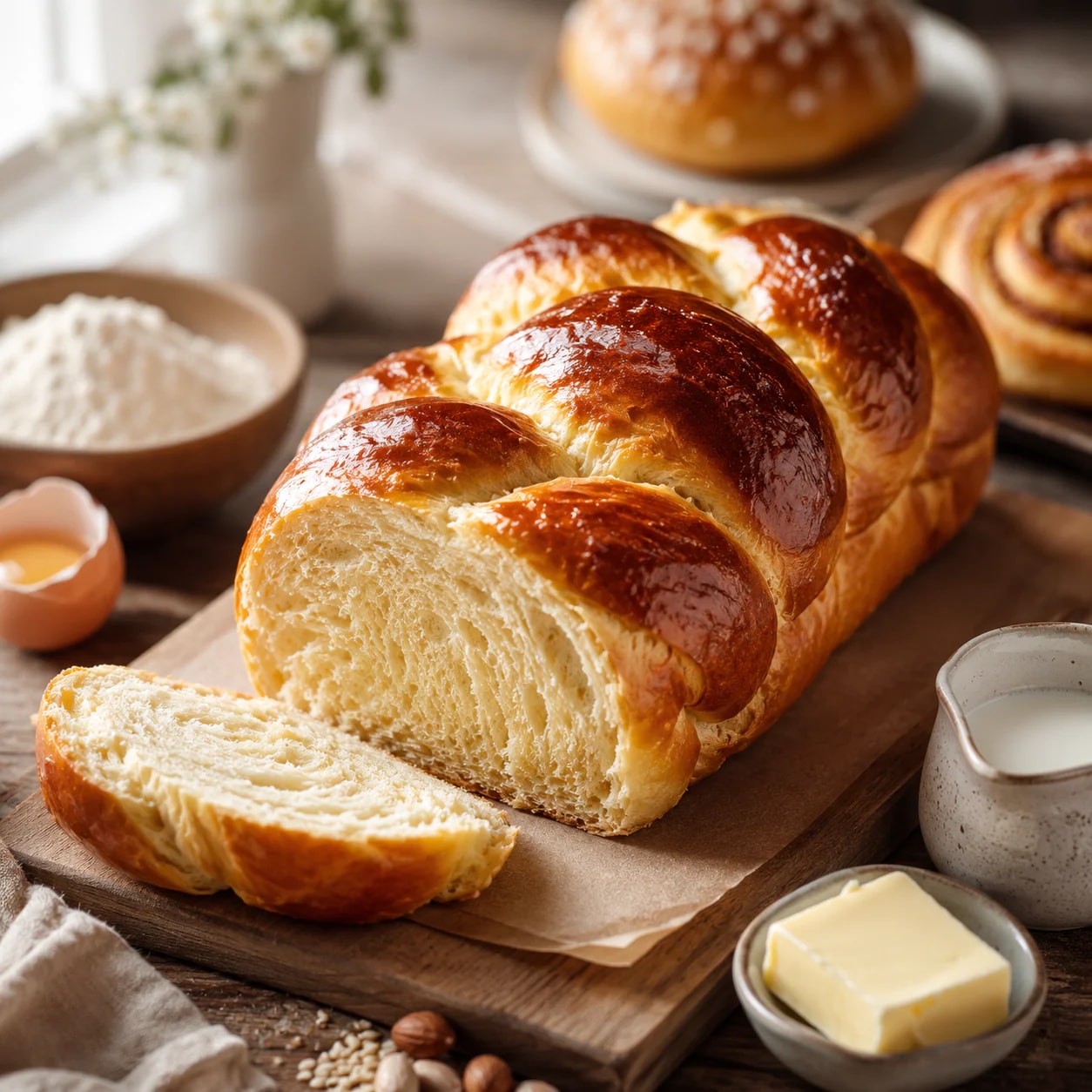
Sweet bread names, recipes, and forms can vary. Paska offers one documented example of why shoppers should use current, product-specific ingredient and allergen information instead of relying on a name alone.
What “Sweet Bread” Can Mean
A sweet bread name may not provide enough information to identify a product’s recipe or form. Paska illustrates this challenge: its terminology and characteristics vary across communities and families. A concise description of the specific bread is therefore more useful than assumptions based only on its category or name.
Paska as an Example of a Traditional Sweet Bread
Paska is described as a traditional Ukrainian Easter bread. It also appears in Central and Eastern European traditions and in diaspora communities, including communities in the United States. This cultural background helps explain why shoppers may encounter different understandings of the same bread name. It is general context, however, and does not describe any particular bakery product.
Why Recipes and Forms May Vary
The cited description of paska notes that its recipes and forms vary. Consequently, a familiar name cannot confirm how a particular loaf is made or presented. When comparing sweet breads, use the description attached to the specific product rather than treating a traditional definition as a fixed specification.
Ingredients Commonly Associated With Paska
Milk, butter, eggs, flour, and sugar are listed as traditional paska ingredients in the available source. This list provides cultural context, not a formula that applies to every paska or sweet bread. Because recipes vary, it cannot establish the ingredients of a specific bakery item. Check that item’s current ingredient information before choosing it.
Major Food Allergens U.S. Shoppers Should Check
Under U.S. law, the FDA recognizes nine major food allergens: milk, eggs, fish, crustacean shellfish, tree nuts, peanuts, wheat, soybeans, and sesame. People with food allergies must avoid allergenic materials, so clear product-specific ingredient and allergen disclosures are important. Traditional descriptions may mention some ingredients, but they cannot replace the allergen information for the actual product being considered.
How to Evaluate Sweet Bread Information Before Choosing
Start by identifying the bread style and reading its specific description. Then review the available ingredient list and allergen disclosure for the exact product. Do not infer ingredients from the bread’s name or from a traditional recipe, because documented examples such as paska can vary in recipe and form. If ingredient or allergen details are unavailable or unclear, ask the seller for current product-specific information before making a selection.
Limits of the Available Product Information
The available research does not document Kampoeng Roti’s catalog, individual products, ingredients, allergen profiles, prices, availability, or ordering paths. It therefore cannot support conclusions about any Kampoeng Roti sweet bread. Names and traditional descriptions should not be treated as substitutes for current product details.
Disclosures and limitations
– This article was prepared with AI assistance from the supplied Research Package and Content Plan. – The article uses two supplied sources: FDA allergen information and a general-reference source about paska. The paska material is cultural context rather than an official or primary product source. – No Kampoeng Roti product records were supplied, so this article makes no brand-specific claims or product recommendations. – No affiliate relationship is represented in this article. If affiliate links or compensated product recommendations are added later, that relationship should be disclosed clearly.
Sources
– Erythritol alternativní cukr 1000 g 99,9% – Woldoshop s.r.o. — Woldoshop s.r.o. – Missi Roti Recipe – Rajathani Misi Roti recipe – YouTube — youtube.com – Robot or human? — walmart.com – Food Allergens and Gluten-Free Guidance & Regulatory Information — U.S. Food and Drug Administration – Hungryroot Review: The Service Still Holds Up — CNET – Baking Ingredients | Gourmet Chocolate, Pastries & Purees | Gourmet Food Store — Gourmet Food Store – Food & Beverage Manufacturing Software – AI-Powered CMMS for Food Safety & Compliance | Reduce Downtime 50% | iFactory — iFactory AI – Dong Talay Lipe Beach Resort – Nejlepší CENY ubytování ve městě… — agoda.com – Our daily bread bakery – One Page Template by Nicepage — Nicepage.com – Paska (bread) – Wikipedia) — en.wikipedia.org