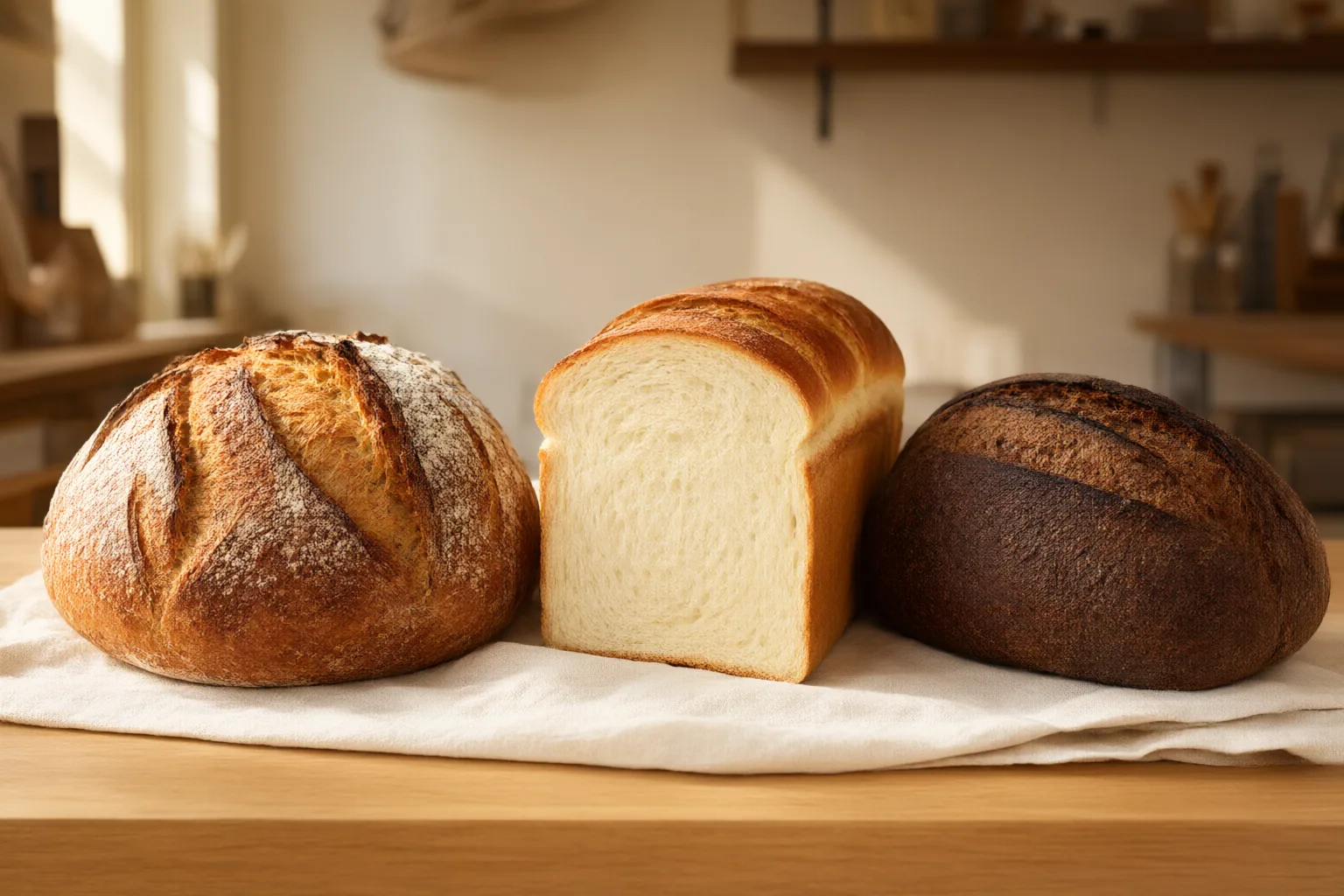
Compare packaged breads on an equal basis: check the labeled serving weight and servings per package, convert each nutrition value to the same gram amount, and review the full nutrition panel rather than a single headline figure.
Start with Serving Size and Servings per Package
Nutrition figures are generally listed per serving, not necessarily for the entire package. Before comparing two breads, find the serving weight and the number of servings in each package. These details clarify how much bread the displayed energy and nutrient values represent.
A package can contain more than one serving. If the full package is eaten, multiply each per-serving figure by the stated number of servings to estimate the package total. Treating a multi-serving package as one serving can understate the amount consumed.
Keep the two questions separate: how much is in one labeled serving, and how many servings are in the package? The first helps establish a fair comparison basis. The second helps relate the panel to the amount under consideration. Check both before deciding that one bread has higher or lower nutrition values than another.
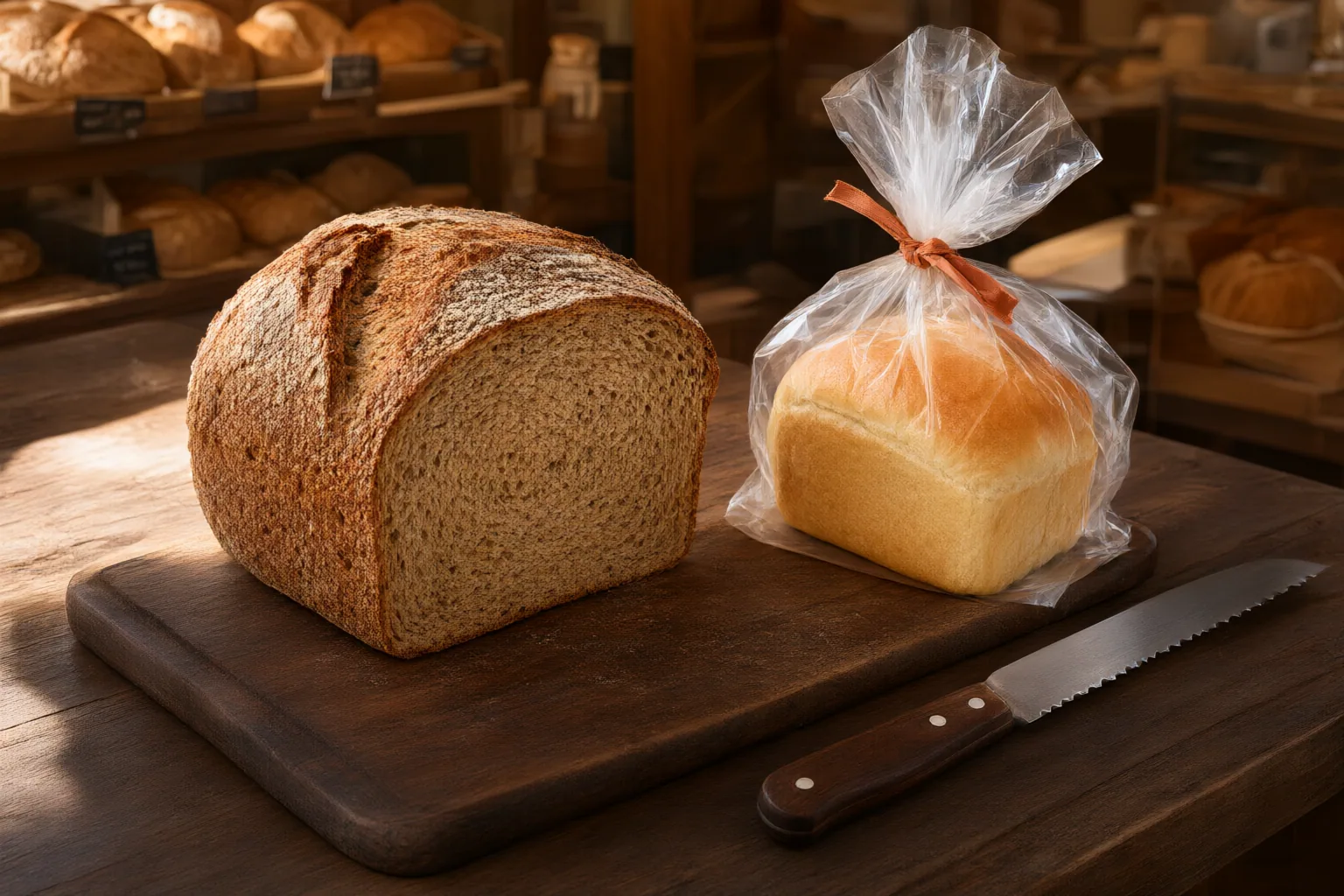
Convert Both Labels to the Same Gram Amount
Per-serving figures are not directly comparable when the labeled serving weights differ. A nutrient value for a smaller serving can appear lower simply because it represents less bread. For a like-for-like comparison, convert both labels to one shared gram amount.
Use the same calculation for every field:
Value on the label ÷ labeled serving weight in grams × chosen comparison weight in grams
First, divide a nutrient value by the grams in that product’s serving. This gives the value per gram. Then multiply it by the common gram amount selected for both breads. Repeat the calculation for the second product using its own labeled serving weight.
The chosen comparison weight can be any equal gram basis that is convenient, provided it is applied consistently to both labels. This conversion does not change the information supplied on either package; it places both sets of figures on the same basis. Use the converted values for comparison while retaining the original serving and package information when estimating how much might actually be consumed.
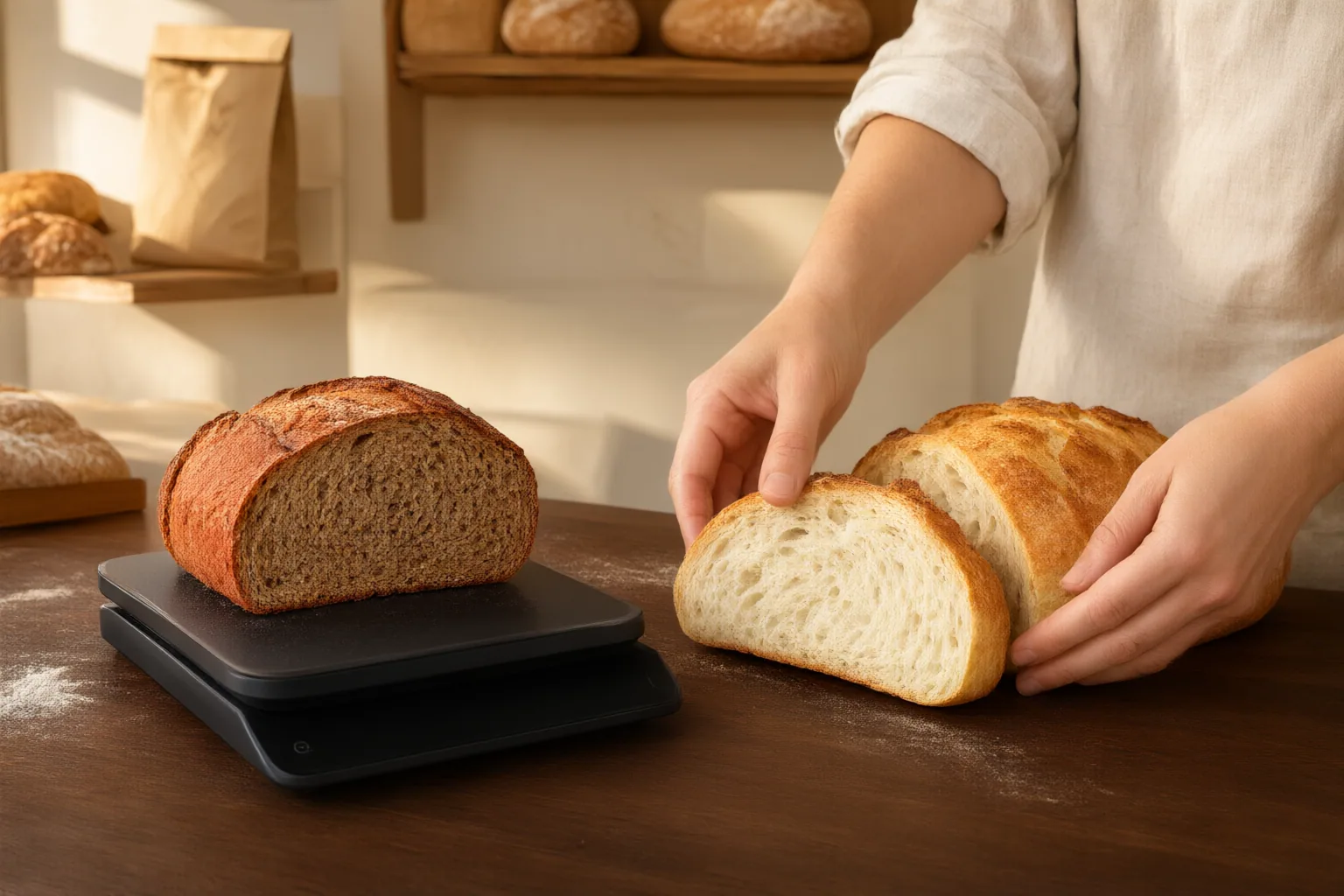
Compare the Full Nutrition Panel, Not One Headline Number
Once both breads are expressed for the same gram amount, compare several fields rather than looking only at calories or energy. Useful fields include energy, fat, carbohydrates, sugar, protein, and sodium. Reviewing them together provides a broader comparison, while the fields that deserve the most attention depend on the shopper’s needs.
A simple label-checking sequence is:
- Confirm that both sets of figures have been converted to the same gram basis.
- Place corresponding fields side by side: energy with energy, sodium with sodium, and so on.
- Note meaningful differences across the relevant fields instead of declaring a product preferable from one number alone.
- Return to the servings-per-package information if the comparison concerns eating the whole package rather than an equal portion.
Prominent statements on the front of a package are not a complete basis for comparison. Check them against the detailed nutrition information panel, where the serving basis and nutrient figures appear together. This reduces the risk that a front-label message or a smaller stated serving will distract from the underlying values.
Conclusion
Use a repeatable process whenever packaged bread labels show different serving sizes: verify the serving weight and servings per package, calculate whole-package totals when relevant, convert both products to the same gram amount, and compare energy, fat, carbohydrates, sugar, protein, and sodium on that shared basis. Before choosing a bread, apply these checks directly to the nutrition panels of the packages you are considering.
Disclosures and limitations
- This article was prepared with AI assistance and is based on the cited nutrition-label research sources. It does not endorse specific products or contain affiliate recommendations.
Related reading
- Find Kampoeng Roti Stores
- Where to Check Official BPOM Information About Processed Foods, Product Withdrawals, and Food-Safety Notices
Sources
- Cara Membaca Label Nutrisi (Gizi) dengan Benar | SehatDanPrima — sehatdanprima.com
- Cara Membaca Label Gizi pada Kemasan – Masoem University — Masoem University