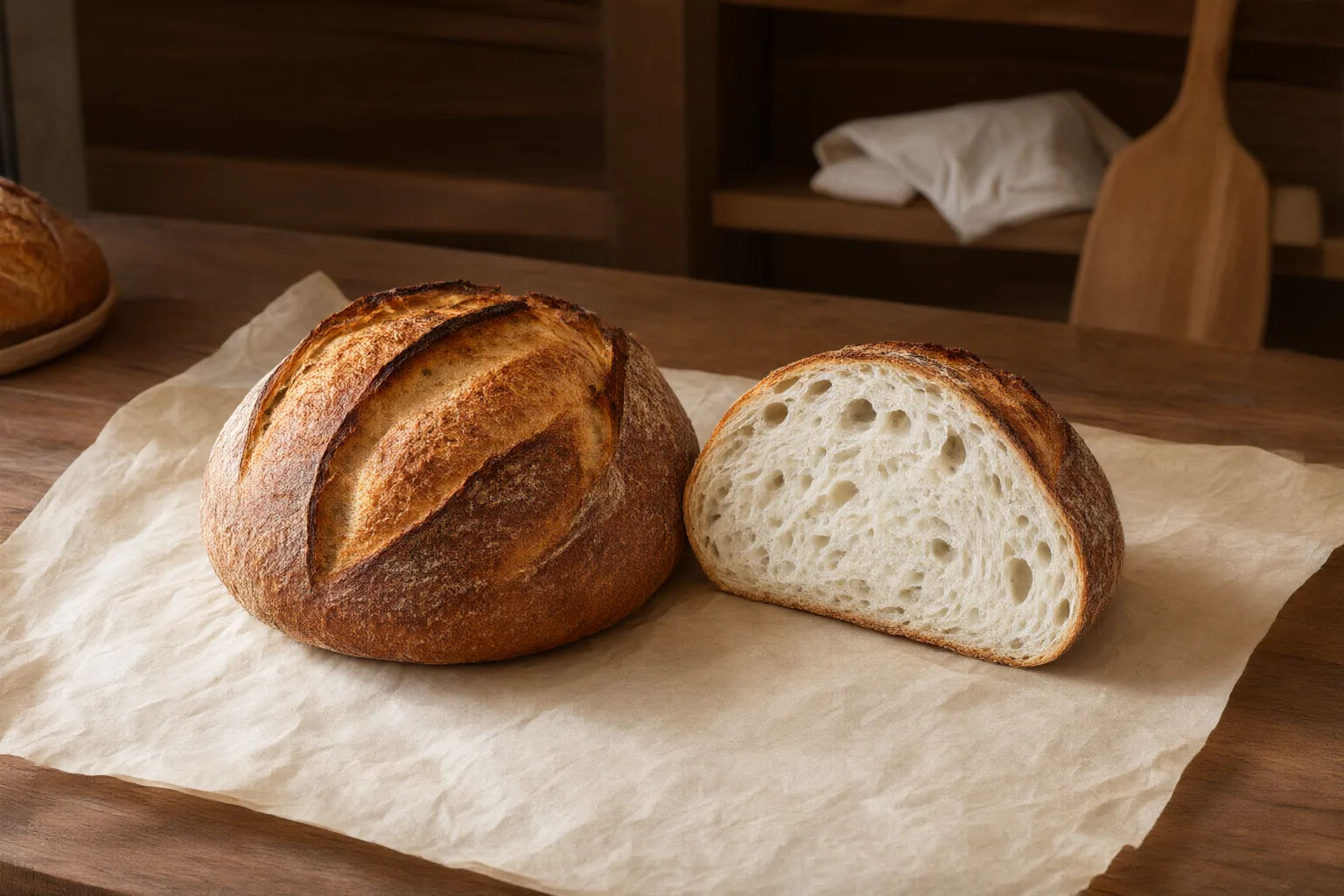
Start by finding the ingredient list and allergen disclosure, then check the date, storage instructions, and other factual package details. Keep branding and edible decorations separate from this review, and ask the seller when allergen information is unclear.
Start with the package information that matters
Bread packaging can present several kinds of information at once, so begin with a deliberate scan. Locate the food name, ingredient list, and allergen information before reviewing quantity, durability or use-by date, storage conditions, and the nutrition declaration. Operator details, origin information where required, instructions for use, and quantities of certain ingredients may also appear.
This checklist comes from Food Safety Authority of Ireland guidance summarizing EU Regulation No. 1169/2011. It is a useful framework for examining a package, but the supplied research does not establish that these are Indonesian legal requirements. For bread sold in Indonesia, use the framework as a reading aid rather than a statement of local law.
Keep each field distinct. The ingredient and allergen sections address composition and allergy-related information, while the date and storage sections help you understand durability and handling. Reading the fields separately reduces the chance of overlooking the information you need among the many details on a prepacked loaf.
Separate ingredient and allergen details from branding
Next, distinguish factual food information from branding, pictures, promotional wording, or decorative elements. A prominent design is not a substitute for the ingredient list or allergen disclosure. Search the package specifically for those sections instead of relying on the largest words or images.
The cited Irish guidance says mandatory information must be accurate, clear, easy to understand, and not misleading about matters including composition, quantity, durability, origin, or production method. It also says required information on prepacked food must be easily visible and clearly legible, without being hidden, obscured, interrupted, or displaced by voluntary information. These principles describe Irish and EU requirements, not confirmed Indonesian rules.
Decoration can also appear directly on bread. One supplier markets edible bread labels for promotional or decorative use, illustrating why a label-like element on the loaf should not automatically be treated as the bread’s regulated package information. Use the package’s factual sections to identify the stated food information, and consider branding or decoration separately.
Check whether a decoration has its own composition
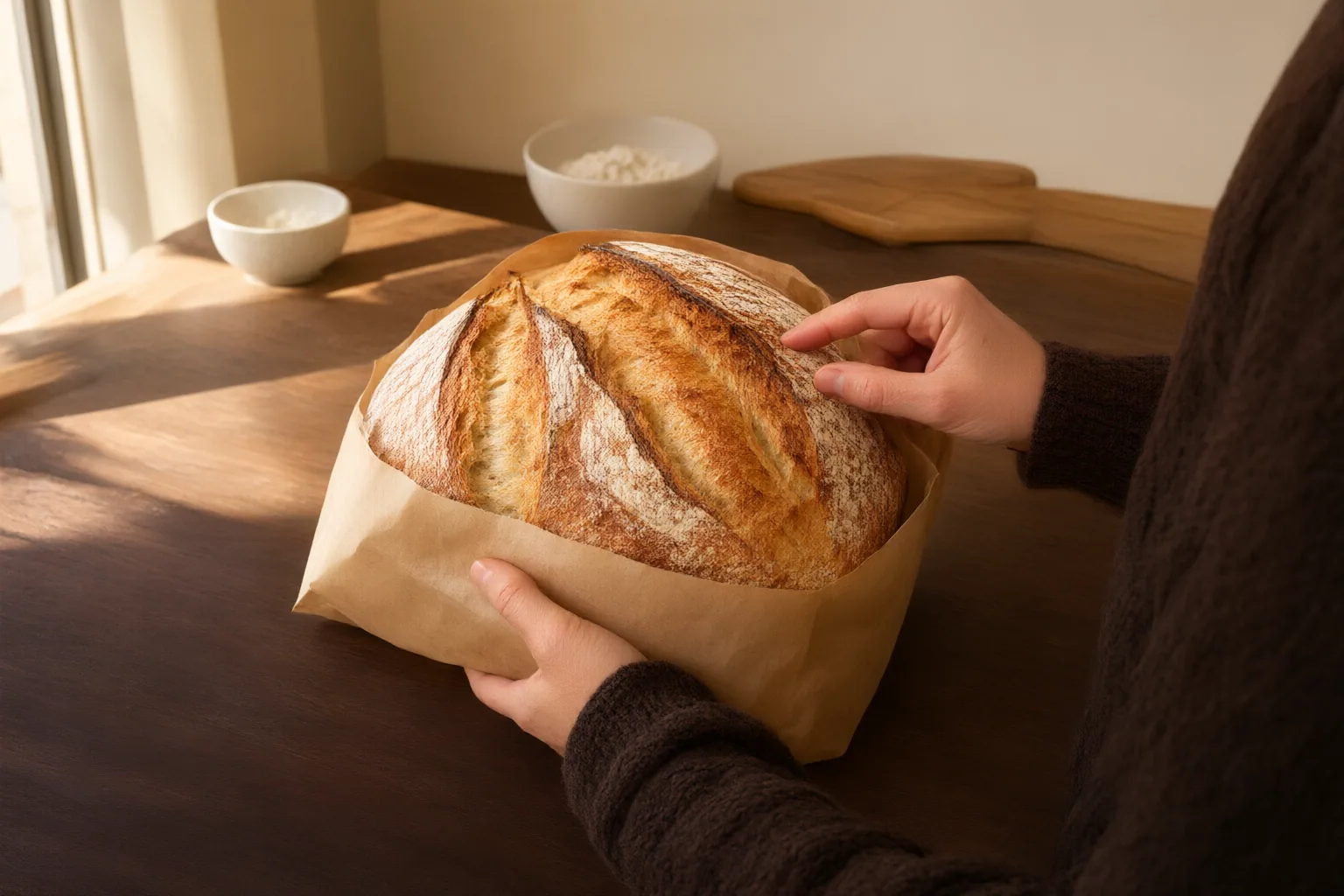
An edible label placed on bread may have a composition of its own. One supplier describes its edible wafers as containing potato starch, water, and maltodextrin, with olive oil used as a processing aid. It says its printed labels additionally contain rice starch, gum arabic, and artificial or natural colorings. Its unprinted cut-out labels are described as containing potato starch, water, and maltodextrin.
These details apply only to that supplier’s products. They do not establish the formulation of other edible labels, nor do they describe the ingredients of the bread beneath a decoration. When such an element is present, keep two questions separate: what information is supplied for the bread, and what composition is stated for the edible decoration? If either answer is unavailable or unclear, ask the seller rather than assuming that the decoration and bread share one ingredient list.
The distinction matters because an eye-catching printed element can be promotional while still being edible. Its presence should prompt an additional information check, not replace examination of the bread’s package details.
Conclusion
Use a consistent sequence when examining bread. First, identify the factual package information. Second, locate the ingredient list and allergen disclosure. Third, review the date and any storage instructions. Finally, separate those details from branding, imagery, promotional claims, or an edible decoration that may have its own composition.
The cited regulatory framework applies to Ireland and summarizes EU rules; the supplied sources do not establish Indonesian labelling requirements. It nevertheless shows why ingredient, allergen, date, storage, and other package fields should be read as distinct information.
Before choosing bread, find the ingredient and allergen details and check the date and storage instructions. If the bread is not prepacked, an edible decoration is not clearly explained, or allergen information remains unavailable or unclear, ask the seller directly for the relevant details.
Disclosures and limitations
- This article was prepared with AI assistance using only the supplied Food Safety Authority of Ireland guidance and edible-label supplier information. The regulatory material concerns Ireland and EU rules, not verified Indonesian requirements.
- No products are recommended here, and no affiliate relationship is asserted. Any future product recommendation should clearly disclose possible affiliate relationships.
Related reading
Sources
- breAd. edible bread labels and wafer decorations — breAd. edible bread labels and wafer decorations
- Food Labelling | Food Safety Authority of Ireland — Food Safety Authority of Ireland
- breAd. & edible labels s.r.o. | LinkedIn — cz.linkedin.com
- Breadcrumbs – Wikipedia — en.wikipedia.org
- Edible labels – breAd. & edible bread labels and wafer decorations — breAd. & edible bread labels and wafer decorations
- Food Archives – breAd. edible bread labels and wafer decorations — breAd. edible bread labels and wafer decorations