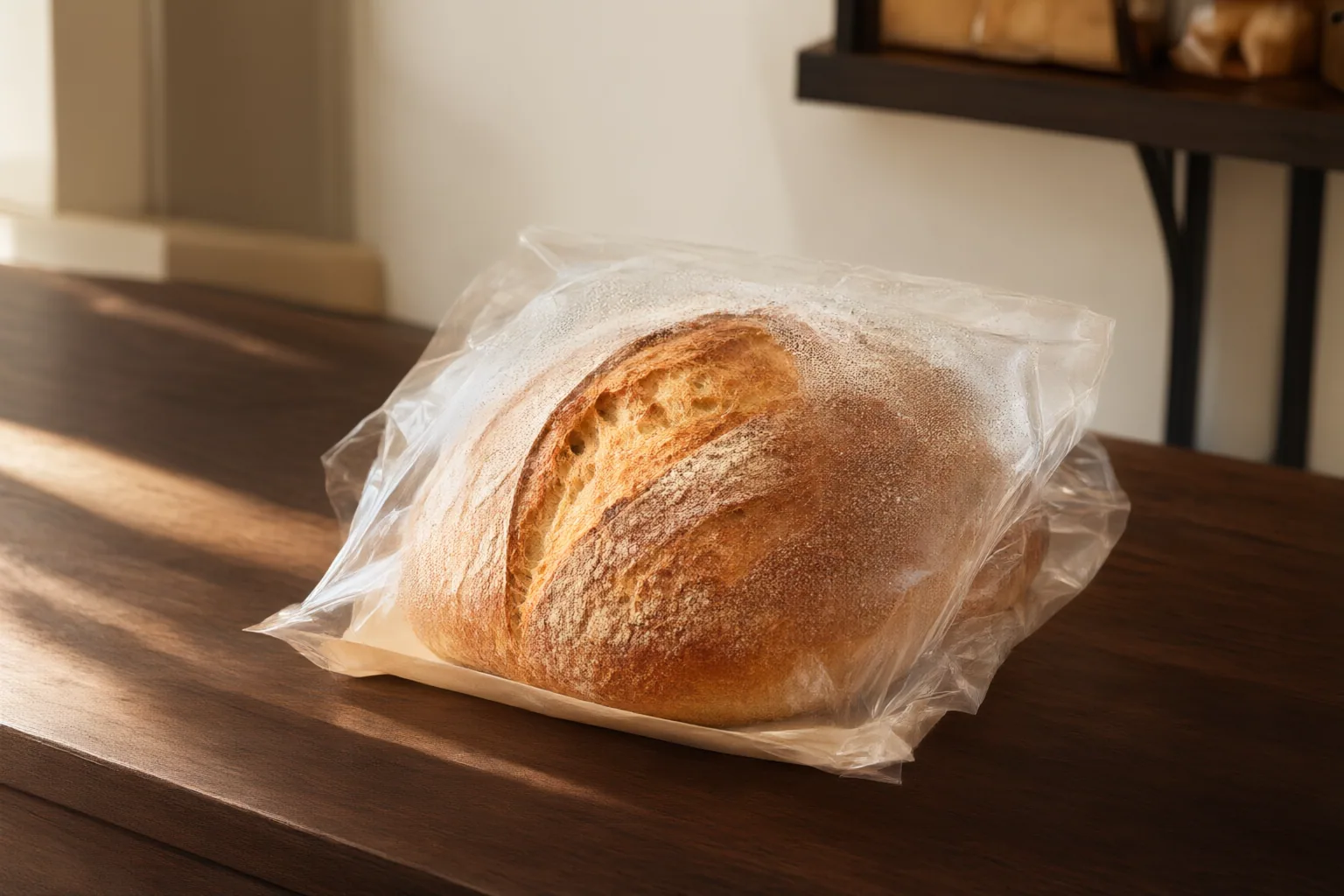
Condensation can form when bread is sealed before it has cooled or when packaging retains too much released moisture. The supplied sources support managing that moisture, but they do not establish whether a particular loaf with condensation is safe to eat or should be discarded.
Why Condensation Can Form Inside a Sealed Bread Package
Warm bread continues to release moisture as it cools. If it is placed in a bag and sealed too soon, that moisture can collect on the inside of the package as visible droplets or fogging. A tightly sealed bag or airtight container can also retain moisture instead of allowing it to escape.
These are possible explanations, not a diagnosis for every package. The available sources discuss general bread-storage practices but do not establish why condensation appeared in any specific sealed loaf. They also provide no Kampoeng Roti-specific information about packaging or handling. The supported takeaway is narrower: sealing bread while it is still warm and using storage that traps excessive moisture can encourage condensation.
How Trapped Moisture Can Affect Bread
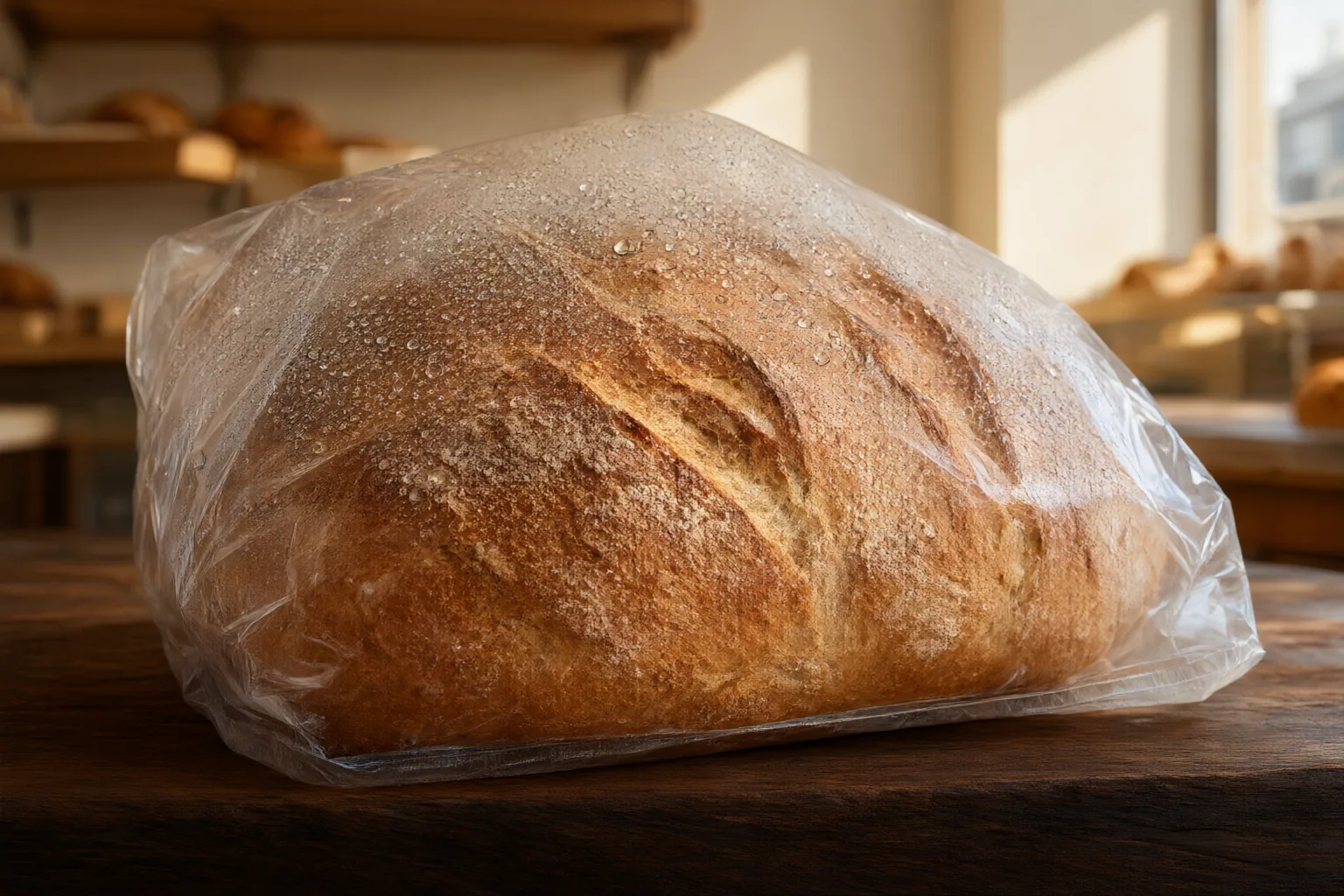
Moisture retained inside packaging can change bread’s condition. One supplied source says condensation can soften the crust and associates the resulting damp environment with a greater risk of mold. The bakery source similarly describes trapped moisture as a concern when cooling bread is kept in fully sealed storage.
That risk-related context should not be treated as a definitive safety verdict. These sources do not provide a rule that tells shoppers to eat or discard a particular loaf based only on condensation. They are a marketplace product page and a bakery blog rather than authoritative food-safety guidance. Consequently, the presence or absence of droplets cannot, on this evidence alone, prove that an individual loaf is either safe or unsafe.
Two Common Questions About Bread Package Condensation
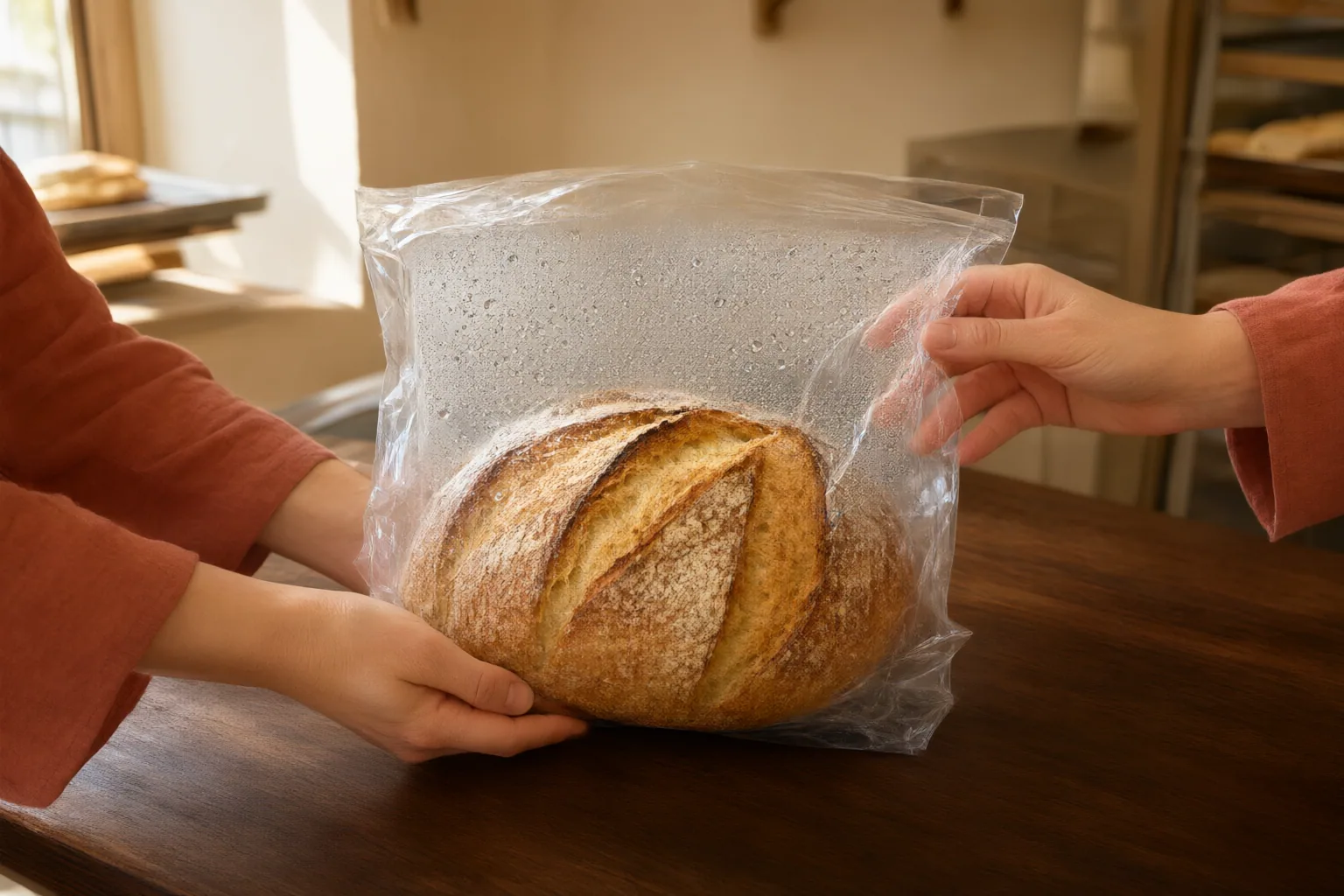
The practical issue is a balance between moisture retention and drying. Completely sealed storage can hold in moisture released by cooling bread, while too much airflow can dry the bread. The supplied material therefore supports a limited storage principle: let bread cool fully before sealing it, and avoid storage conditions that retain excessive moisture.
It does not support a universal response for a loaf that already has condensation. In particular, it supplies no verified threshold for an acceptable amount of moisture and no eat-or-discard test. The questions below separate that evidence limit from the preventive practices the sources do support.
Conclusion
Condensation inside sealed bread packaging can be consistent with bread being packed while warm or with storage that retains released moisture. Trapped moisture may soften the crust and is associated in the supplied sources with greater mold risk, but condensation alone does not provide a supported safety decision for a specific loaf.
For future storage, allow bread to cool completely before placing it in closed packaging. Choose storage that limits excessive trapped moisture without exposing the bread to so much airflow that it dries out. This concrete moisture-management step is the clearest action supported by the available evidence.
Disclosures and limitations
- This article was prepared with AI assistance from the supplied marketplace product page and bakery blog. Those sources offer general storage context, not authoritative food-safety guidance or Kampoeng Roti-specific facts.
- No product recommendation or affiliate endorsement is made in this article.
Related reading
- Practical Bread Tips and Safe Access Guides
- How to Check for a Public Prayer Room Near a Kampoeng Roti Outlet
Sources
- Amazon.com: IDEATECH 2 Pack Reusable Beeswax Bread Bags for Homemade Sourdough, Cotton Bread Storage with Natural Beeswax Lining, Keeps Bread Fresh Longer, 16.9" x 13.8", Freezer Safe, Roll-Top Closure : Home & Kitchen — amazon.com
- Best Bread Box to Prevent Mold: 7 Top Picks for Fresher Bread (2026) — Berry Gerry Bakes