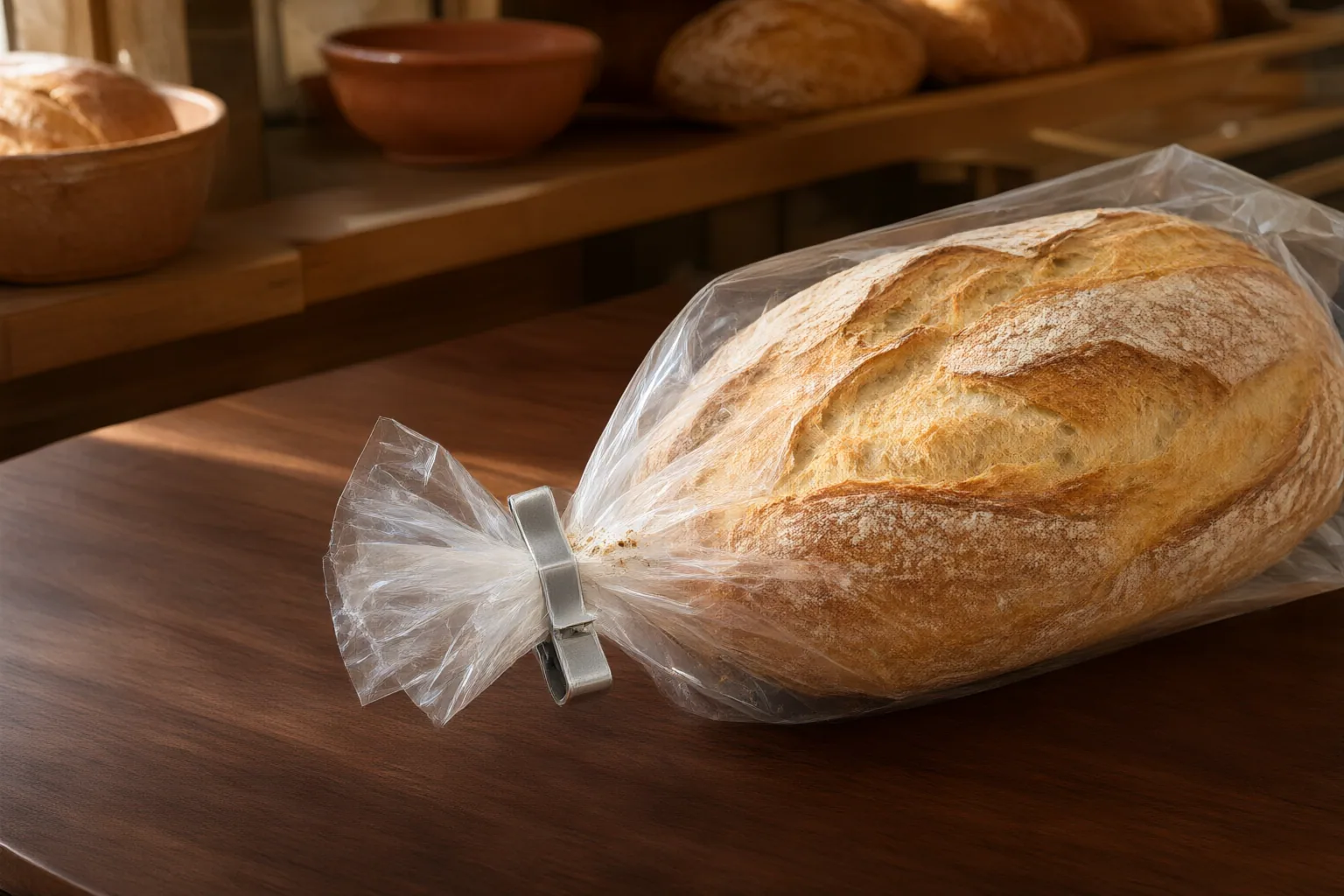
Before buying packaged bread, inspect the entire package and seal. Choose another package if you notice a partial opening, a leak, stickiness, or a color change. These are general warning signs for damaged food packaging, although the available evidence does not establish bread-specific package designs or brand procedures.
Check the Seal and Package Before You Buy
Examine the full seal rather than checking only the most visible edge. Look for any section that is partially open or appears to be leaking. Then inspect the rest of the package for stickiness or a color change, which INAGI also identifies as warning signs associated with damaged food packaging.
Treat even a small opening as a reason to choose an undamaged package when another one is available. A package can look mostly intact while still having an imperfect seal. Checking every sealed edge before purchase therefore gives you a simple, consistent way to make a choice.
Keep the evidence boundary in mind: the cited guidance concerns packaged foods generally. It does not establish which materials or seal designs a particular bread producer uses. Do not assume that every bread package has the same construction, and do not infer a brand-specific safety or quality guarantee from its appearance. The practical decision is narrower: if you can see an opening, leak, sticky area, or color change, avoid that package.
Why a Small Opening or Leak Matters
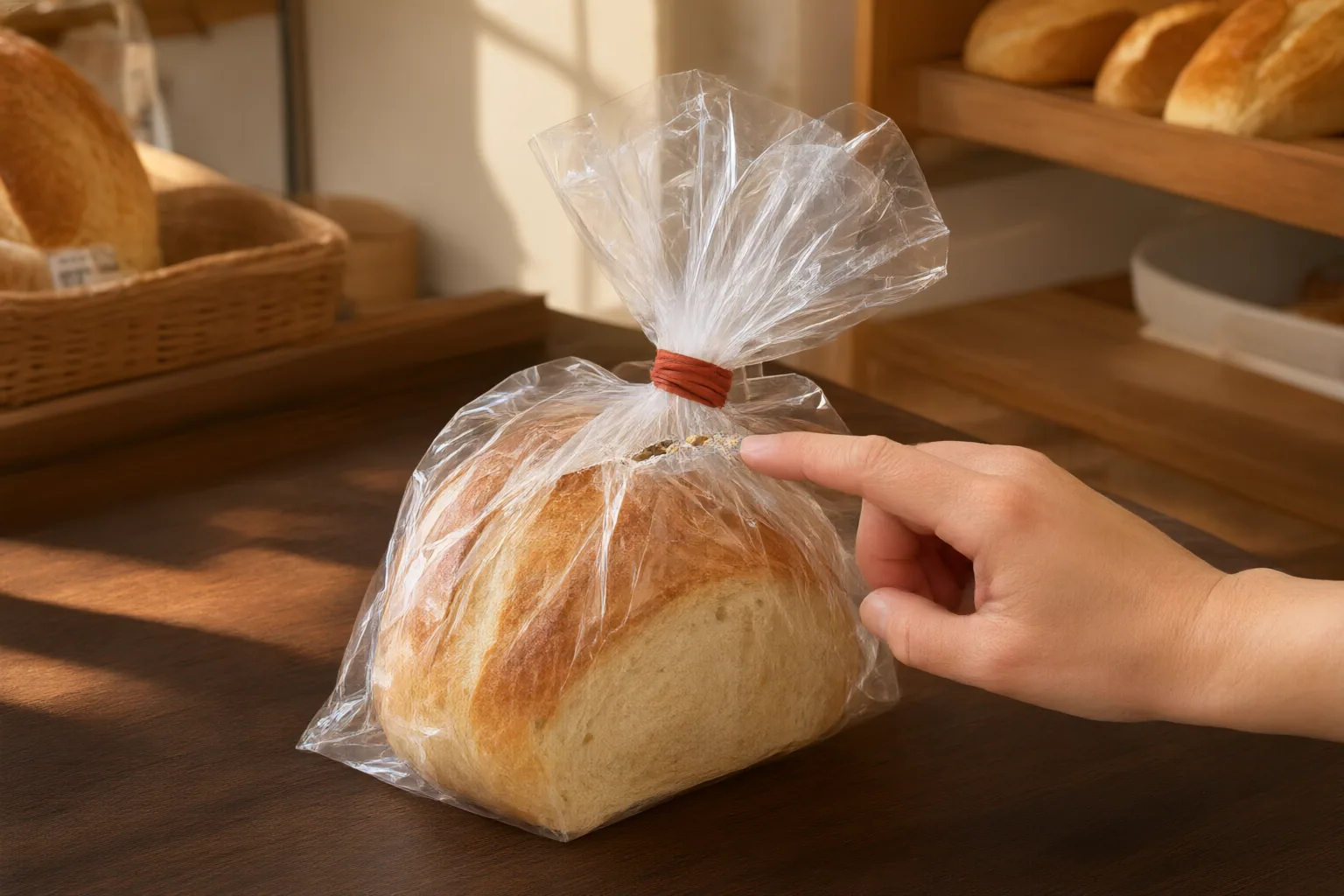
An imperfect seal matters because it may let outside air and moisture enter packaged food. According to INAGI, that exposure can contribute to oxidation, stale odors, discoloration, and spoilage. These are potential consequences described for packaged foods generally, not a prediction that every package with minor-looking damage will show all of them.
The size or appearance of the defect alone does not establish what has happened inside. A shopper may not be able to determine when the damage occurred or how much exposure followed. The available research also reports that packaging damage can arise while packaged products are moving through distribution. This supports checking the package at the point of purchase even when it is displayed normally.
Because the supplied evidence does not define bread-specific seal tolerances, storage conditions, or inspection methods, a visible opening or leak should not be dismissed as merely cosmetic. Selecting an intact alternative avoids relying on an unsupported judgment about the damaged package.
What to Do If You Find Damage
If you notice damage before purchase, leave that package and select one without a visible opening, leak, sticky area, or color change. This action follows the identified warning signs without requiring you to diagnose the product or decide exactly how the damage occurred.
If you discover damaged packaging only after purchasing the item, contact the seller promptly and clearly report the problem. Ask what reporting, replacement, or refund options are available. The supplied repository abstract, which discusses damaged goods under an Indonesian consumer-protection framework, describes replacement with an equivalent product or a refund as possible forms of compensation for consumer loss. It does not establish that every complaint will qualify, and it does not provide a procedure for any particular bakery, retailer, or brand.
Keep the request focused on the observable packaging condition. Avoid presenting possible air or moisture entry as a confirmed event unless it is established; the source says an imperfect seal can allow entry and contribute to deterioration. Likewise, do not assume a specific remedy. Ask the seller to explain the options that apply to the transaction and damaged item.
Conclusion
A useful package check is straightforward: inspect the complete seal and look across the package for a partial opening, leakage, stickiness, or a color change. These warning signs matter because an imperfect seal may admit outside air and moisture, with possible effects including oxidation, stale odors, discoloration, and spoilage.
Before buying, choose a different package when you find an opening or leak. If damage becomes apparent after purchase, contact the seller promptly and ask about reporting, replacement, or refund options. Apply this as general packaged-food guidance, not as a claim about a particular bread package or brand policy.
Disclosures and limitations
- This article was prepared with AI assistance using only the supplied industry article and university repository abstract. Those sources address packaged foods and damaged goods generally; they do not establish bread-specific packaging designs, storage rules, retailer procedures, or brand policies.
Related reading
- Practical Bread Tips and Safe Access Guides
- What Hygiene and Handling Clues Should You Check When Buying Ready-to-Eat Bread?
Sources
- Kemasan Sealer Rusak Layak Jual? Ini Dampak untuk Bisnis! – INAGI — INAGI
- TANGGUNG JAWAB HUKUM PELAKU USAHA ATAS KEMASAN PRODUK YANG RUSAK MENURUT UNDANG-UNDANG NOMOR 8 TAHUN 1999 TENTANG PERLINDUNGAN KONSUMEN (Studi Kasus: Distributor PT. Tigaraksa Satria Jombang produk “SGM”) – USB REPOSITORY — repository.usb.ac.id