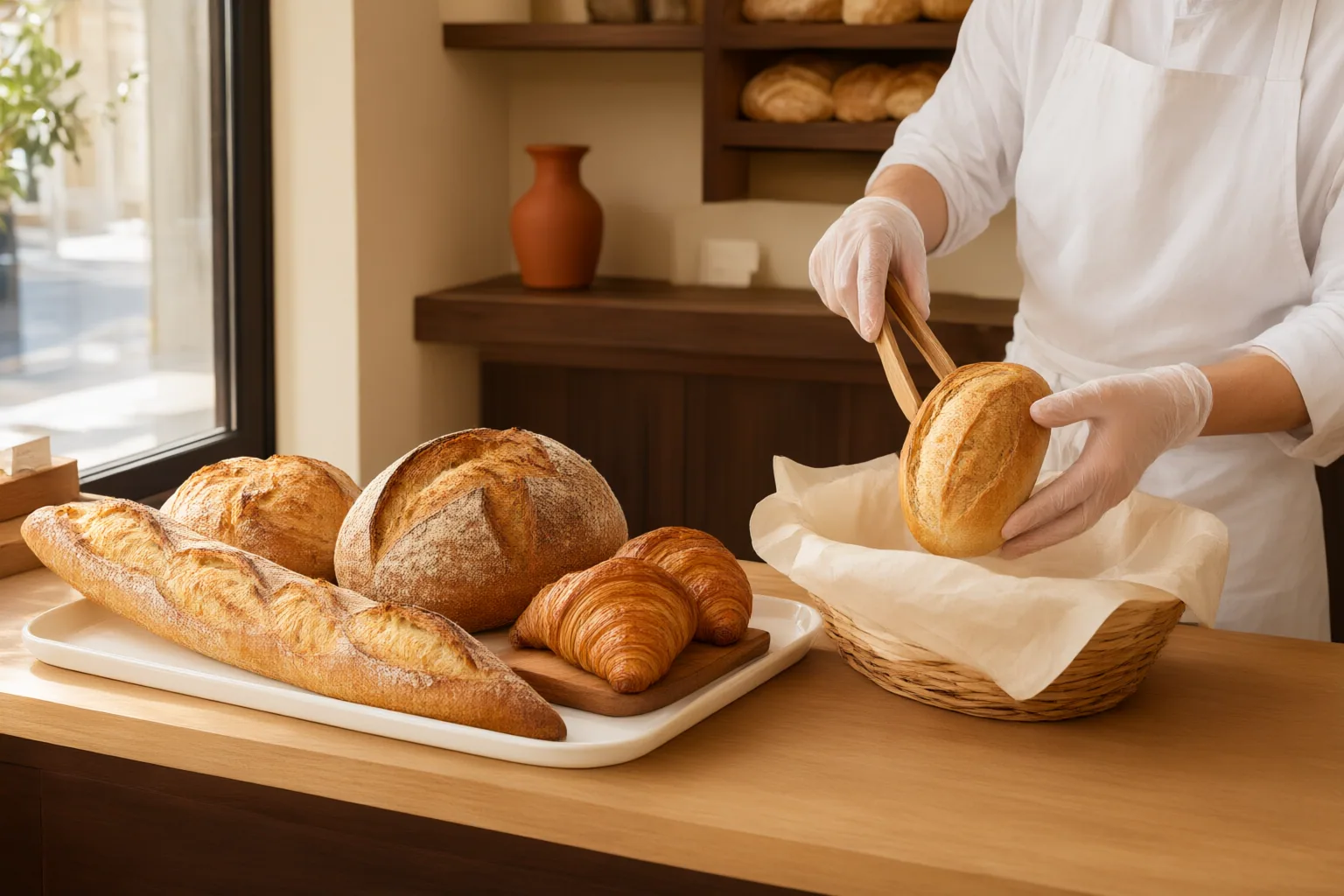
Before buying ready-to-eat bread, look for a clean serving area, a protected and orderly display, hygienic staff handling, and clean, intact packaging or food-suitable containers. These visible clues can inform your choice, but they cannot confirm every safety control used during production and storage.
Start With the Clues You Can See
Ready-to-eat food has already been processed and can be served directly, so hygiene remains important from preparation through display and service. BPOM describes hygiene and sanitation controls as covering raw materials, processes, people, premises, and equipment. For shoppers, however, only part of that system is visible.
Begin with four practical observations:
- Does the serving and handling area appear clean and orderly?
- Is the bread displayed in a way that limits unnecessary exposure or contact?
- Do staff appear to handle the food, utensils, and containers hygienically?
- Does the packaging or takeaway container look clean, intact, and suitable for holding food?
Treat these as decision-making clues rather than proof that the bread is safe. Customers generally cannot see ingredient receipt, back-room storage, preparation, or every processing step. A tidy counter also cannot establish what happened earlier in production. The useful approach is to notice what is observable, avoid making assumptions about what is not, and ask staff when a visible practice raises a reasonable question.
Check the Display, Handling, and Packaging
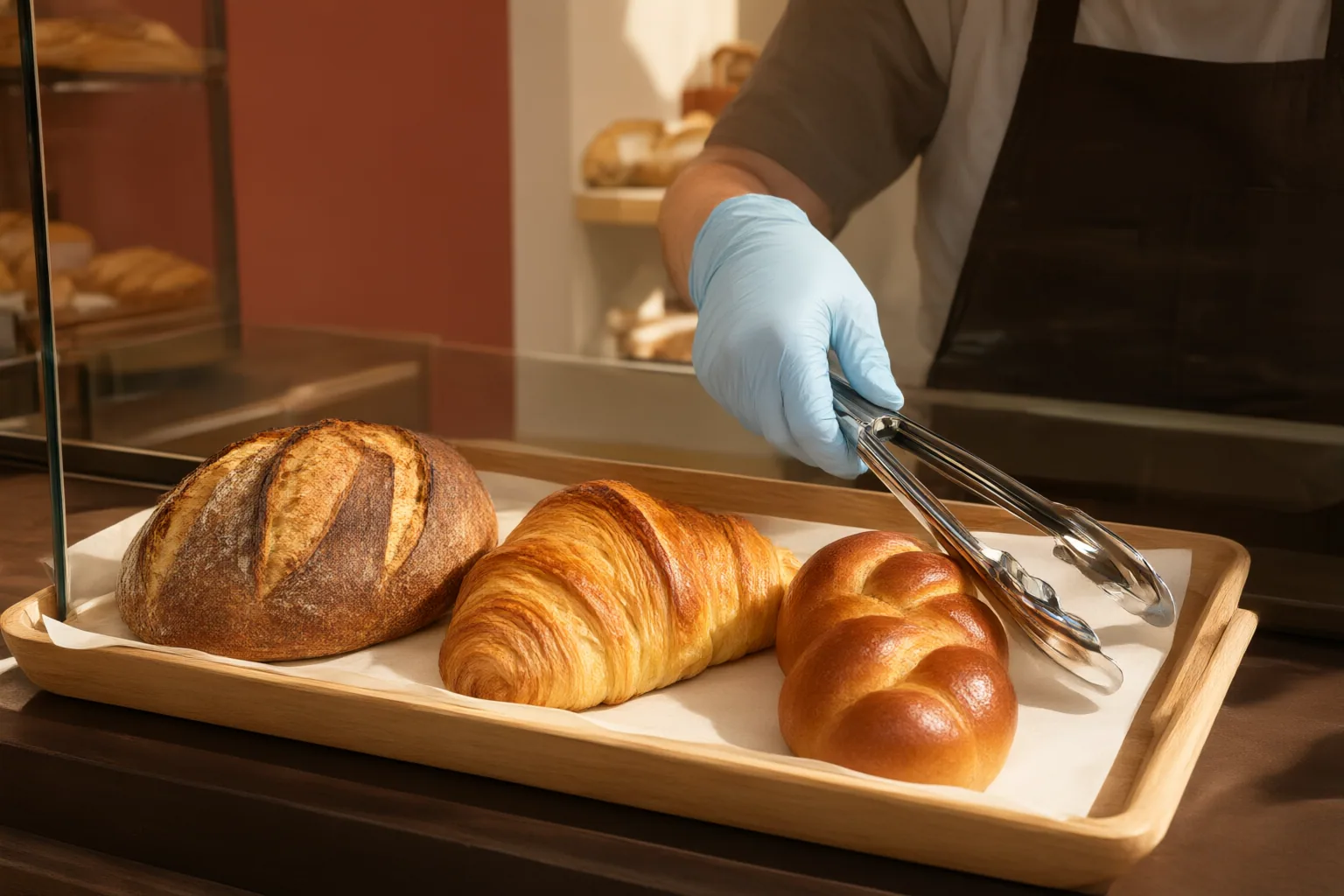
At the point of sale, examine the display and the surfaces used for serving. Look for visible cleanliness around the bread, serving equipment, and packaging area. Observe whether staff use careful handling practices and whether food containers are kept in a clean condition. These checks matter because food-safety guidance includes people, premises, equipment, display, packaging, and service—not only the final product.
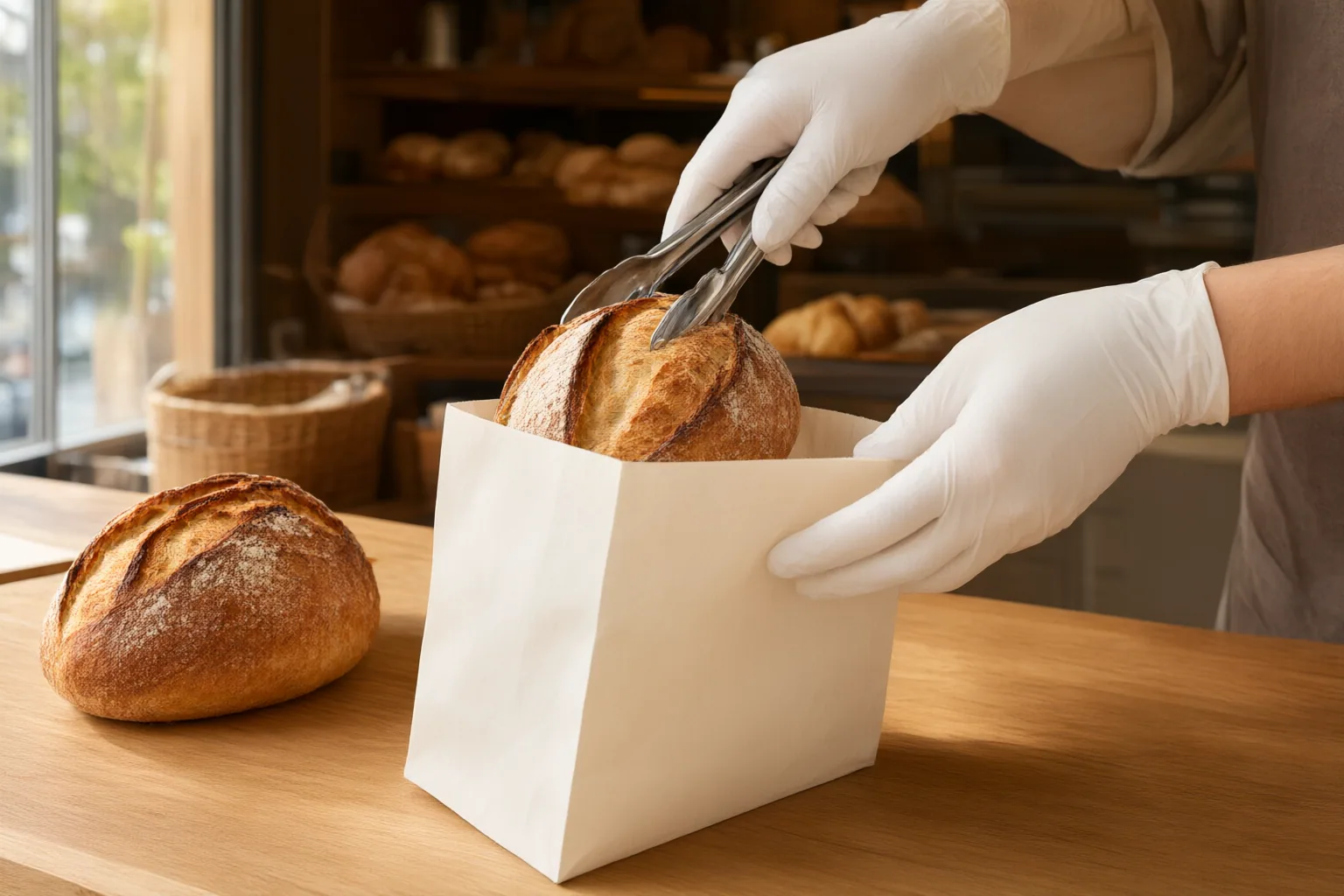
For takeaway bread, inspect the container or wrapping before accepting it. It should appear clean, intact, and appropriate for food. If packaging is visibly damaged, unclean, or handled in a way that concerns you, ask whether another item or container is available. Prodia OHI specifically highlights hygienic staff practices, food-safe containers, appropriate temperature control, and the cleanliness and safety of serving and packaging in dine-in and takeaway operations.
Use the same calm assessment during busy periods. Operational pressure does not remove the need for suitable storage, processing, packaging, and service practices. Still, do not interpret a single visible clue as a complete inspection of the business. What you see can help you decide whether to ask a question or choose another item, but it does not reveal all conditions behind the counter.
Why Storage and Process Controls Still Matter
Visible checks are only the shopper-facing part of a longer food-safety chain. BPOM’s described production flow includes receiving ingredients, storage, preparation, processing, and serving or display; some foods also require cooling and additional storage. Prodia OHI describes HACCP as a preventive system for identifying and controlling biological, chemical, and physical hazards from raw-material selection through production, distribution, and service.
This wider view explains why appearance alone cannot confirm safety. Suitable ingredients must be selected, stored according to their needs, and checked regularly. Controls may also be needed during packaging, service, and delivery. Many of these activities occur before customers arrive or in areas they cannot observe.
The practical distinction is simple: shoppers can assess visible cleanliness, display, staff handling, and the condition of containers or packaging. They usually cannot verify ingredient selection, storage conditions, production controls, or routine internal checks. Rather than treating visible clues as a guarantee, use them as a limited screening tool and ask a focused question when something seems inconsistent with careful handling.
Conclusion
When choosing ready-to-eat bread, focus on the evidence available to you: the visible handling area, the display, staff practices, and the cleanliness and condition of packaging or containers. Remember that important controls also occur during ingredient receipt, storage, preparation, processing, and distribution, so visible conditions cannot guarantee overall safety or describe any particular bakery’s full operation.
Before buying, pause and check the handling area, bread display, and packaging. If something appears unclean, damaged, or poorly handled, ask staff about it or select another item.
Disclosures and limitations
- This article was prepared with AI assistance using only the supplied BPOM and Prodia OHI source material. The sources address ready-to-eat food operations generally and do not establish conditions at Kampoeng Roti or provide bread-specific inspection standards.
- This guide offers a source-based checklist rather than a product recommendation or guarantee of food safety; no affiliate relationship or firsthand product testing is claimed.
Related reading
- Practical Bread Tips and Safe Access Guides
- What “Best Before” and “Use By” Dates Mean on Packaged Bread—and What They Do Not Tell You
Sources
- PENERAPAN HIGIENE DAN SANITASI PADA INDUSTRI PANGAN SIAP SAJI (IPSS) | Badan Pengawas Obat dan Makanan — pom.go.id
- Tips Keamanan Pangan Industri FnB Selama Ramadan – Prodia OHI — Prodia OHI
- American service, definisi, keunggulan, dan Penerapannya bagi Restoran for Professional Chefs and Restaurants by Unilever Food Solutions ID — Unilever Food Solutions ID