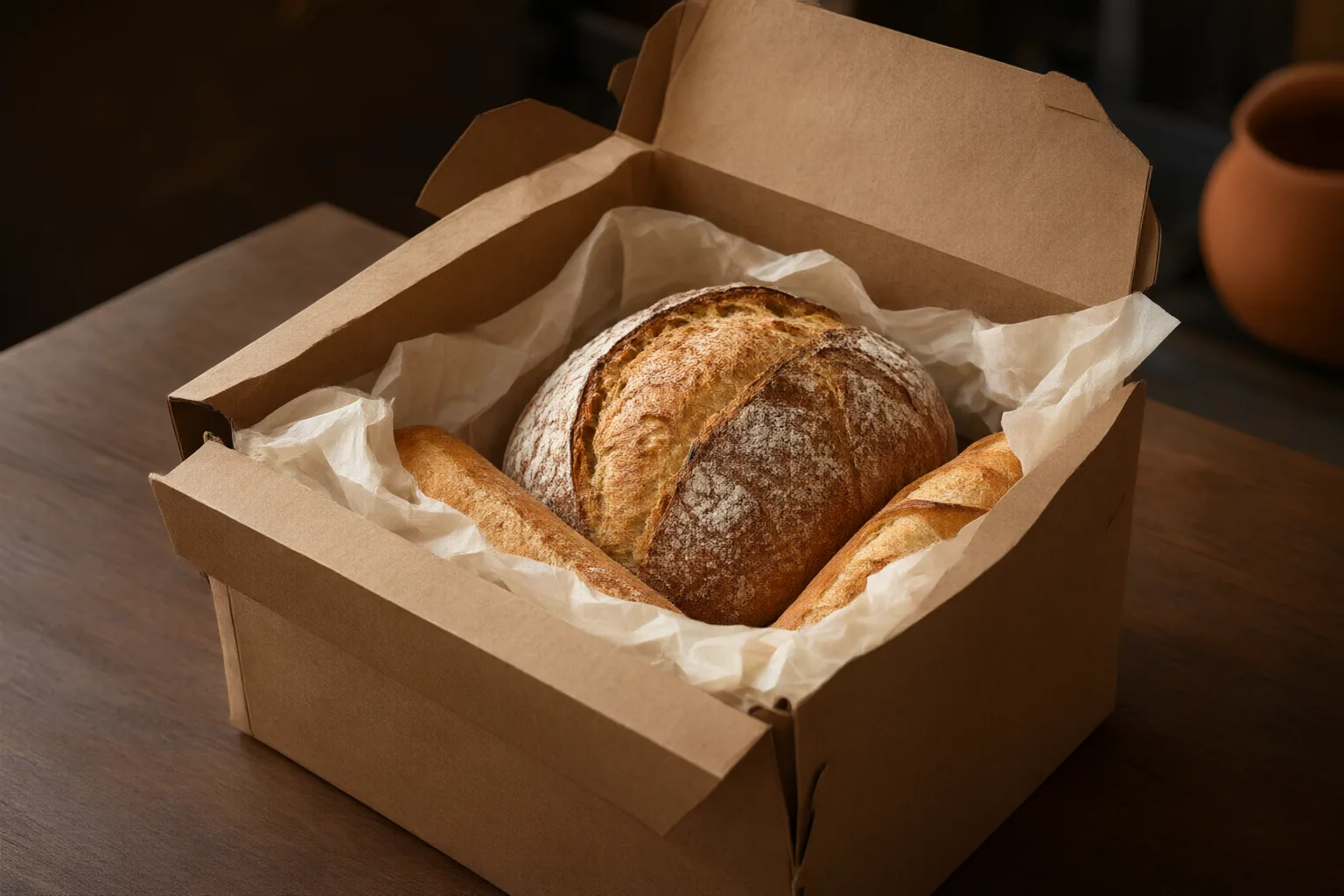
When a bread delivery arrives, check the package for crushing, tears, moisture, and an unsuitable fit. Then compare the items and visible package details with your order confirmation, review any seller-provided handling directions, and promptly report anything damaged, unclear, or inconsistent.
Start With the Package’s Condition and Fit
Begin with what you can observe. Look for crushed corners, dents, tears, punctures, opened areas, or a container that has lost its shape. Bread can be affected by compression, moisture, and transportation handling, while structural strength is one consideration in bread-box design. Packaging is also intended to protect bread during transportation, storage, and display.
Next, consider the fit. A package that is too tight may press against the bread, while one that is much larger than its contents may allow movement. Suppliers describe bread packaging in multiple sizes and formats, including bags, paperboard boxes, kraft boxes, and corrugated boxes. Some also offer custom sizes and shapes. This means an appropriate format may depend on the bread rather than a single standard container.
Record visible damage with photographs before changing or discarding the packaging. Appearance alone, however, cannot establish freshness or food safety. Compare what you see with the seller’s description and instructions, and ask the seller if the condition is unexpected.
Check Closures, Ventilation, and Visible Moisture
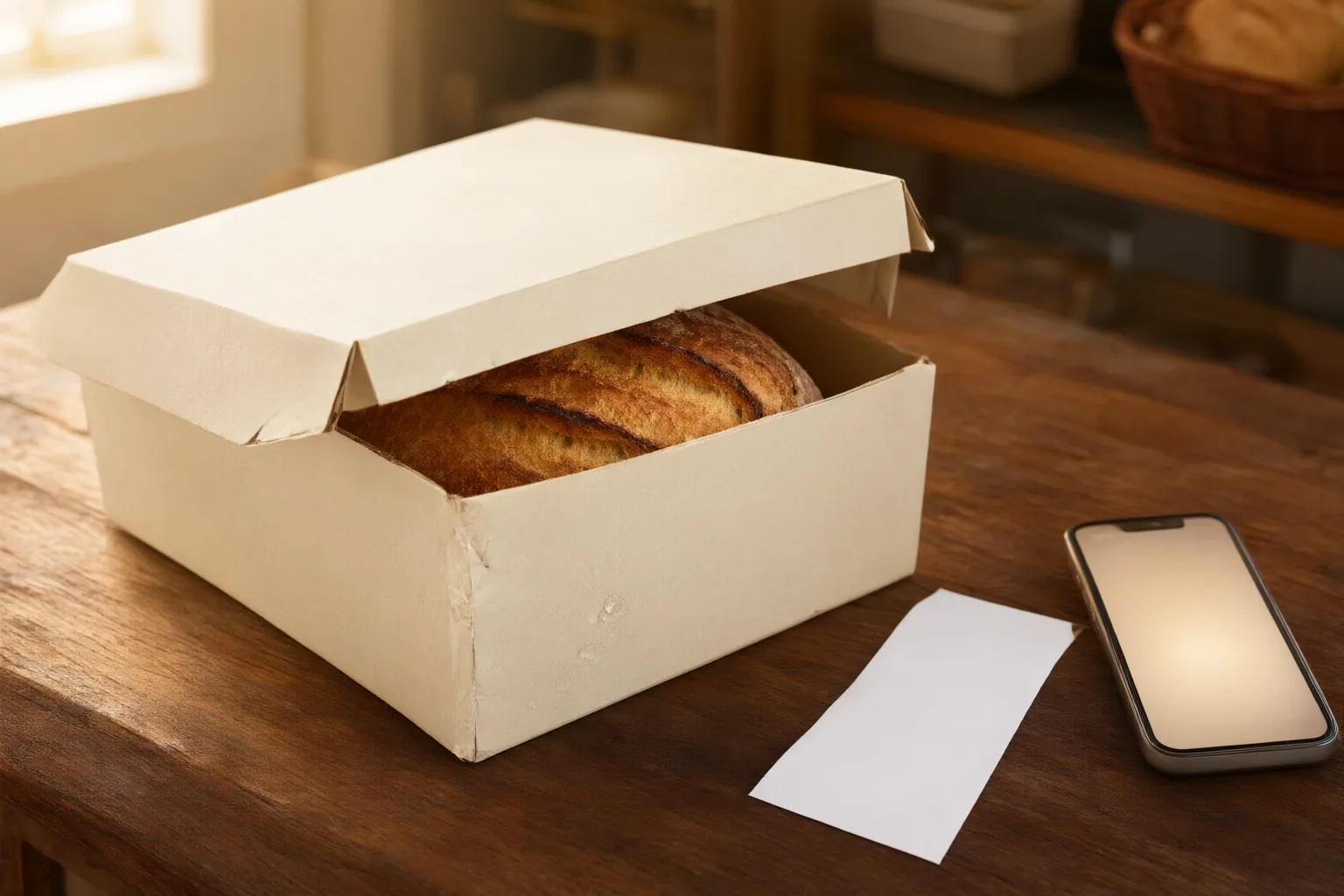
Inspect every closure without assuming that all bread packages should look the same. Check whether a flap, wrap, sleeve, or other closure remains in place. If the package has a tamper-evident seal, note whether it appears intact. Windows and cutouts can help with a visual check, but their presence is optional rather than universal.
Look for tears and weak or softened areas, especially around handles, seams, and openings. Packaging suppliers identify durability, tear resistance, closure type, and breathability as variables that can differ among packages. They also list features such as seals, windows, handles, wraps, sleeves, and grease-resistant barriers.
Check for visible condensation or dampness. Supplier guidance says fresh bread releases moisture and that ventilation may be used to help manage condensation. Do not conclude from moisture alone that the bread is fresh, spoiled, or unsafe. Instead, note where the moisture appears and compare it with any packaging or handling information supplied by the seller.
These descriptions come from packaging businesses, not independent performance tests. Treat them as a guide to observable features, and use the seller’s stated requirements to judge whether the delivered condition differs from what was promised.
Match the Delivery to the Order and Handling Information
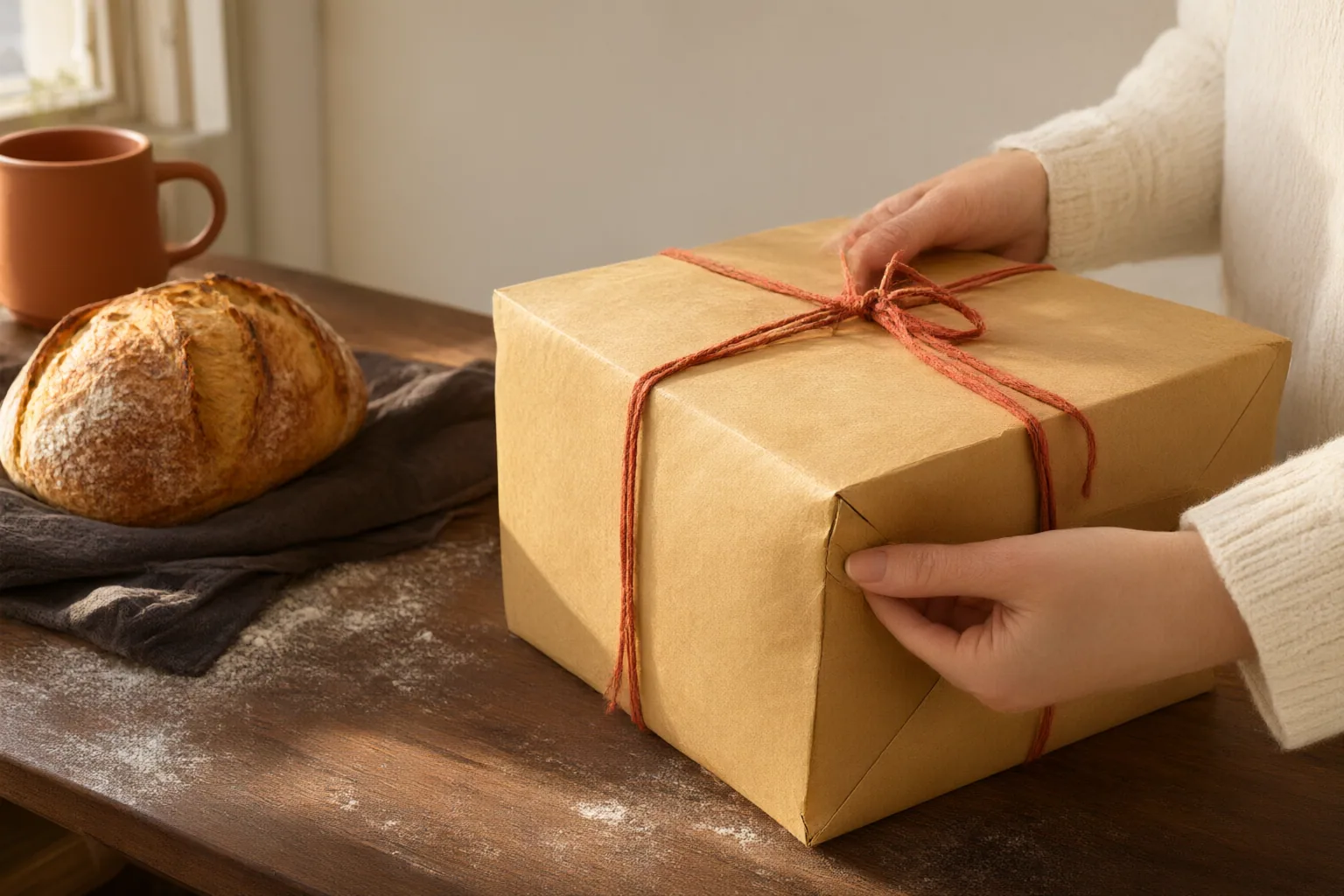
Use the order confirmation as your reference rather than relying on memory. Check the number of delivered items and match any stated bread types, package sizes, or selected packaging options. Packaging guidance emphasizes checking order details, and the available formats can vary by dimensions, materials, closures, and other features.
Read the visible package text carefully. If the seller stated measurements, labels, or options in the confirmation, compare them with the delivery. Packaging production guidance describes checking text, measurements, and artwork during proofing, which illustrates why exact details deserve attention. Do not assume that an unstated feature—such as a window, handle, ventilation opening, or particular closure—was included.
Finally, locate any seller-provided storage or handling directions and follow them as written. The supplied research does not establish the practices of any particular bakery, so general packaging observations should not replace the seller’s instructions. If directions are absent, contradictory, or difficult to understand, keep the confirmation and package information available when requesting clarification. For damage or discrepancies, document the package, affected items, and relevant order details before contacting the seller.
Conclusion
Use a simple arrival checklist: inspect the package’s condition and fit, review its closures and visible moisture, match the delivered items and stated options to the order confirmation, and follow the seller’s handling directions. Keep photographs and order information when something does not match. Contact the seller promptly for clarification or resolution if the package is damaged, the order is inconsistent, or the instructions are unclear.
Disclosures and limitations
- This article was prepared with AI assistance from the supplied research package and was not based on personal purchase, product use, testing, or interviews.
- The cited information comes from packaging suppliers or manufacturers and may be promotional rather than independent performance evidence. No products are recommended, and no affiliate relationship is presented.
Related reading
- Our Story: Bread for Everyday Moments
- Choosing Bread for an Easy Meal Between Classes: A Practical Guide for Students
Sources
- Custom Bread Packaging Boxes | Eco-Friendly Bakery Boxes USA – Custom Boxes Inc. — Custom Boxes Inc.
- Bread Packaging Boxes | Custom Bakery Boxes — Good Carton – Quality Carton Production
- Custom Bread Packaging Boxes — Eco Custom Packaging
- Bread Packaging Boxes | Custom Bread Box Packaging — CP Food Boxes
- Bread packaging — Small Box Company
- Packaging Bread for Delivery — Packnwood
- Customizable Bread Packaging Boxes — Refine Packaging
- Custom Bread Packaging Boxes | Durable, Food-Safe & Eco-Friendly — Custom Designs Boxes