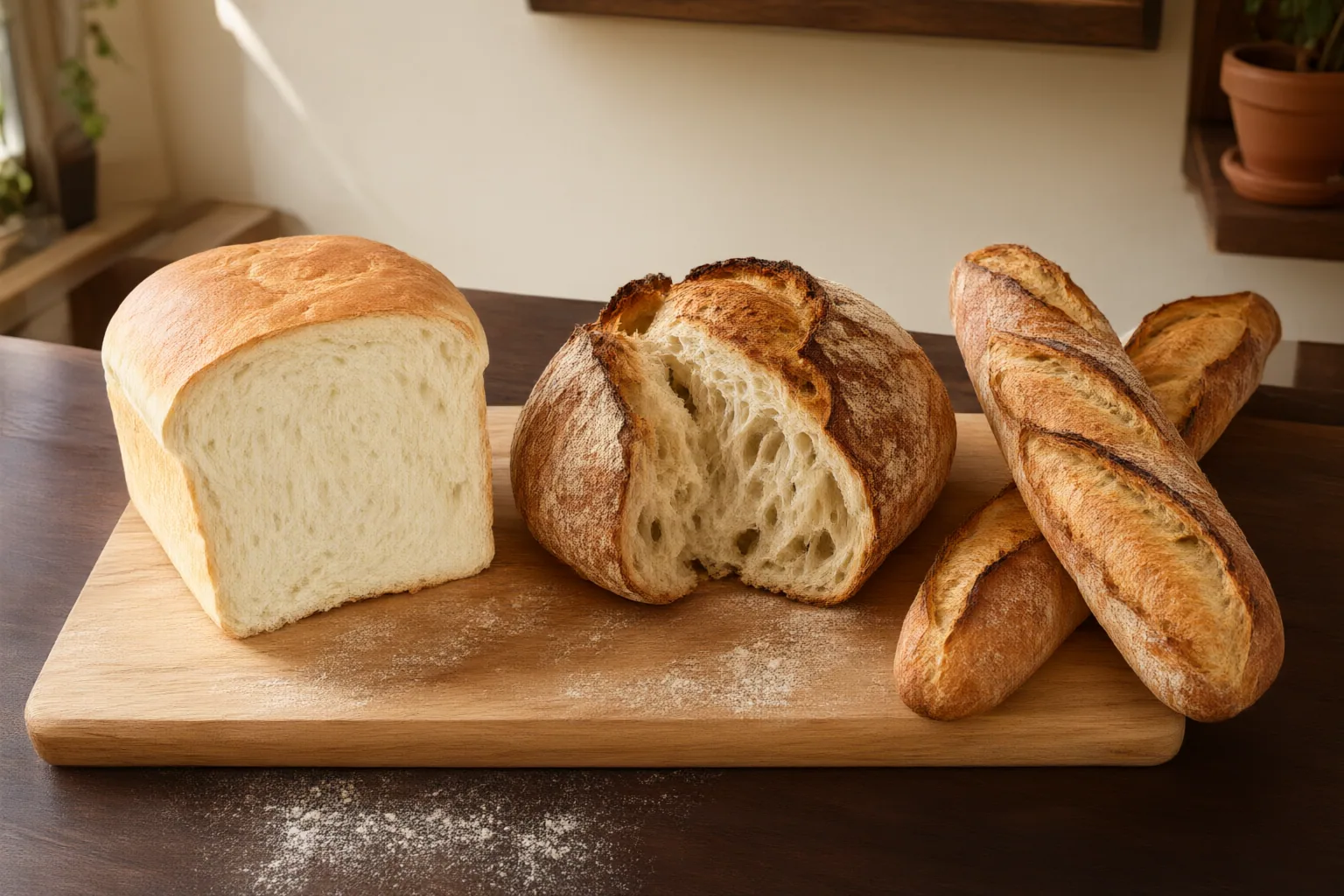
Choose bread by matching its texture to the job. Read crust and crumb descriptions separately: a soft, even crumb can support sandwiches, while firmer, chewier, or more open bread may work better for toast, dipping, or serving with a meal.
What Bread Texture Descriptions Actually Tell You
Bread texture descriptions may refer to different parts of a loaf or different aspects of mouthfeel. “Soft” generally points to low resistance when biting, while “chewy” signals that the bread requires more repeated chewing. “Springy” describes elasticity—the crumb’s tendency to recover after light pressure. “Dense” and “airy” usually help distinguish a compact interior from one with a more open structure.
“Crisp” or “crusty” commonly describes the exterior rather than the crumb. This distinction matters because one loaf can have a crisp exterior and a chewy interior. The words are not necessarily competing labels.
It is useful to separate four questions when reading a description:
- How hard or soft is the bread?
- Does the crumb hold together cohesively?
- How much chewing does it require?
- Does it feel elastic or spring back?
Then check whether each term refers to the crust, the interior crumb, or the overall eating experience. That gives a clearer picture than choosing from a single word such as “soft” or “crisp.”
Match the Crumb and Crust to How You Will Use the Bread
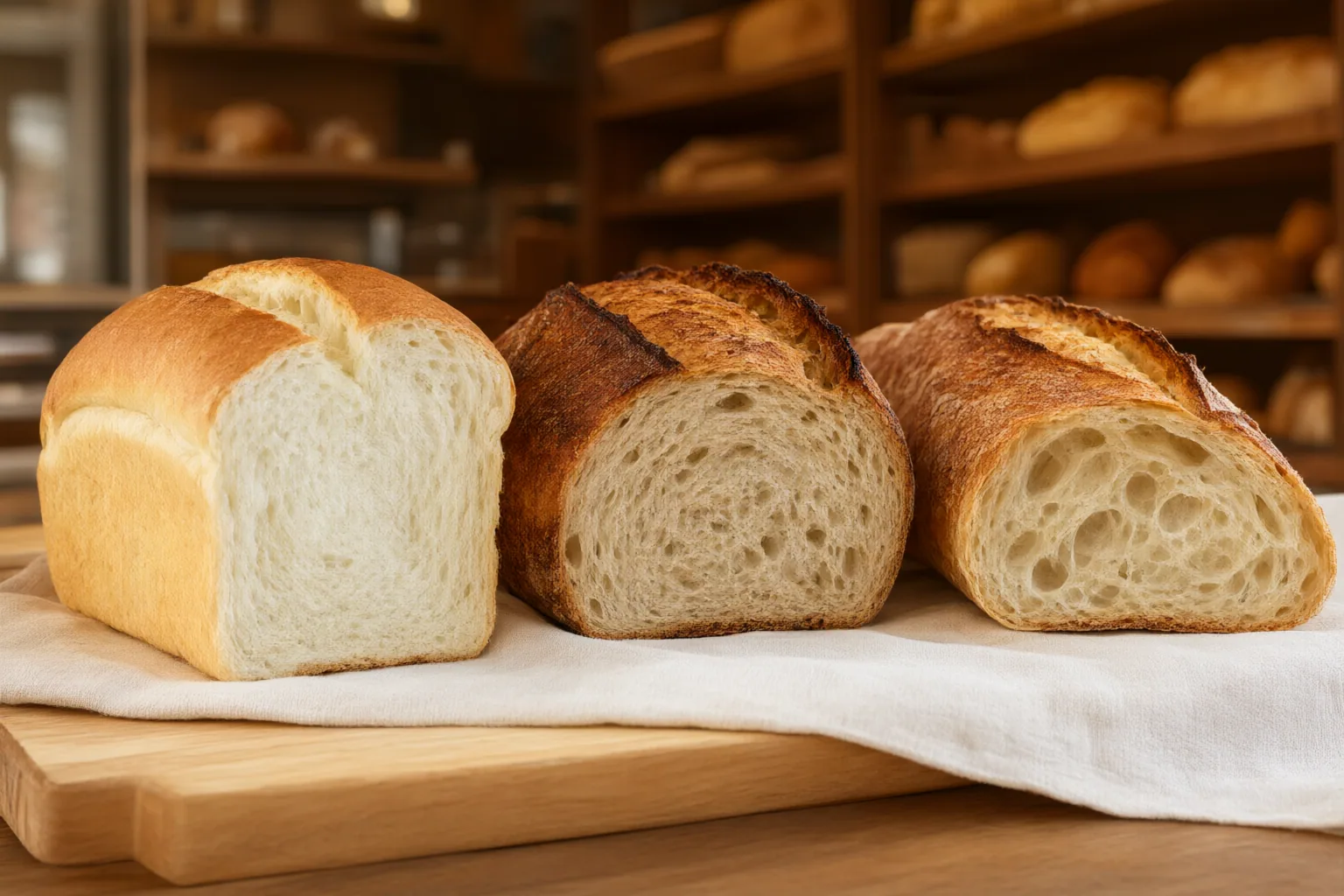
Start with the way you plan to serve the bread. For sandwiches with sliced fillings or spreads, a close, even crumb is practical because it provides a continuous surface and makes ingredients less likely to slip through. A uniform, cohesive crumb is also more resistant to crumbling. A thin, soft crust can make an everyday sandwich easier to bite.
For toast or bread served alongside a meal, a firmer crumb or thicker crust may be desirable. The extra resistance adds contrast and chew. If the bread will be dipped or used to absorb an accompaniment, a more open crumb can be useful because its interior spaces can take in liquid.
That same open structure may be less convenient for wet sandwich fillings, which can pass through larger holes. Conversely, a dense crumb may not provide the lighter texture some shoppers want. Neither structure is automatically better; suitability depends on the intended use.
A simple comparison order is:
- Decide whether the bread is for sandwiches, toast, dipping, or a meal.
- Look at the crumb description: close and even, open, soft, or firm.
- Read the crust description separately: thin and soft or thicker and more resistant.
- Select the combination that best supports the filling, accompaniment, and preferred bite.
How Texture Develops and How to Check Freshness
Bread texture results from several interacting factors. Higher-protein flour is associated with chewier bread. Added fats can inhibit gluten formation and contribute to a finer, tighter, more tender crumb. Hydration, fermentation, kneading or mixing, and temperature can also change the internal structure and final texture.
These influences help explain why two breads can feel very different even when both are fresh. Texture should therefore be judged against the expected bread style rather than against a universal idea that fresher bread must always be softer.
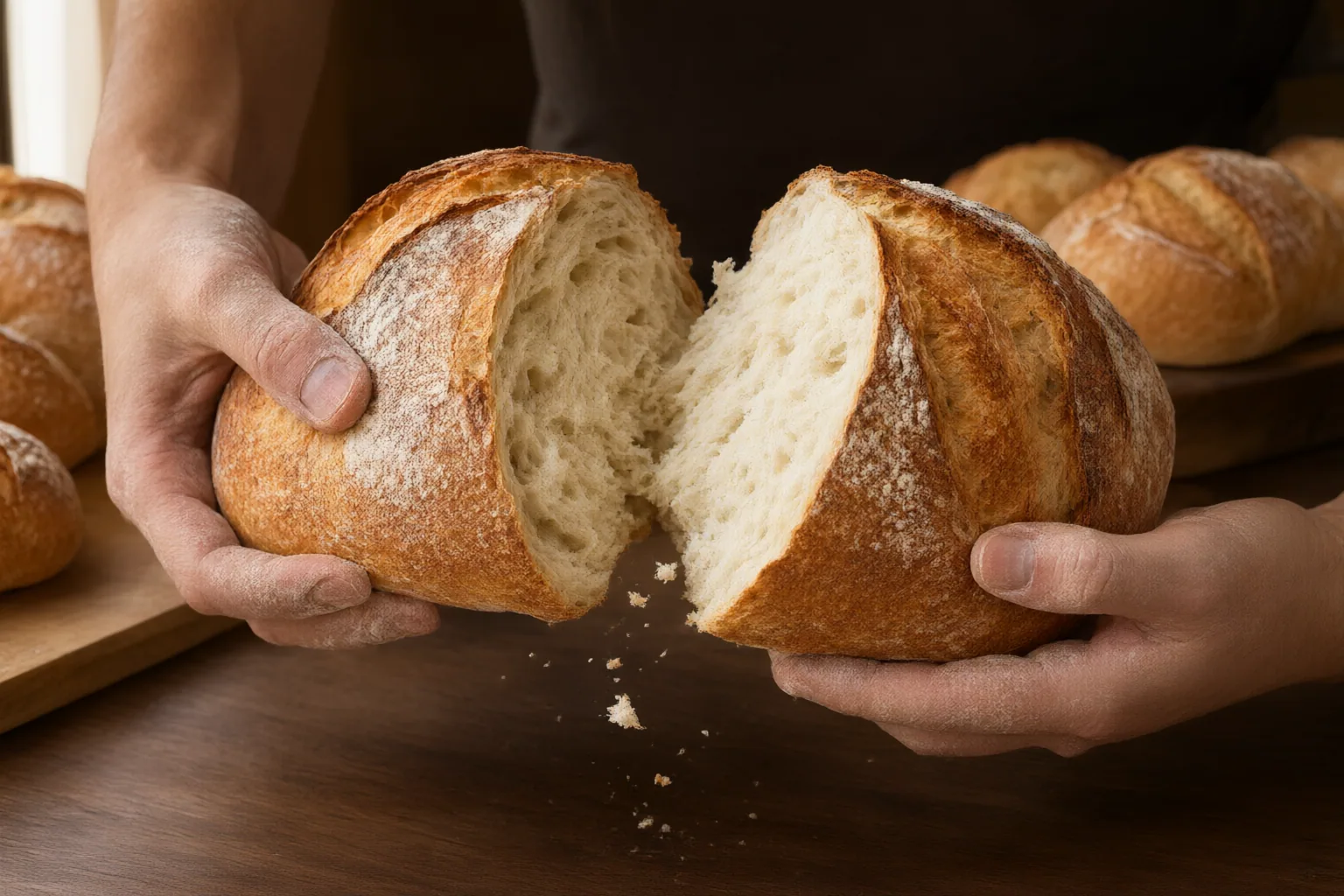
For a soft loaf, look for a crumb that springs back lightly after gentle pressure. For a crusty style, freshness includes retaining resistance at the exterior. A crusty loaf should not be rejected merely because its surface is firm, just as softness alone does not establish that another loaf is fresh.
When possible, compare the current feel with the texture promised by the description. Check the crust and crumb independently, then consider whether their condition still fits the kind of bread you intend to buy.
Conclusion
Choose by use first and texture second. Identify whether you need bread for sandwiches, toast, dipping, or a meal; interpret crust and crumb terms separately; and judge freshness according to the expected style. Before selecting a loaf, compare those three points with the bread available to you and choose the texture combination that best fits how you will serve it.
Disclosures and limitations
- This article was prepared with AI assistance using only the supplied research package and its identified sources. It does not make claims about specific products, ingredients, prices, availability, ratings, or reviews.
Related reading
- Our Story: Bread for Everyday Moments
- How to Choose a Contact Channel for a Kampoeng Roti Outlet Question
Sources
- How to Choose Bread for Texture, Use and Freshness — Vendably Shopping
- The Texture Of Bread — Kingsley Sullivan
- The Science Behind Soft Bread Vs Crusty And Chewy (One Thing Makes All The Difference) – Chowhound — Chowhound
- Understanding Bread Texture: A Comprehensive Guide – GekBuzz — GekBuzz
- Analyzing the Texture of your Products | Blog | BAKERpedia — BAKERpedia
- Bread Adjectives: Describing Words & Examples — Starts With
- 20+ Best Words to Describe Bread, Adjectives for Bread – EngDic — EngDic
- Crumb Texture: The Signature of Quality — kpmanalytics.com
- Describing Dough: Mastering Adjectives for Bread – Grammar Tactics — Grammar Tactics