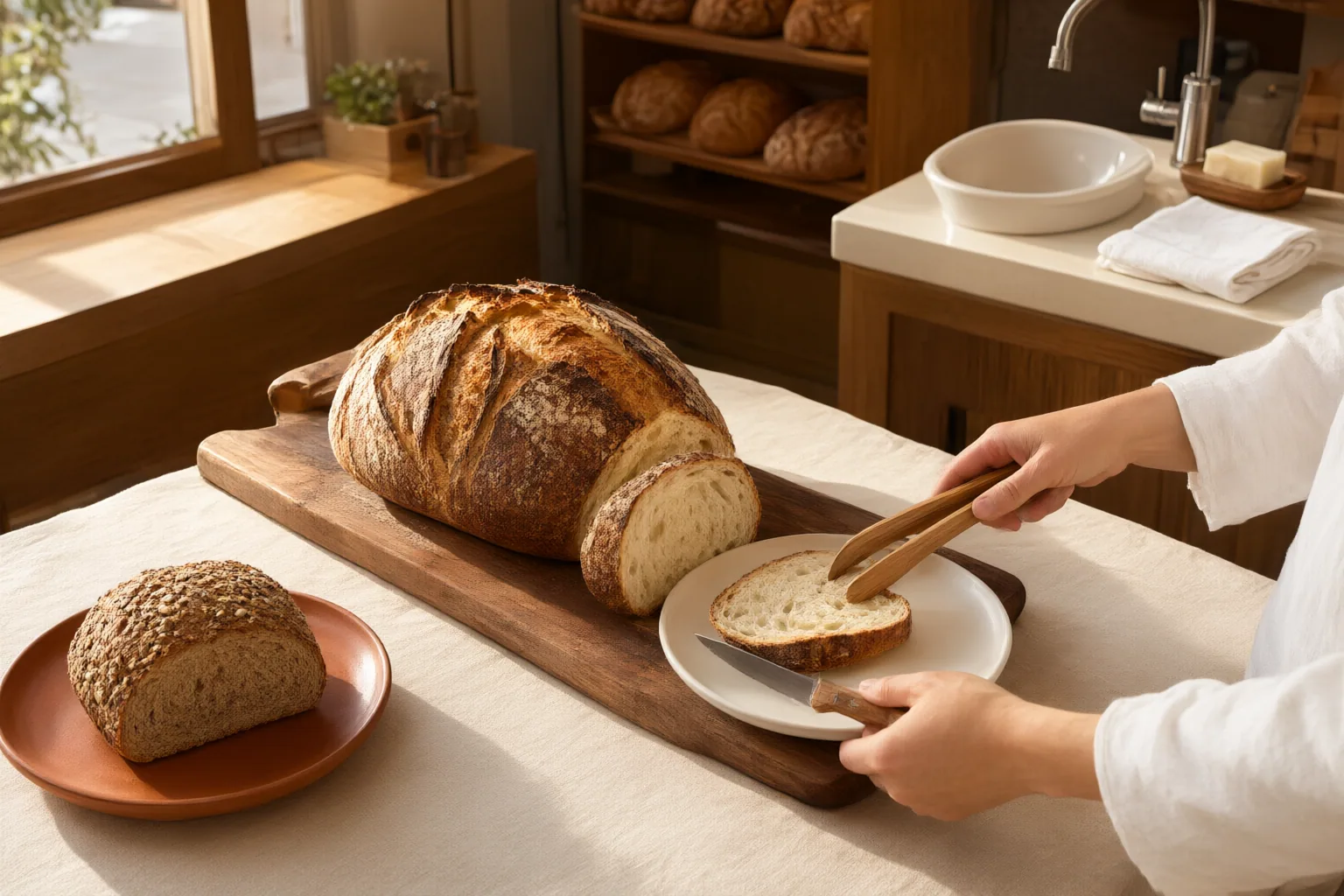
To reduce repeated hand contact, avoid passing one loaf from guest to guest. Plan for one person to divide and distribute the bread, ask everyone handling food to wash with soap and water first, and keep clearly identified alternatives separate for guests with dietary restrictions.
Why a Communal Loaf Creates Repeated Hand Contact
Communal bread service often means passing a loaf around the table so each person can tear off a piece. That familiar approach also means several guests touch the same loaf. For a family trying to reduce shared handling indoors, the service pattern—not the bread itself—is the practical issue to reconsider.
The available source describes this pass-and-tear tradition, but it does not test whether any alternative serving method prevents illness. A reasonable goal is therefore narrower: organize service so fewer people need to handle the shared bread. This is practical planning guidance, not a claim that a particular arrangement has been proven to eliminate contamination or health risk.
Plan the Bread Service Before Guests Gather
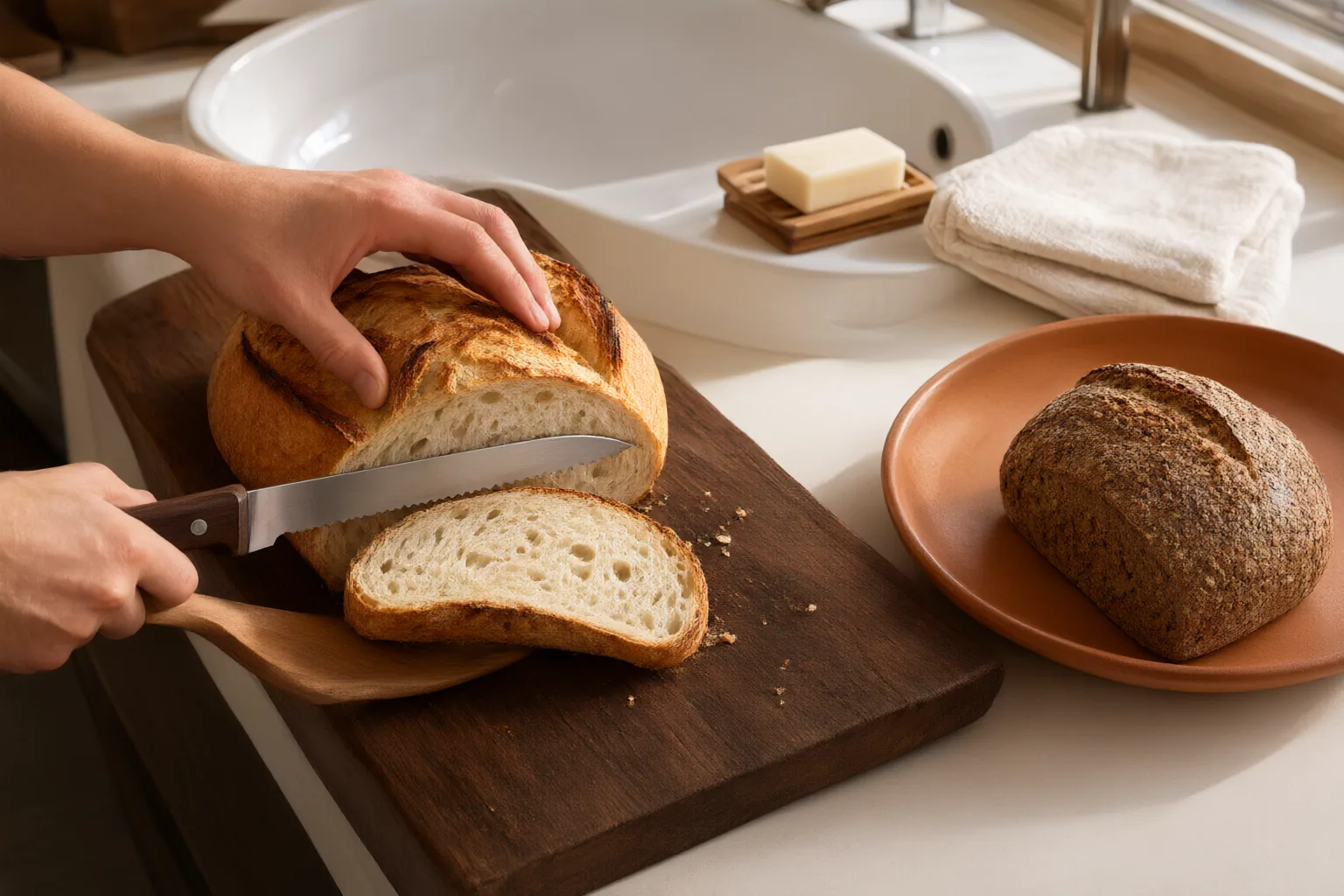
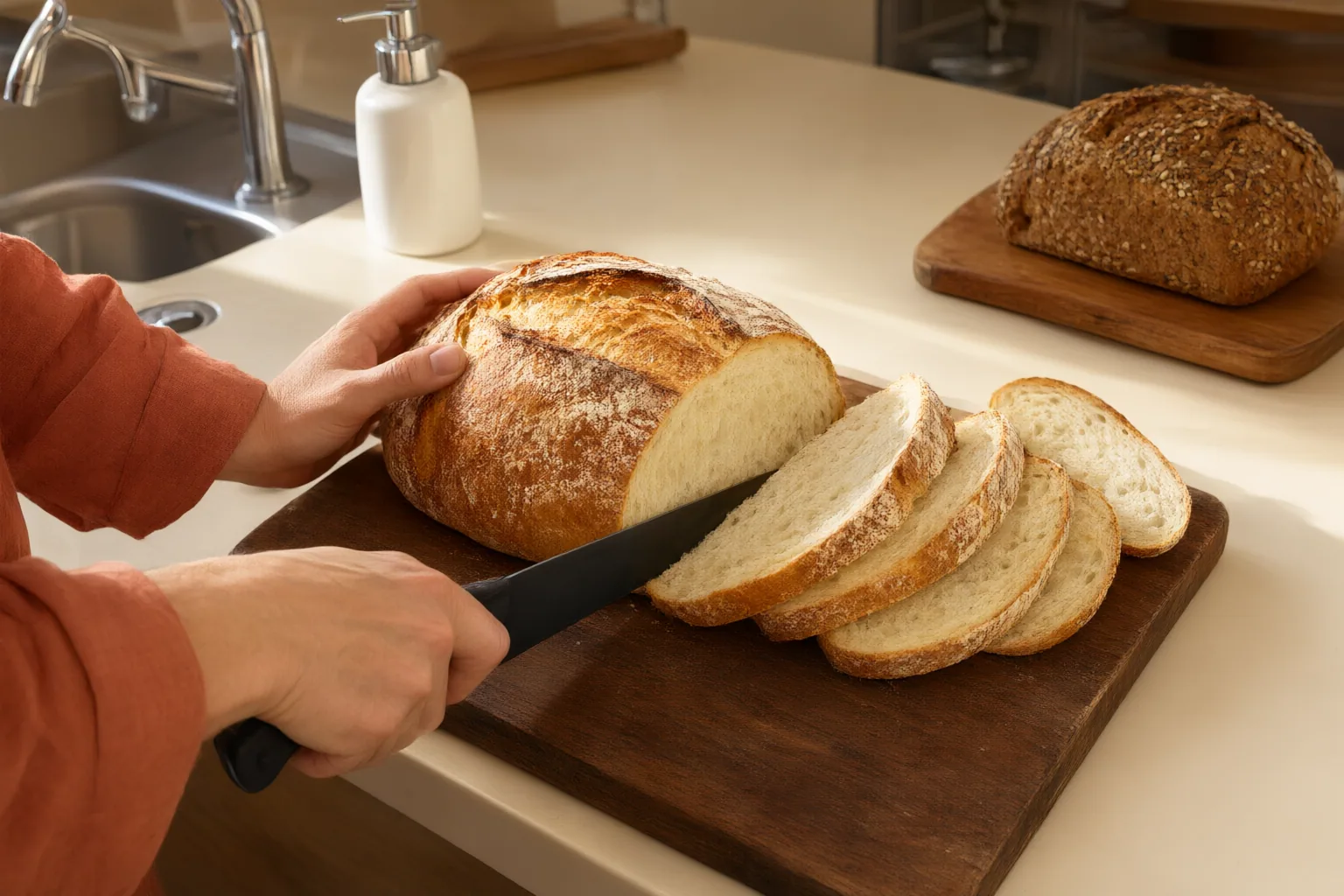
Choose who will handle and distribute the bread before everyone sits down. One straightforward editorial option is to have a designated person divide the loaf and place portions where guests can take them without touching the remaining bread. This changes the usual flow from “everyone handles the loaf” to “one person prepares and distributes it.” Keep the arrangement easy to understand so guests do not automatically begin passing the loaf.
Hosts might also consider separate portions, wrappers, or serving tools if those choices suit the gathering. However, the supplied sources do not compare these approaches, so none should be presented as a tested or superior solution. Their value here is organizational: they may help a host design a flow with fewer people touching the same bread.
Think through the sequence as well as the setup: decide where the bread will be placed, who will divide it, and how portions will reach the table. If more bread is needed later, use the same planned flow instead of returning to communal handling.
Pair Lower-Contact Service with Handwashing and Inclusive Choices
Ask the designated server—and anyone else who will handle food—to wash their hands with soap and water before bread service. Make the handwashing point clear before the meal, particularly when children are present or people have recently handled shared electronic devices.
A reported classroom demonstration offers limited context for this routine. Separate bread slices were touched by unwashed hands, soap-and-warm-water-washed hands, sanitizer-treated hands, and classroom Chromebooks; another slice was left untouched. After about a month, the report described substantial visible mold on the Chromebook-rubbed slice and said the slice touched by soap-washed hands appeared cleaner than the one touched by unwashed hands. This was an observational teaching activity, not a controlled food-safety study. Its visible mold results do not establish illness risk or measure contamination, so they should not be used to promise that handwashing makes shared bread risk-free.
Inclusion also needs advance planning. Ask guests to disclose relevant dietary restrictions and prepare suitable alternatives where possible. Keep those choices clearly identified and separate from the communal bread so guests can recognize them and avoid unintended mixing. The source supports considering dietary needs and offering alternatives, but it does not provide ingredient-specific or allergen-control procedures. Hosts should therefore avoid making unsupported claims that an item is safe for a particular guest.
Conclusion
A practical indoor plan has three parts: reduce how many people handle the shared bread, establish soap-and-water handwashing before food service, and prepare clearly identified alternatives for disclosed dietary needs. These steps organize the gathering around less repeated handling without overstating what the available evidence proves.
Before guests arrive, select one person to divide and distribute the bread, identify the handwashing point, and confirm how suitable alternatives will be kept separate. Share that simple plan with the household so everyone knows the serving flow when the gathering begins.
Disclosures and limitations
- This article was prepared with AI assistance using only the two sources identified in the supplied research package; their findings and limitations have been summarized rather than independently verified.
- The serving suggestions are editorial planning guidance, not results from a controlled comparison of bread-serving methods. This article contains no product recommendations or disclosed affiliate relationship.
Related reading
- Practical Bread Tips and Safe Access Guides
- Baked or Fried? How Catalog Descriptions Can Clarify a Bakery Item’s Cooking Method
Sources
- | AMAZING BREAD — AMAZING BREAD
- Students Touch Bread Slices With Washed and Unwashed Hands. A Month Later, Here’s What the Bread Looks Like — Green Matters