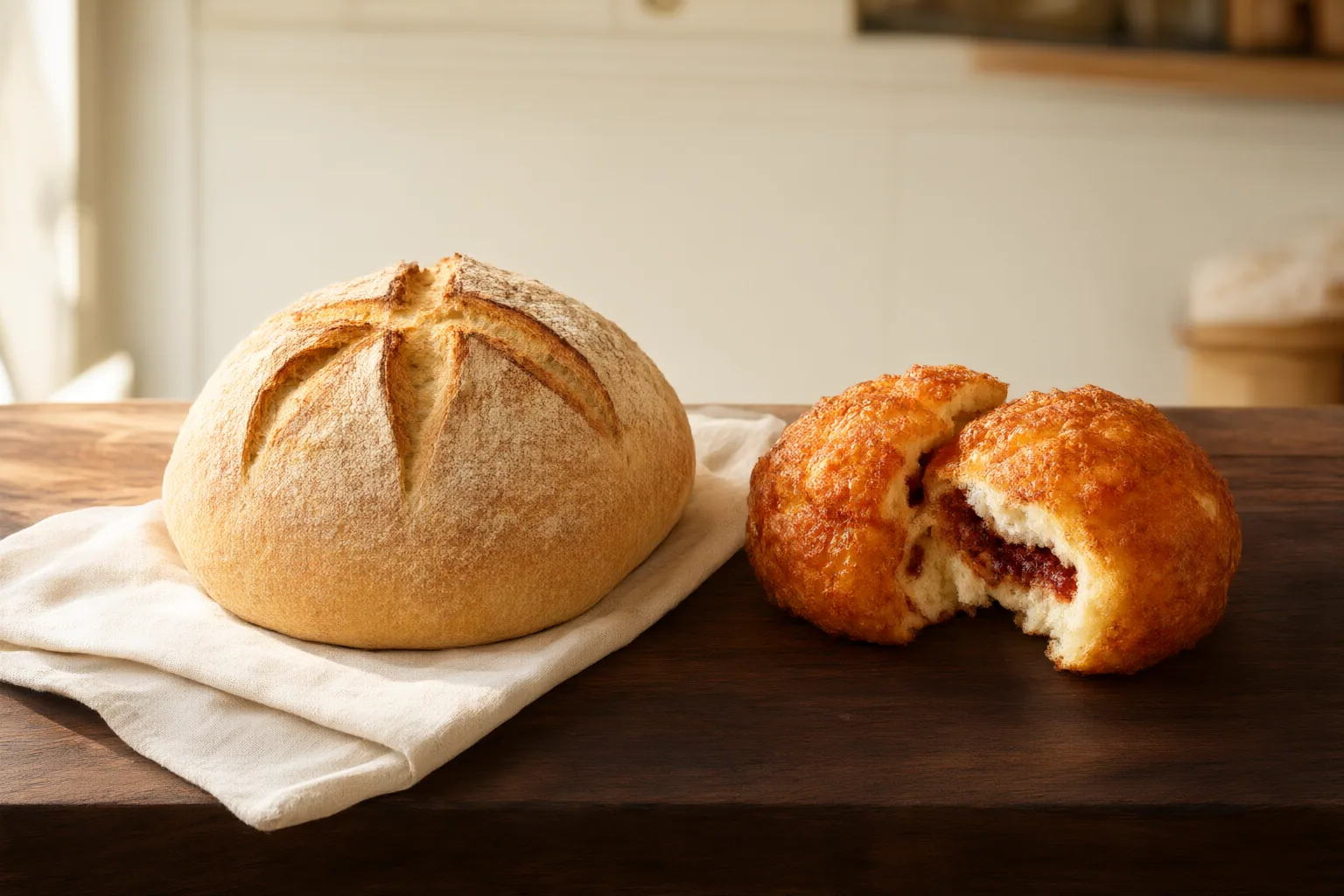
The clearest catalog descriptions state the cooking method directly. Look for wording such as “oven-baked,” “deep-fried,” or “pan-fried” instead of relying on an item’s name, coating, appearance, or texture.
What “Baked” and “Fried” Mean
A reliable description answers the baked-or-fried question with an explicit preparation term. In the supplied cooking-method comparison, baking means cooking food with dry heat in an oven, while frying means cooking it in hot oil. These definitions make phrases such as “oven-baked” and “deep-fried” more informative than a broad label like “bakery item.”
The distinction matters because the category in which a food is sold does not necessarily reveal how it was cooked. A description should therefore present the method as a factual preparation detail, not leave shoppers to infer it from the product’s placement, shape, or name.
Why an Item Name or Texture Is Not Enough
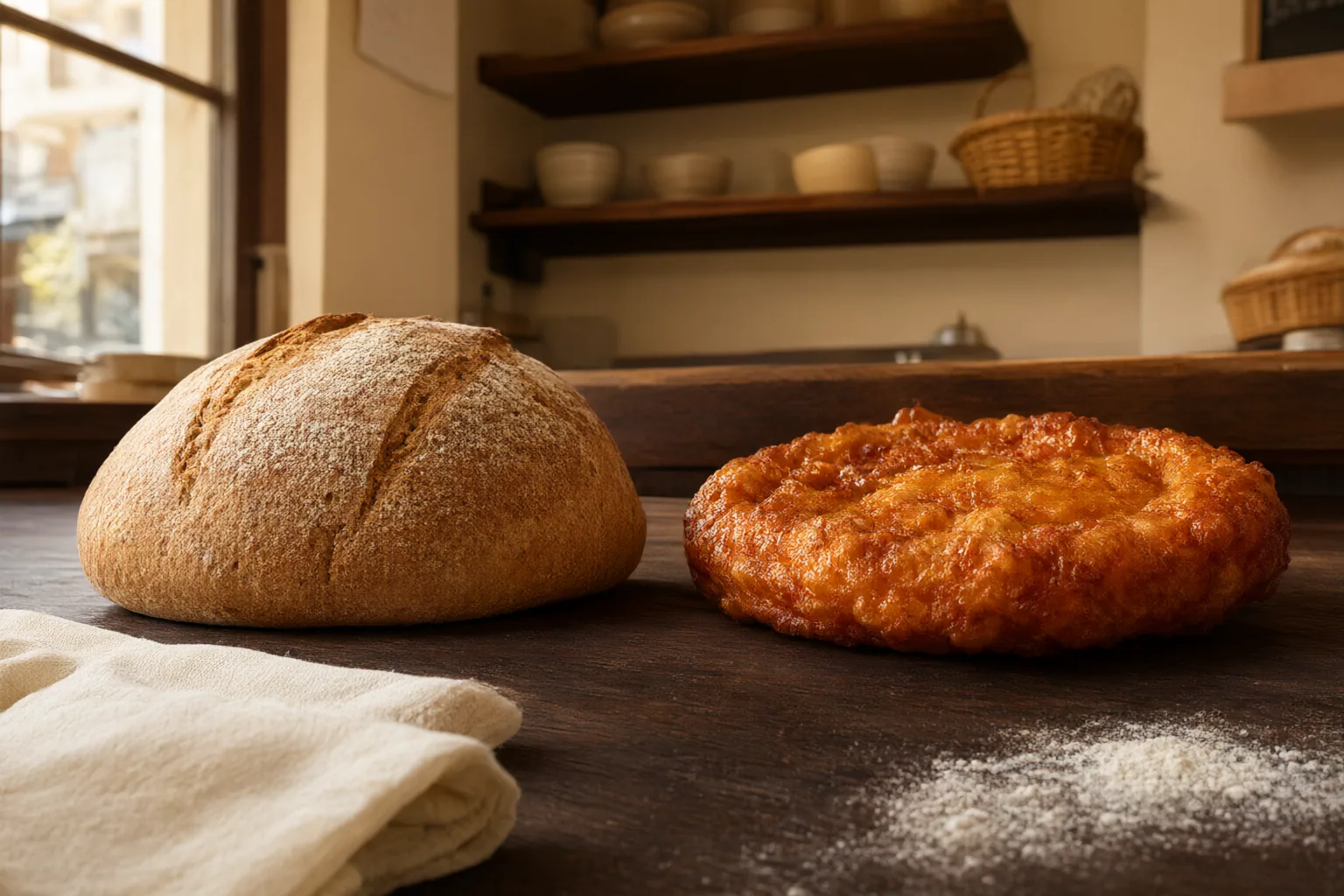
Bread-related foods are prepared in several ways. The supplied list describes a croquette as breaded and deep-fried, French toast as fried bread and eggs, a crouton as rebaked bread, and toast as bread exposed to dry heat. These examples show why the word “bread” alone cannot settle whether an item is baked or fried.
A coating is not conclusive either. One supplied recipe gives two methods for the same coated item: sautéing it in butter or coconut oil for a fried version, or placing it in a preheated oven for a baked version. The name and coating remain similar while the cooking process changes.
Texture language can also be ambiguous. Although the cooking comparison associates frying with crispness, crisp or toasted bread can result from rebaking or other dry-heat treatment. Words such as “crispy,” “golden,” or “coated” may describe an item, but they should not replace a direct method statement. Shoppers need wording that identifies the actual process rather than an inference based on appearance or expected texture.
Catalog Details Shoppers Should Look For
Start with the preparation line or main product description. Useful method labels include:
- Oven-baked: directly identifies dry oven heat.
- Deep-fried: states that the item is cooked by immersion in hot oil.
- Pan-fried: distinguishes frying in a pan from oven baking and deep-frying.
- Rebaked, toasted, or dry-heated: provides more specific context when the process is neither adequately described as simply baked nor fried.
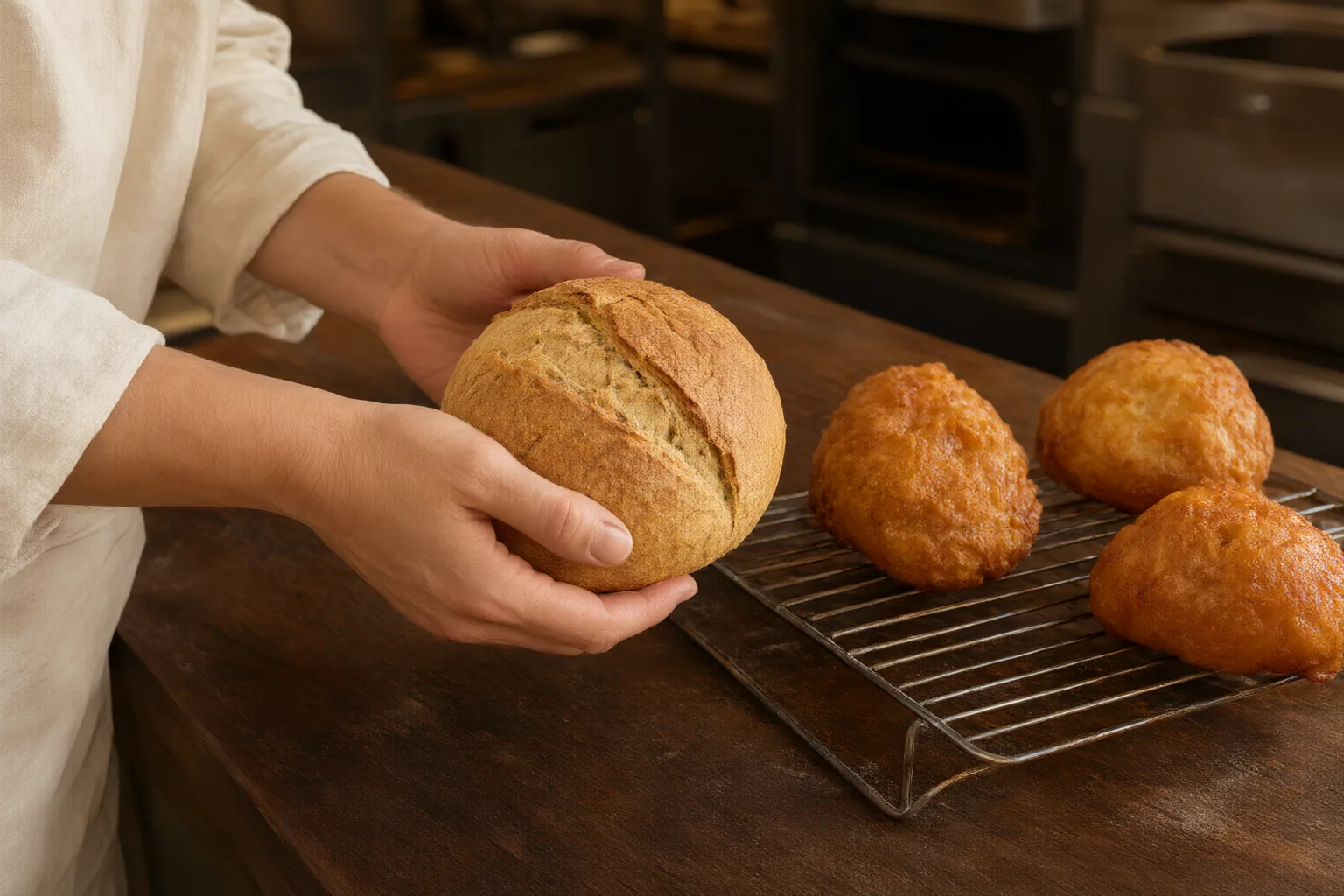
Treat category and appearance terms separately. “Bread,” “pastry,” “coated,” or “crispy” may help describe a food, but the supplied examples show that they do not independently establish its cooking method. A complete catalog entry should keep the method clear rather than requiring shoppers to decode texture words or photographs.
Also check whether the description refers to the finished item or only one component. The supplied grocery supply-chain overview notes that raw ingredients may be processed, combined, and cooked or baked before finished products are packaged and distributed. Consequently, a reference to a processed or baked component does not necessarily explain every preparation step for the finished food.
If no cooking method appears, the available evidence does not justify guessing. Ask the bakery whether the finished item is oven-baked, deep-fried, pan-fried, or prepared by another method. This is general catalog-reading guidance, not verification of how any particular bakery prepares its products.
Conclusion
Explicit cooking-method wording is the strongest catalog clue. Names, coatings, and texture descriptions can remain similar even when preparation changes, while bread-related foods may be fried, baked, rebaked, or exposed to other dry heat. Check each description for a precise method; if it is missing, ask the bakery to confirm whether the finished item is oven-baked, deep-fried, or pan-fried before making your choice.
Disclosures and limitations
- This article was prepared with AI assistance using only the supplied research sources; it does not verify any specific bakery’s products or production practices.
- No products are recommended, and no affiliate offer, price, ingredient, availability, or ordering claim is presented.
Related reading
- Practical Bread Tips and Safe Access Guides
- Condensation Inside a Sealed Bread Package: What Shoppers Can Do
Sources
- How Grocery Store Supply Chains Work — oracle.com
- Baked or Fried: Which Cooking Method Is Better? 🍟🍞 — meanvsmean.com
- List of bread dishes – Wikipedia — en.wikipedia.org
- Fried or Baked Purslane Recipe — ediblewildfood.com