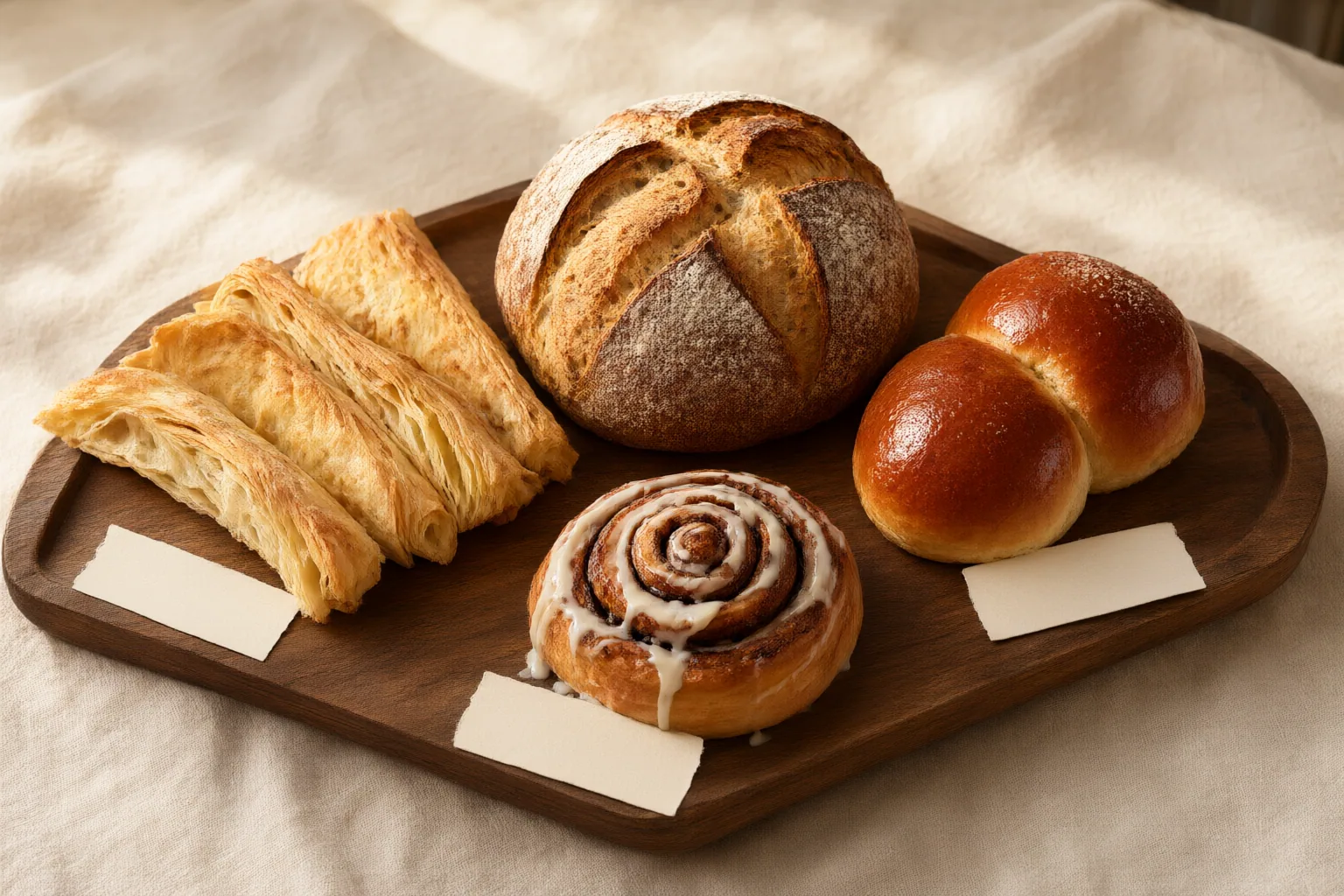
Separate each bread selection into a clearly defined tray area, then label it only with distinctions stated in the current Kampoeng Roti product description. A simple row or cluster for each selection can help guests identify their options without introducing unsupported claims about ingredients, allergens, texture, or serving requirements.
Choose Identifiers From Current Product Descriptions
Start by reviewing the description available for every bread you plan to serve. Choose the clearest stated identifier, such as a named bread type, filling, or another explicit distinction. Copy the meaning accurately onto a short label, but do not add details that the description does not provide.
A third-party mixed-tray example shows the general value of identifying selections through both bread and filling: it distinguishes sandwiches made with sourdough, rye, ciabatta, and a brioche bun alongside their named fillings. This example supports the labeling method only; it does not establish the names, ingredients, or characteristics of any Kampoeng Roti product.
Keep each label factual and compact. If a Kampoeng Roti description supplies only a product name, use only that name. Do not infer a filling from appearance, describe an unstated texture, or turn an editorial serving suggestion into an official product classification. When information is limited, a modest label is more reliable than a detailed but unsupported one.
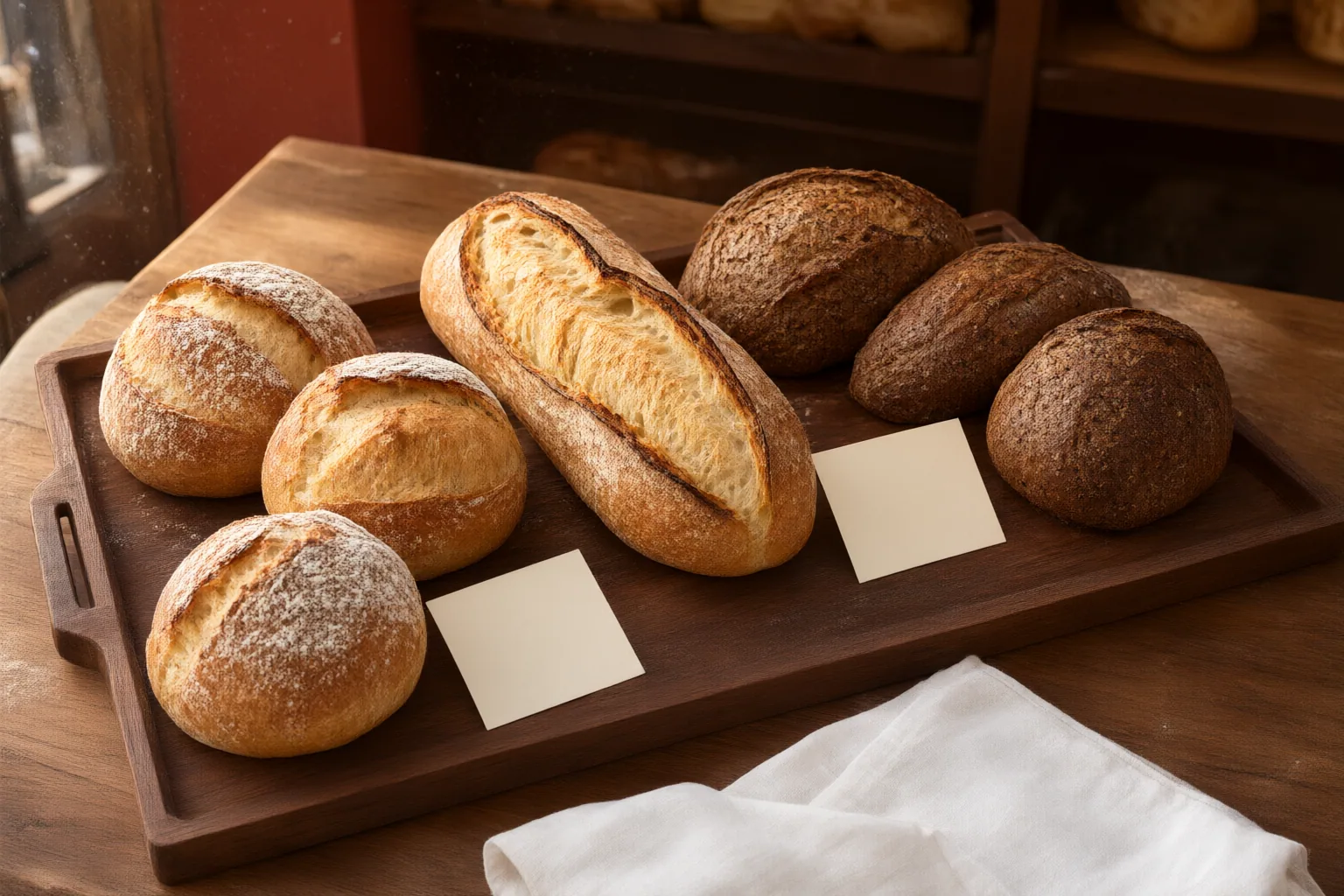
Separate Selections Into Clear Tray Zones
Give every selection its own visible zone. Depending on the tray and the number of breads, that zone can be a row, a compact cluster, or one side of the tray. Place the matching label immediately beside the selection rather than collecting all labels at a distance. Consistent spacing and label placement make the relationship between each bread and its description easier to follow.
Use only as much tableware as the stated serving cues support. Kampoengroti guidance treats references to cutting, portioning, spooning, creams, or plated desserts as useful planning cues, not as official classifications. When those cues appear, they can inform whether a knife, spoon, plate, or other simple item may be helpful. When they are absent, do not claim that an elaborate setup is necessary.
Before serving, check that pieces have not drifted between zones and that no label could reasonably point to two selections. The goal is an orderly tray that communicates stated distinctions, not a decorative arrangement that implies facts the descriptions never supplied.
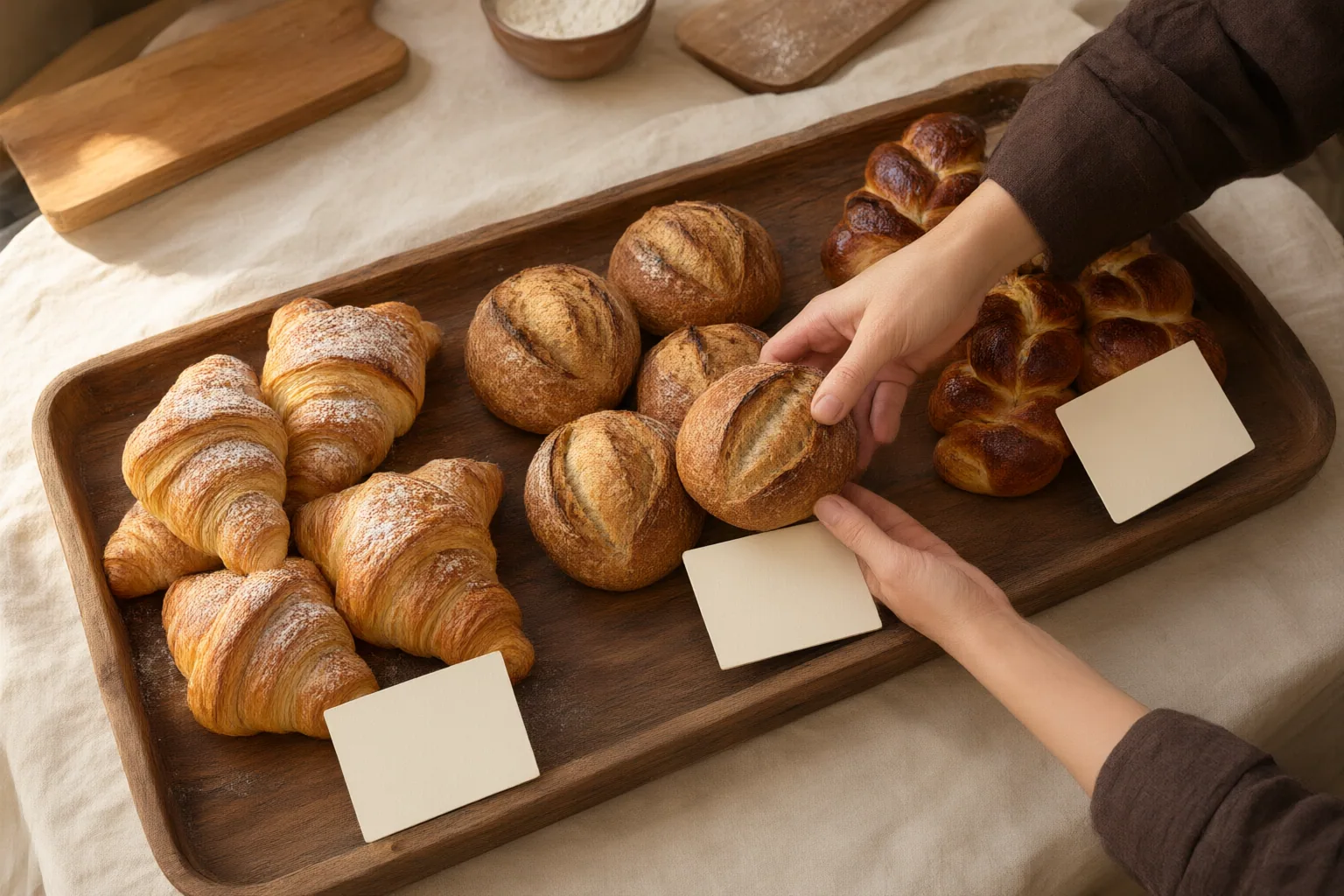
Describe Texture and Serving Needs Carefully
Treat crust and crumb as separate characteristics. The crust describes the exterior, while the crumb describes the interior; one bread can therefore have a crisp exterior and a chewy interior. If a current product description explicitly states both characteristics, a label can preserve that distinction. If it mentions only one—or neither—leave the missing information unstated.
Choose the arrangement according to the intended serving use first, then compare any available crust and crumb descriptions separately. This prevents a broad term such as “crisp” or “soft” from being applied to the entire bread when the source may describe only one part.
Also separate product facts from hosting decisions. Putting selections into rows, choosing label cards, and deciding where to place utensils are editorial arrangement choices. They should not be presented as official Kampoeng Roti serving rules. Details such as ingredients, allergens, fillings, texture, and utensil needs should appear only when the relevant current description expressly provides them. If those details are unavailable, the safe approach is to identify the selection with the limited information that is actually stated.
Conclusion
A useful mixed tray follows a short sequence: review the available product descriptions, select one or more stated identifiers, assign each selection a distinct row or cluster, and place its label beside that zone. Texture wording should distinguish crust from crumb, while extra tableware should follow explicit serving cues rather than assumptions.
This method helps guests connect each label with the intended selection without turning appearance or editorial judgment into product fact. The cited mixed-tray example demonstrates the general labeling principle, but it is not evidence about Kampoeng Roti’s catalog.
Before presenting the tray, compare every label with the current Kampoeng Roti description. Remove any ingredient, allergen, filling, texture, availability, or serving claim that the description does not state, then confirm that every label clearly points to only one tray zone.
Disclosures and limitations
- This article was prepared with AI assistance from the supplied research package. Its factual boundaries come from Kampoengroti serving guidance, a general bread-texture guide, and a third-party mixed-tray example; the third-party example does not verify Kampoeng Roti product details.
- This guide does not recommend a specific product or state an affiliate relationship. Any future commercial links or product recommendations should disclose applicable affiliate relationships clearly.
Related reading
- Explore Kampoeng Roti Products
- How to Choose Kampoeng Roti Bread to Pair With Soup, Eggs, and Savory Dishes
Sources
- How to Spot Kampoeng Roti Breads That May Require a Plate — Kampoengroti
- Philly Gourmet Tray (serves 10) | Tipsy Catering — Tipsy Catering |
- Bread Texture Descriptions: How to Choose Soft, Chewy, or Crisp — Kampoengroti