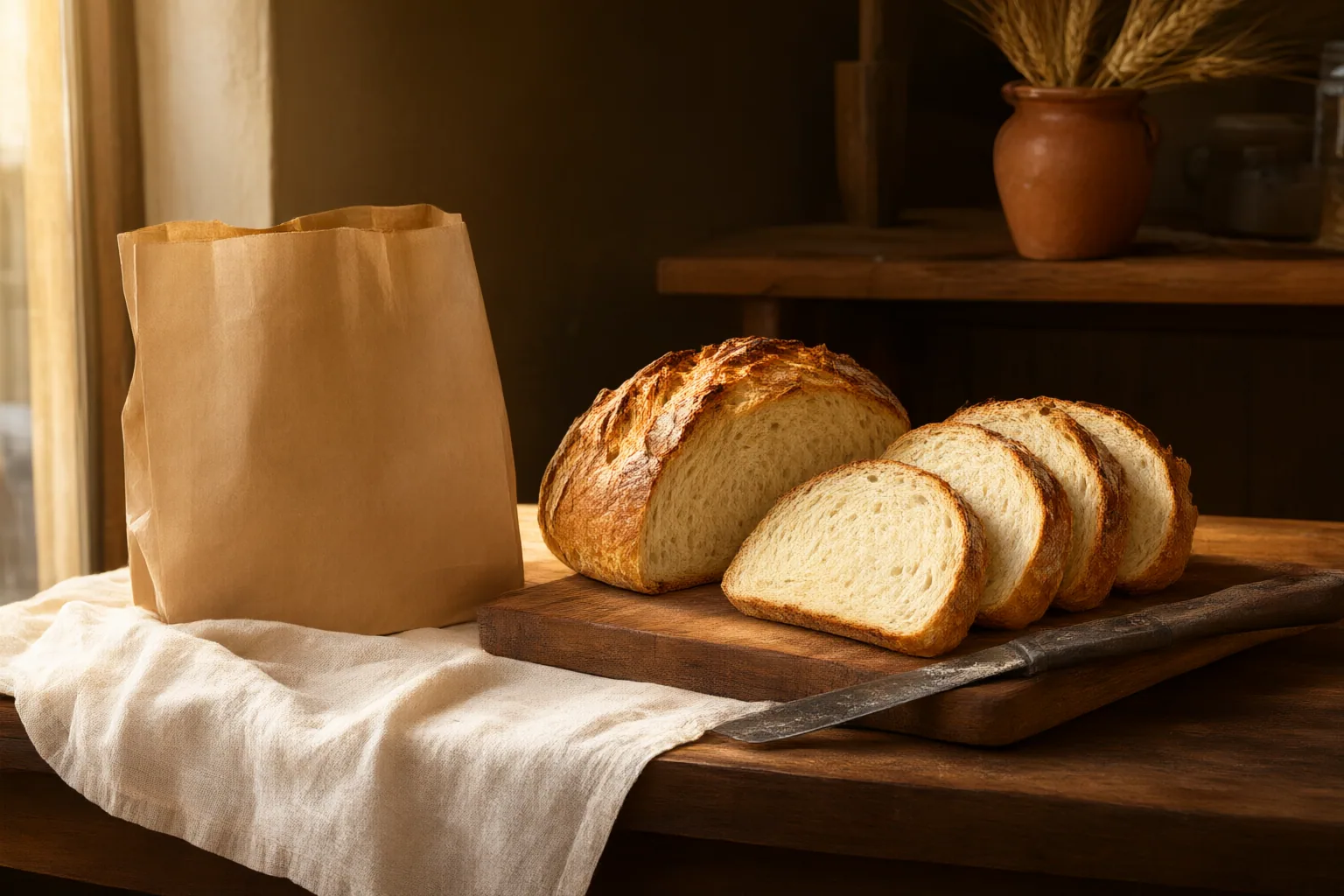
To compare packaged bread portions fairly, read four details together: the serving description, its weight in grams, the number of servings in the container, and the nutrition values stated for each serving. Slice count by itself does not provide the same context.
Start With the Labeled Serving Size and Gram Weight
Begin with the serving-size line rather than assuming that every slice represents an equivalent portion. FDA guidance says a Nutrition Facts label presents serving size using an appropriate household measure, such as a slice, followed by the corresponding metric amount in grams. The household measure explains what the serving looks like, while the gram figure provides another basis for comparing portions across packages.
Keep in mind that serving size describes the amount people typically consume. It is not a recommendation for how much a particular person should eat. This distinction matters when evaluating bread for a meal: the labeled serving supplies the basis for the nutrition figures, but it does not prescribe an individual portion.
When two breads use different serving descriptions or gram weights, their per-serving nutrition figures do not necessarily represent equal amounts of food. Check both parts of the serving statement before making a comparison.
Compare Servings per Pack Before Comparing Nutrition
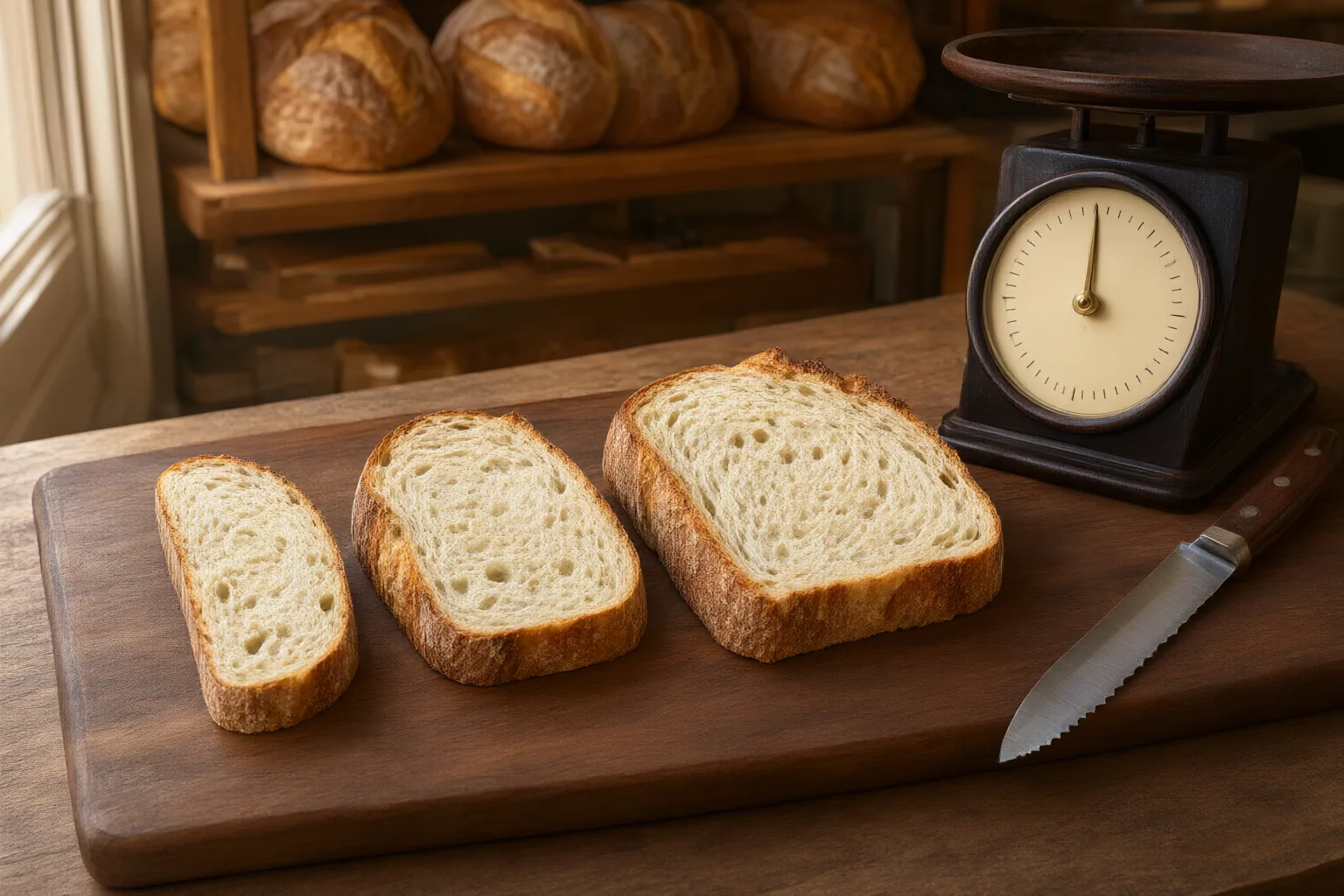
Next, check the number of servings per container. A bread package can contain more than one serving, and nutrition information is usually presented for a single serving. Some containers may also show information for the entire package, so identify which column or set of figures you are reading before comparing it with another product.
Relate the amount you expect to eat to the serving defined on that package. If the amount is two labeled servings, it represents twice the calories and twice the nutrients stated for one serving. Reading only the per-serving numbers without checking serving size and servings per container can therefore produce a misleading comparison.
A source from Food For Life illustrates this with one of its breads: where its product label defines one slice as one serving, a sandwich made with two slices counts as two servings. That example applies only to the specific label described. It should not be treated as a rule that every bread slice equals one serving.
Use a Consistent Basis Across Bread Packages
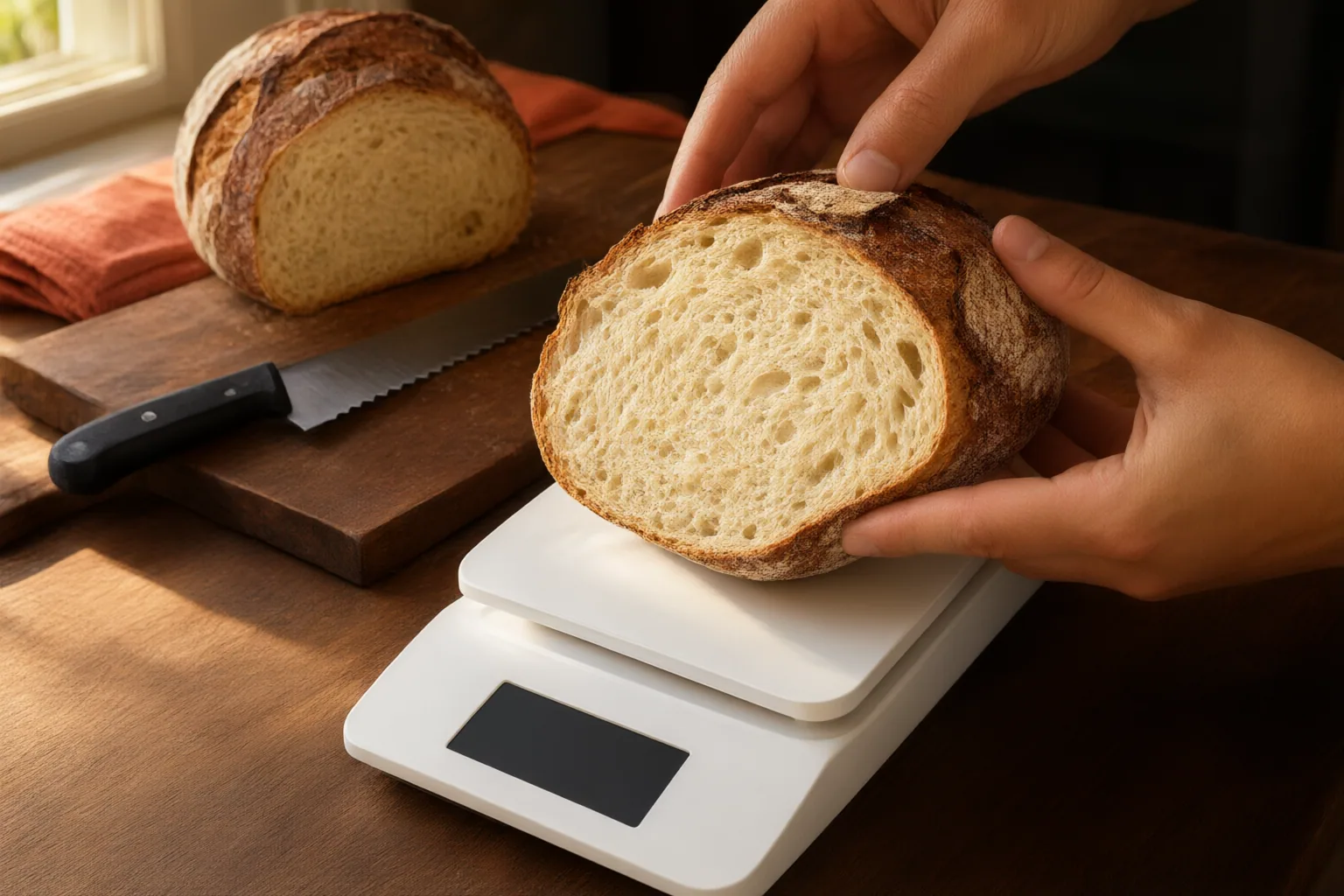
Use the same sequence for every package. First, identify the household description of one serving. Second, record the gram weight attached to that serving. Third, check how many servings the container provides. Finally, compare the nutrition figures using equivalent portions rather than relying on slice count alone.
For example, if a particular label defines one slice as one serving, using two slices requires counting two servings and doubling that label's per-serving calories and nutrients. Do not transfer that assumption to another loaf: read its serving description and metric weight independently. Packages with different gram amounts per serving need to be aligned to a consistent basis before their nutrition figures can be compared meaningfully.
No Kampoeng Roti labels or package data were supplied in the research materials. Consequently, no product-specific slice weights, serving counts, ingredients, prices, availability, or nutrition values can be stated here. The cited FDA guidance comes from the United States, and label formats or requirements in Indonesia may differ. Treat this method as a reading framework and rely on the current information printed on each package.
Conclusion
Slice count is only one part of a bread portion comparison. The serving description establishes what the nutrition figures cover, the gram weight helps reveal differences between labeled portions, and servings per container provides package context. Before choosing a loaf, inspect its current label and compare the serving description, grams per serving, servings per container, and nutrition values on the same basis.
Disclosures and limitations
- This article was prepared with AI assistance using only the supplied FDA and Food For Life source materials. The commercial example is not a product recommendation, no Kampoeng Roti package data were provided, and the cited US guidance may not reflect every Indonesian labeling requirement.
Related reading
- Explore Kampoeng Roti Products
- How to Check a BPOM Registration Code When Choosing Packaged Bread in Indonesia
Sources
- Serving Size on the Nutrition Facts Label — U.S. Food and Drug Administration
- Reading Food Labels – How to Find the Healthiest Bread | Food For Life — Food For Life
- Bread Nutrition Facts Label – Printable Nutrition Facts — Printable Nutrition Facts –
- Bread Calories & Nutritional Facts Calculator — Fit Health Regimen