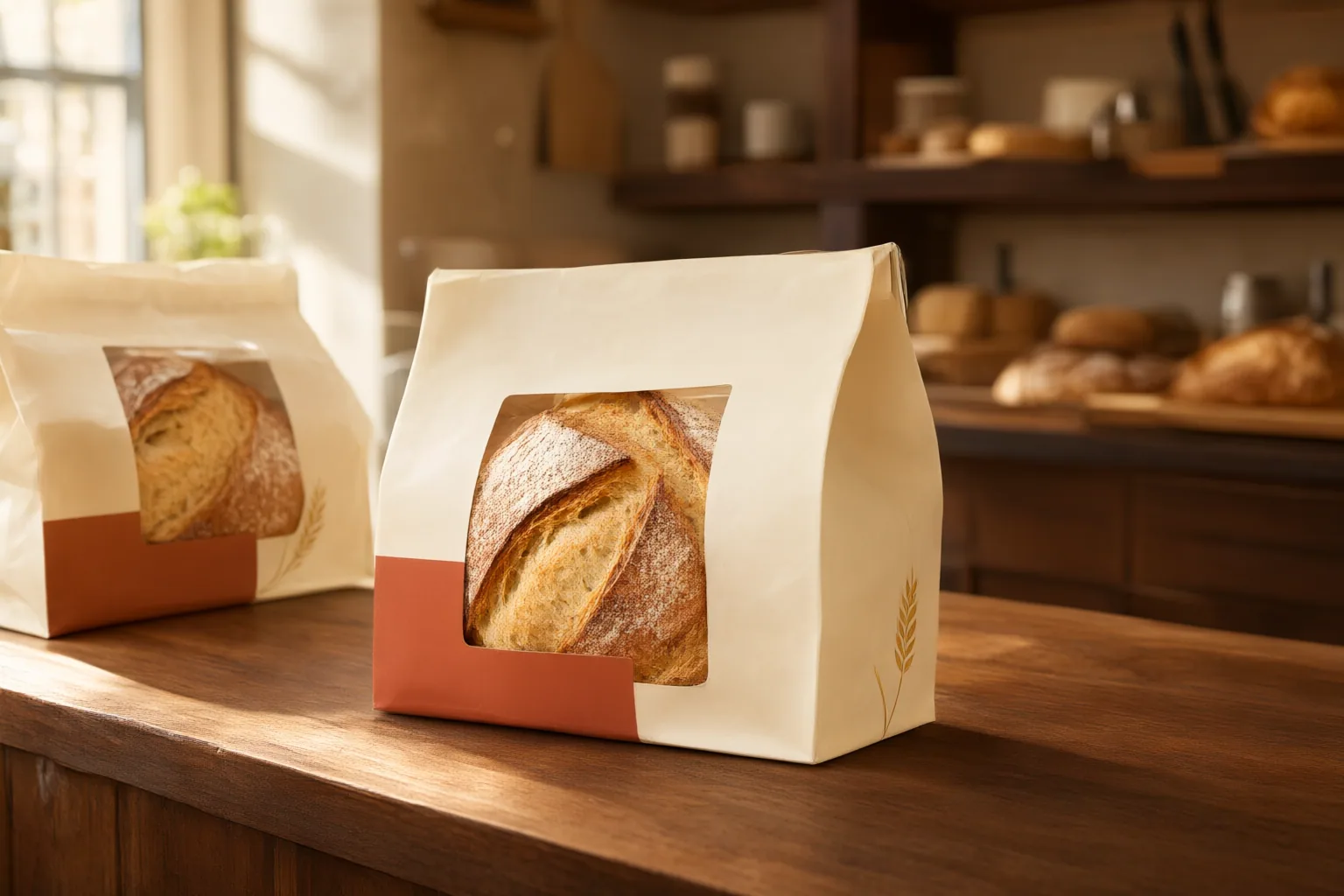
When choosing packaged bread, find the BPOM registration information, read its prefix carefully, and review it together with the ingredients, allergen statement, expiration information, nutrition details, and producer information.
Find the Registration Information on the Package
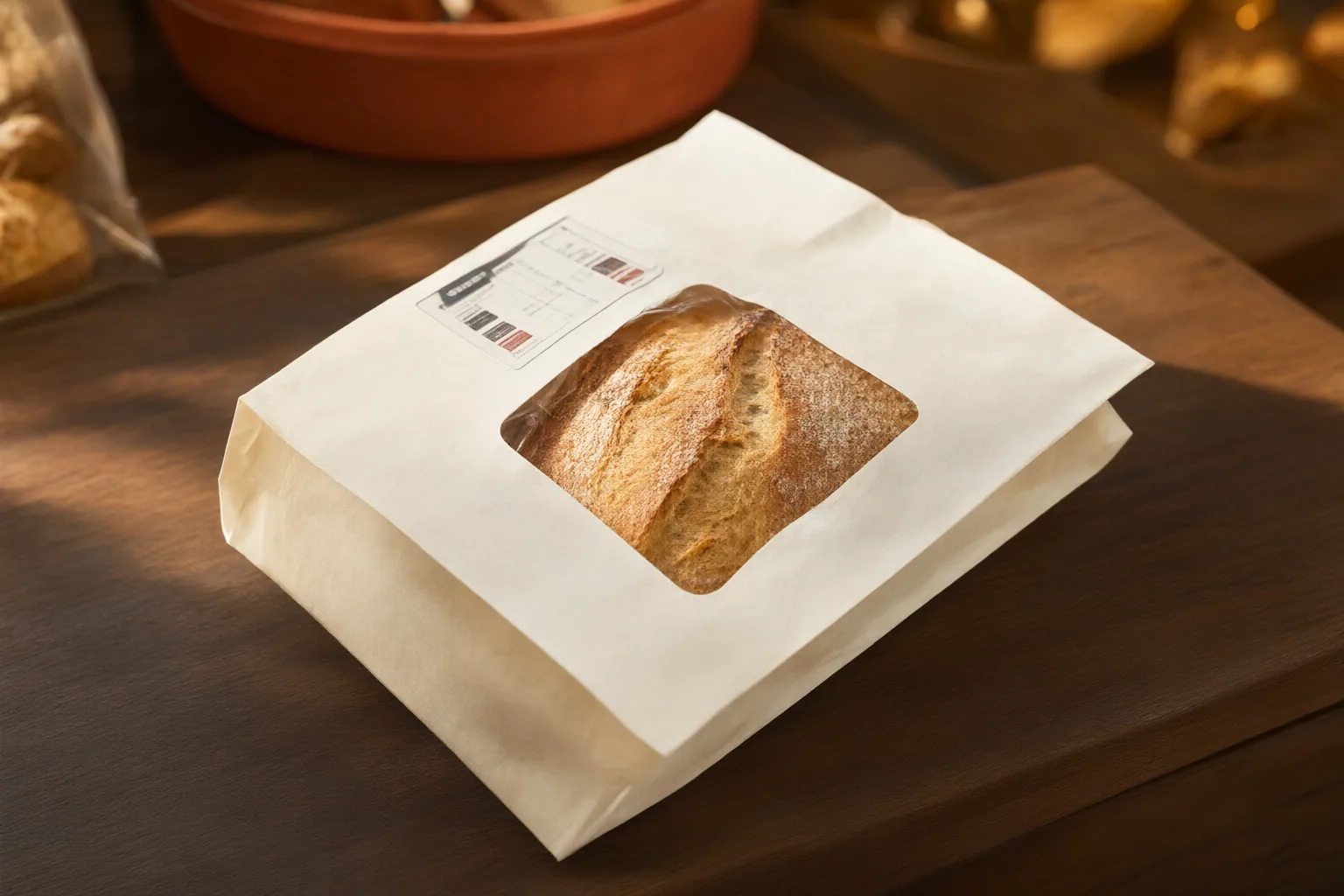
Start by examining the package for its BPOM registration information. A practical sequence is to locate the registration entry, copy the code exactly as printed, and identify its prefix before reviewing the remaining label details.
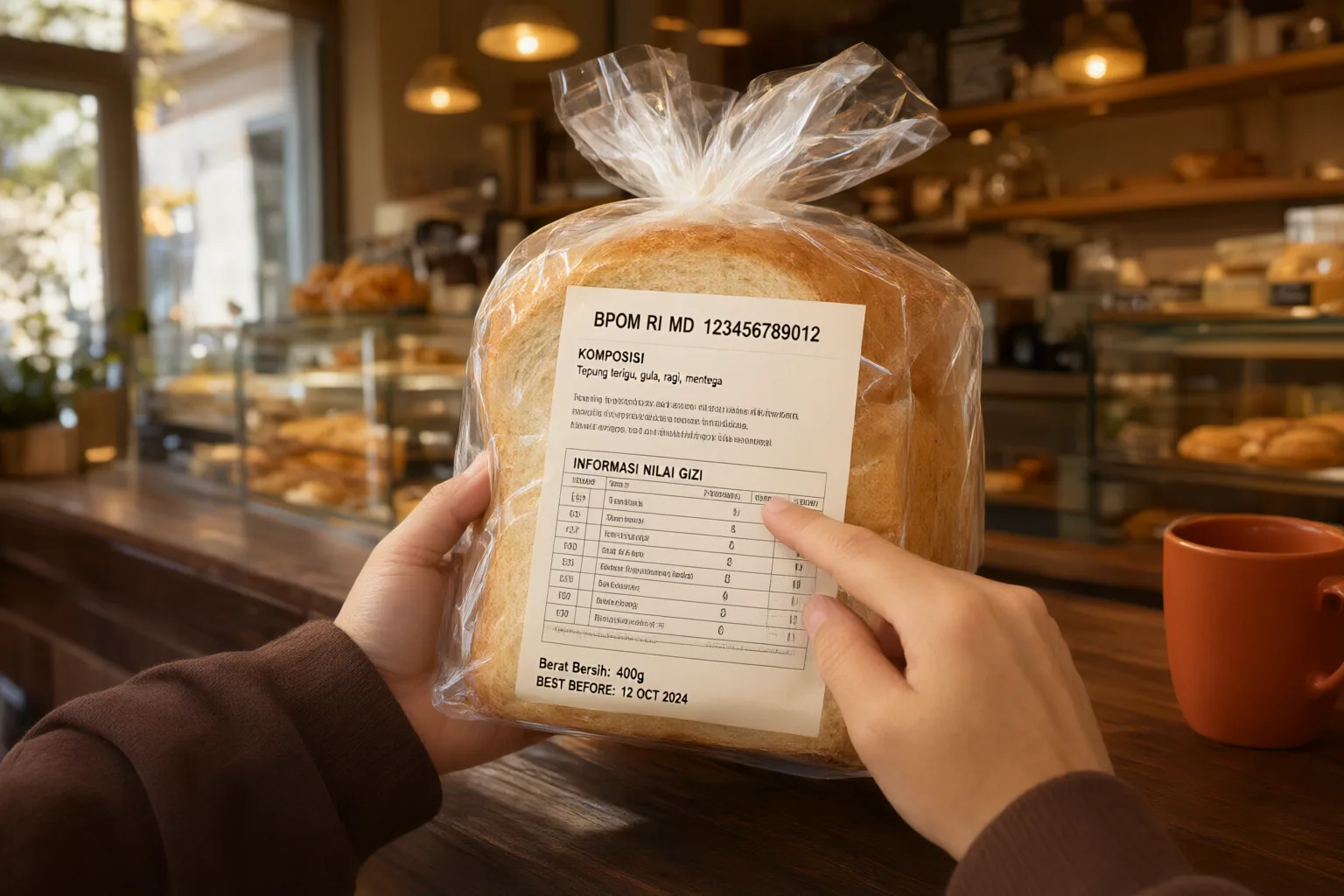
BPOM registration is only one part of a packaged-food label. The cited labeling guide also identifies composition, nutrition information, serving size, net weight, expiration information, and company address as useful details for shoppers. A documented Indonesian packaged-food example likewise presents an RI MD registration number alongside ingredients, allergens, nutrition data, and producer information.
Read the package currently in front of you rather than relying on an older transcription or a different product variant. The cited example says its information was copied from packaging purchased in December 2025 and may change. It does not establish the registration status or other details of any Kampoeng Roti product.
Understand BPOM RI MD and BPOM RI ML
According to Endia Global Mandiri’s summary of Indonesian processed-food registration rules, distribution permit numbers for domestically produced processed food begin with BPOM RI MD, while those for imported processed food begin with BPOM RI ML. The prefix therefore reportedly distinguishes domestic from imported processed food; it is not an ingredient list, nutrition rating, or allergen statement.
The same commercial regulatory-services source describes a processed-food distribution permit as approval issued after assessment against safety, quality, and nutrition criteria for circulation in Indonesia. This gives the registration information more significance than an ordinary catalog or packaging reference.
Use the prefix as an initial reading aid, not as a substitute for current regulatory guidance. Because this explanation comes from a commercial publisher rather than BPOM, its regulatory interpretation and any procedure for validating a particular code should be checked against current official BPOM guidance before publication or reliance on a specific product’s status.
Check the Code Together With the Rest of the Bread Label
After finding the registration information, review the other relevant fields on the same package:
- Composition or ingredients: Check what the bread is reported to contain.
- Allergen statement: Read this separately instead of assuming the registration code answers allergy-related questions.
- Expiration information: Find the date information printed on the current package.
- Serving size and nutrition details: Consider the stated serving basis when reading the nutrition information.
- Net weight: Confirm the quantity identified on the label.
- Company or producer information: Review the named business and address or other producer details provided.
- Registration information: Record the full code and distinguish the reported MD or ML prefix.
This combined check matters because the registration code does not disclose the ingredients, identify allergens, explain serving size, or provide the nutrition figures by itself. The documented Indonesian product example reports these as separate label fields, including ingredients, an allergen statement, serving and nutrition information, producer details, and an RI MD registration number.
Keeping a short sequence can make label reading more manageable when shopping time is limited: registration, ingredients and allergens, expiration information, nutrition and serving size, then producer and quantity details.
Conclusion
Use a repeatable package check when choosing bread: locate the registration information, copy the code accurately, identify whether it carries the reported BPOM RI MD or BPOM RI ML prefix, and then read the other label fields. Registration information and the wider label answer different questions, so neither should be treated as a replacement for the other.
Before choosing packaged bread, find its registration code and review the ingredients, allergen statement, expiration information, serving and nutrition details, net weight, and producer information printed on that same package.
Disclosures and limitations
- This article was prepared with AI assistance from the supplied research sources. The sources support general label-reading guidance but do not verify any specific Kampoeng Roti product, and the regulatory explanation should be checked against current official BPOM guidance. No product or affiliate recommendation is made.
Related reading
Sources
- Informasi Campina Hula Hula Maxx Kacang Hijau | Aurodigo — Aurodigo
- Izin Edar Produk Pangan Olahan — Endia Global Mandiri – Biro Jasa Pengurusan Izin Usaha Jakarta
- Powerade — Coca-Cola
- Hanya MADURA88: Platform Hiburan Daring Terbaik 2026 dengan Pola Gacor dan Jackup Terbukti Nyata Setiap Hari! — MADURA88
- Cara Memilih Pangan Dengan Membaca Label Kemasan | Hujanpelangi Blog — Hujanpelangi Blog
- Sarapan atau Tidak? — Situs Rumah Sakit Dan Kesehatan Terbaru
- Flynn Mart — Flynn Mart
- GitHub – itlovel/sajisehat — GitHub