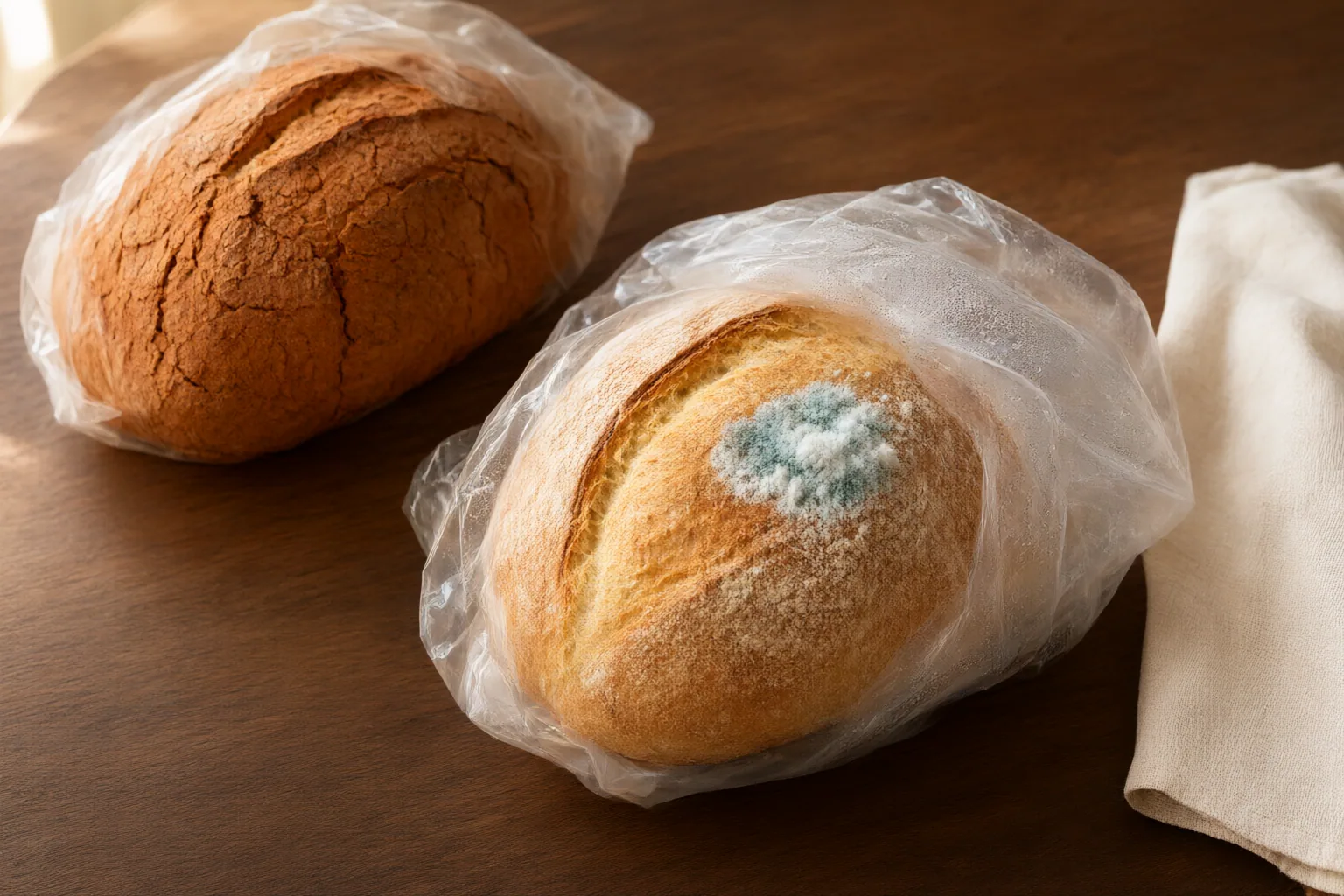
Mold and staling are not the same change. Mold involves fungal contamination that commonly appears on a bread’s surface, while staling is a loss of texture and freshness. Before eating packaged bread, examine both the bread and its package, then consider how it was stored.
Mold and Staling Are Different Changes
Mold is a biological contamination issue, whereas staling concerns changes in texture and freshness. Puratos reports that fungal spores from the environment can contaminate bread after baking, including while the bread is cooling, being sliced, or being packaged. The food-safety overview also classifies fungi among the main types of foodborne pathogens.
Bread mold typically develops on the surface. Moisture, moderate warmth, and a relatively neutral pH can favor its growth. Staling follows a different pattern: bread may lose its preferred texture without displaying the surface growth associated with mold.
Refrigeration illustrates why firmness alone does not distinguish the two. Cooler storage can slow mold growth while accelerating staling, so refrigerated bread may feel less fresh sooner even though mold is developing more slowly. Texture loss therefore should not automatically be described as fungal spoilage, and packaging should not automatically be treated as proof that bread is uncontaminated.
What to Check on Packaged Bread
Begin with the bread’s visible surface. The bakery source associates Rhizopus with black mold, Penicillium with blue or green patches, and Aspergillus sometimes with white mold. Check across the bread rather than assuming mold must have only one color or appearance. These surface patches concern fungal growth, while firmness or reduced freshness can instead reflect staling.
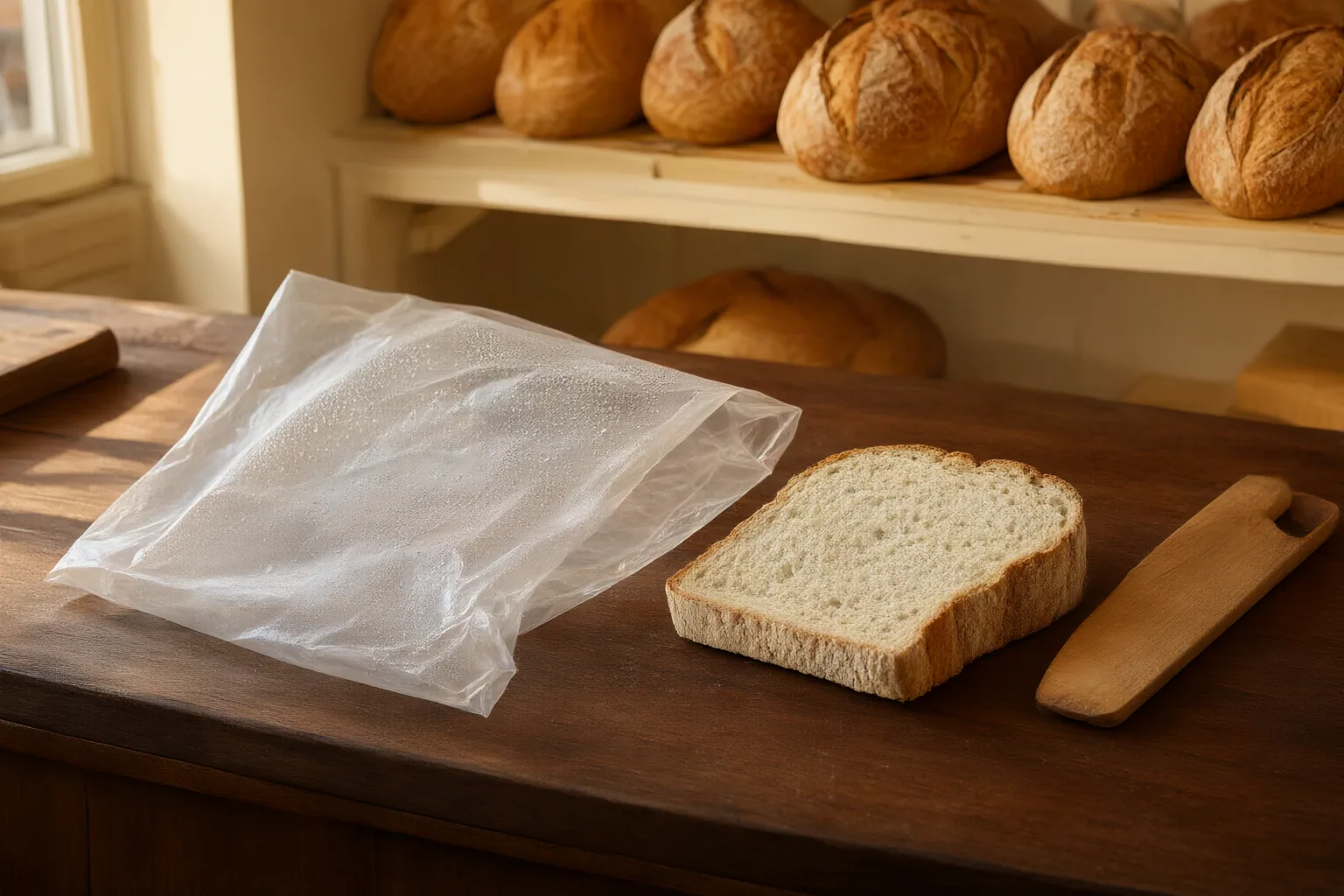
Next, examine the inside of the package for condensation. Puratos states that wrapping bread while it is still warm can create condensation inside the package. That trapped moisture produces a humid environment favorable to mold growth, particularly when combined with moderate warmth.
Finally, do not use the existence of a package as the sole condition check. The food-safety overview says contamination can occur during production, transportation, packaging, storage, sale, or cooking. Puratos likewise identifies cooling, slicing, and packaging as stages when environmental fungal spores may reach bread after baking. A practical examination therefore considers the surface, moisture inside the package, and storage history together rather than relying only on packaging or texture.
Storage Questions: Refrigeration, Freezing, and Condensation
Storage methods affect mold and texture differently. According to Puratos, refrigeration can slow mold growth but accelerate staling. This tradeoff explains why refrigerated bread can become firm or otherwise lose freshness more quickly without that texture change establishing the presence of mold.
Freezing has another effect: it halts microbial activity, but it does not destroy fungal spores. The distinction matters when assessing what freezing accomplishes. It pauses activity under frozen conditions rather than eliminating the spores described by the source.
Moisture inside a package also deserves attention. If bread is wrapped while warm, condensation can form and create the humid environment in which mold is favored. Storage assessment should therefore include temperature and package moisture, while keeping texture preservation separate from mold control.
Conclusion
Visible black, blue, green, or sometimes white surface patches are associated with bread molds in the bakery source, while faster texture loss can result from refrigeration-driven staling. Condensation and warm, humid conditions favor mold, and a package alone cannot establish that bread avoided contamination. Before eating packaged bread, inspect its surface and the inside of its package for unusual patches or condensation, then consider its storage conditions instead of treating firmness or packaging alone as proof of its condition.
Frequently asked questions
Why can refrigerated bread feel stale even though refrigeration slows mold?
Refrigeration affects mold and freshness differently. Puratos says it can slow mold growth while accelerating staling, so bread may lose its preferred texture sooner in the refrigerator. That texture change does not, by itself, establish fungal contamination.
Does freezing packaged bread destroy fungal spores?
No. According to Puratos, freezing halts microbial activity but does not destroy fungal spores. Freezing and refrigeration also have different effects: refrigeration can slow mold while making bread stale faster, whereas freezing stops microbial activity under frozen conditions.
Disclosures and limitations
- This article was prepared with AI assistance from the supplied Research Package. Detailed mold and storage claims come from a commercial bakery-industry source, while the second source supplies broader food-safety and contamination context.
- This article contains no product recommendation; readers should not interpret any storage discussion as an undisclosed affiliate endorsement.
Related reading
- Explore Kampoeng Roti Products
- How to Store Fresh Bread at Room Temperature, in the Fridge, or in the Freezer
Sources
- Guidance Handbook on Gaining Market Access in Indonesia for EU Dairy Products — EEAS
- Mold in packaged bread: Understanding the science behind shelf life and clean label protection — puratos.com
- food cutter sold on Temu United States — temu
- Food safety – Wikipedia — en.wikipedia.org
- Bakery & Confectionery Processing Spray Nozzles | NozzlePro — nozzle-pro.com
- Makanan Khas Lampung Paling Enak yang Wajib Kamu Coba — Grosirmesin
- Guidance documents — Food Safety