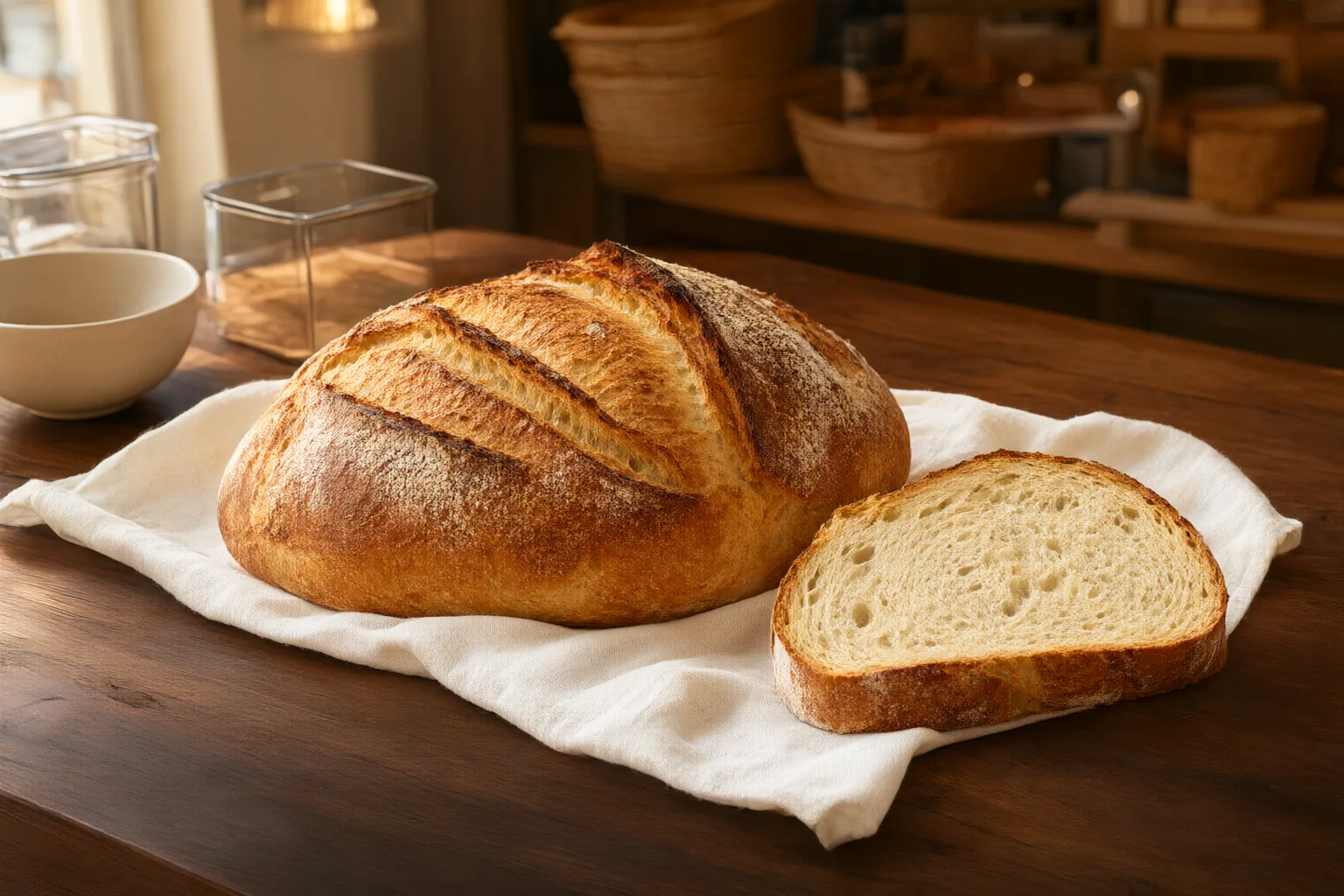
Store fresh bread at room temperature when you expect to eat it within a few days, keeping it protected from direct sunlight, excessive heat, and overly dry conditions. Refrigeration can reduce mold risk in some circumstances but may make fresh bread dry and firm more quickly. For longer storage, slice, seal, label, and freeze the portions you will not finish soon.
Start With When You Plan to Eat the Bread
The best storage method depends first on when you expect to eat the bread. Storage involves balancing two competing problems: moisture escaping, which contributes to drying, and humidity becoming trapped around the loaf. Talorne describes staling as involving moisture evaporation from the crust and starch retrogradation in the crumb.
For bread that will be eaten within a few days, room-temperature storage is generally the preferred starting point. Keep it away from direct sunlight and places that are excessively hot or dry. A suitable bag or bread box can provide protection, but the right enclosure depends on the bread and the kitchen environment. Talorne notes that breathable material can help regulate moisture; tightly sealed plastic may trap humidity and soften the crust, while leaving bread completely exposed can make it dry rapidly.
Heat and humidity deserve extra attention in Indonesian kitchens. Check the bread more closely under warm or humid conditions, and consider freezing portions early if the whole loaf is unlikely to be finished before it becomes stale.
Room Temperature, Refrigeration, and Freezing Compared
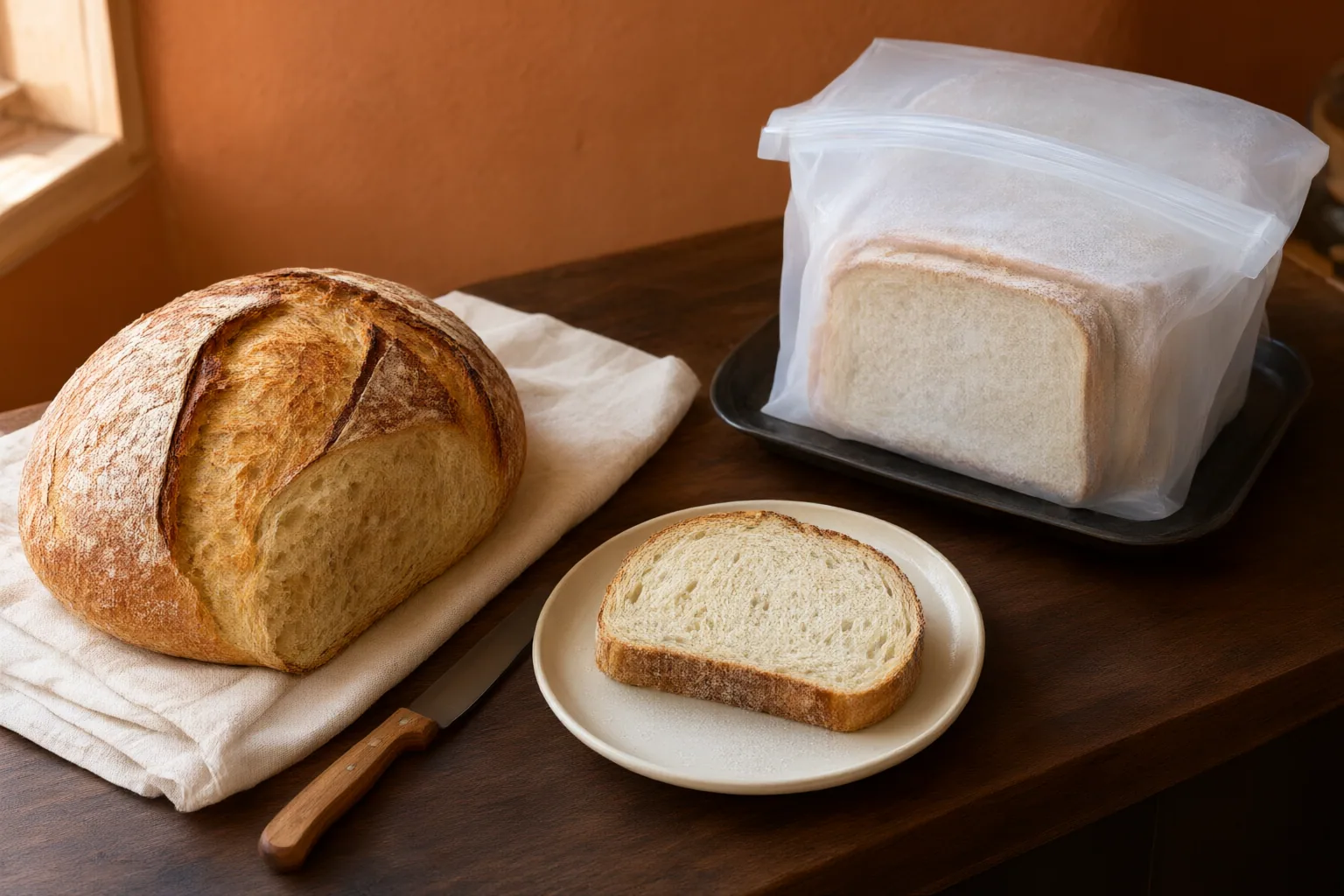
Room temperature is suited to fresh bread intended for the next few days. Protecting the loaf in its bag, another appropriate covering, or a bread box can limit excessive drying. The enclosure should not create unnecessary moisture buildup, particularly in a humid kitchen. Breathable storage may help balance moisture, although the most suitable choice varies with the bread type and local conditions.
Refrigeration presents a tradeoff. It may lower mold risk under some conditions, but it also accelerates starch retrogradation. The result can be a drier crumb and harder crust, and Stop Food Waste likewise advises that fresh bread dries out in the refrigerator. Refrigeration is therefore not automatically the best way to preserve the texture of a fresh bakery loaf.
Sealed, prepackaged sliced bread is a separate case. Stop Food Waste says its closed package may be refrigerated during warm months or when it needs to last one to two weeks. If using this approach, watch for condensation inside the bag.
Freezing is the more practical option when fresh bread cannot be eaten before it becomes stale. Slice the remaining loaf first, place it in a sealed bag or container, and freeze it in usable portions. Later, remove only what you need and either defrost it or toast it directly. This avoids repeatedly handling the entire loaf and makes portioning easier.
Practical Storage Steps and Common Questions
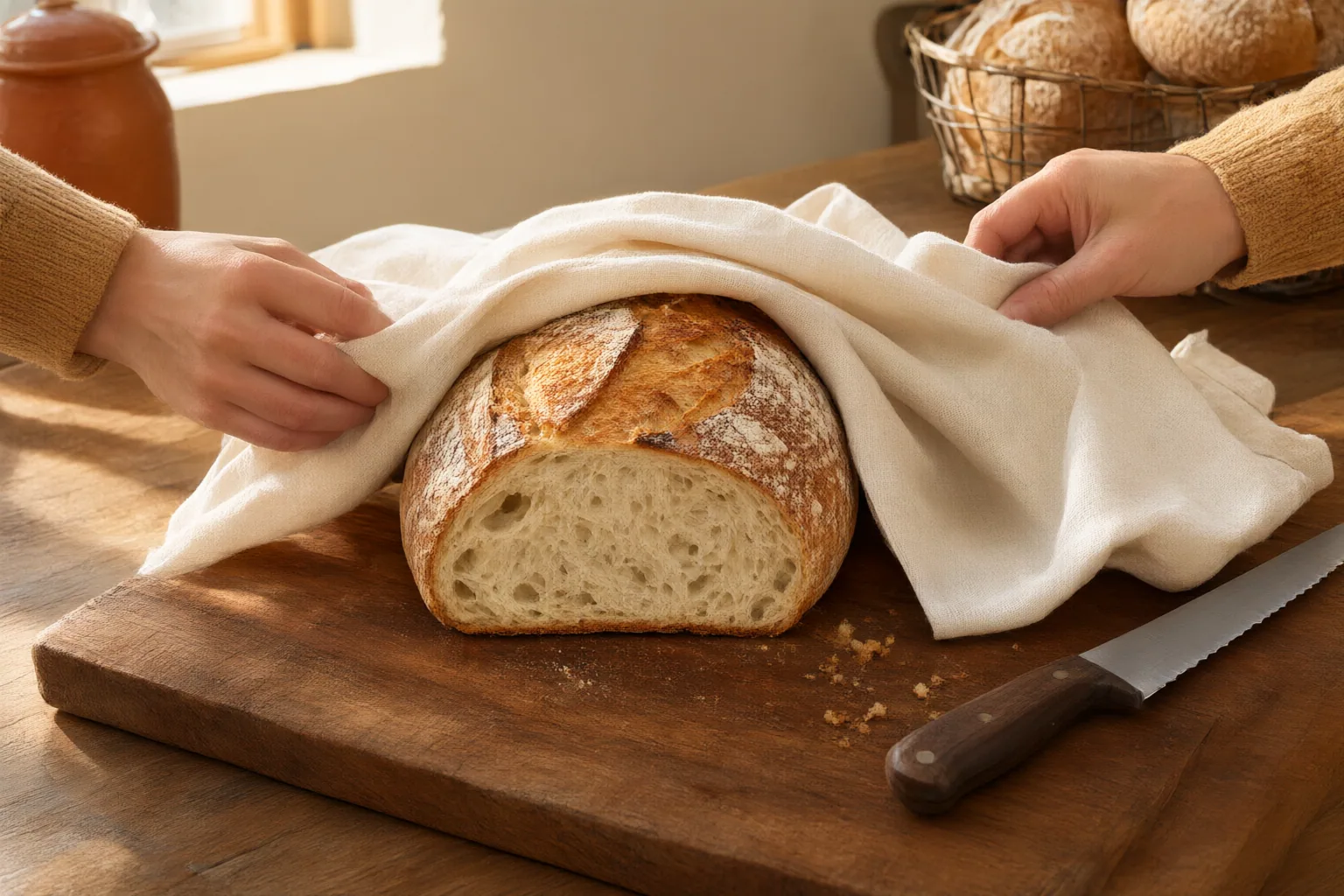
Begin by estimating how much bread will be eaten within the next few days. Keep that portion at room temperature in a protective bag or bread box, away from direct sun and excessive heat or dryness. Consider how the covering manages humidity: completely exposed bread can dry quickly, while sealed plastic can trap moisture and soften a crisp crust.
Inspect room-temperature bread more often when the kitchen is hot or humid. If you are unlikely to finish it before staling, do not wait until its texture has already deteriorated. Slice the remaining portion, transfer it to a tightly sealed freezer bag or container, and mark it with the name and date. Freezing slices makes it possible to remove only the quantity needed.
Fresh bakery bread and factory-packaged sliced bread should not automatically receive identical treatment. Selective refrigeration may suit sealed packaged bread in warm weather, but condensation should be monitored. For fresh bread, refrigeration can sacrifice texture even when it is being considered to manage mold risk.
Conclusion
Use room-temperature storage for fresh bread you will eat soon, protecting it from sunlight, excessive heat, dryness, and unnecessary trapped humidity. Refrigerate selectively because fresh bread may become dry and firm more quickly in the fridge. For longer storage, freeze bread as sealed, labeled slices that can be removed as needed. Check your loaf today and freeze any portion you are unlikely to finish before it becomes stale.
Frequently asked questions
Should fresh bread be refrigerated?
Usually not when preserving fresh texture is the priority. Refrigeration may reduce mold risk in some conditions, but it can accelerate starch retrogradation, drying the crumb and hardening the crust. Sealed, prepackaged sliced bread may be refrigerated in warm weather or for a one-to-two-week eating period, with the package checked for condensation.
How long can frozen bread be stored?
Stop Food Waste says sliced fresh bread placed in a sealed bag or container, labeled with its name and date, can be frozen for up to three months. Results can vary with the bread type, packaging, and storage conditions, so portioning before freezing helps you take out only what is needed.
Disclosures and limitations
- This article was prepared with AI assistance using only the supplied research package. Storage guidance is based on sources identified as Talorne and Stop Food Waste; no independent product testing or personal use is claimed.
Related reading
- Explore Kampoeng Roti Products
- Kampoeng Roti Bread Storage: A General Guide to Containers, Refrigeration, and Freezing
Sources
- How to Keep Bread Fresh Longer (Without Ruining Texture) — Talorne
- Bread — Stop Food Waste
- Best Bread Machines of 2026 — CNET