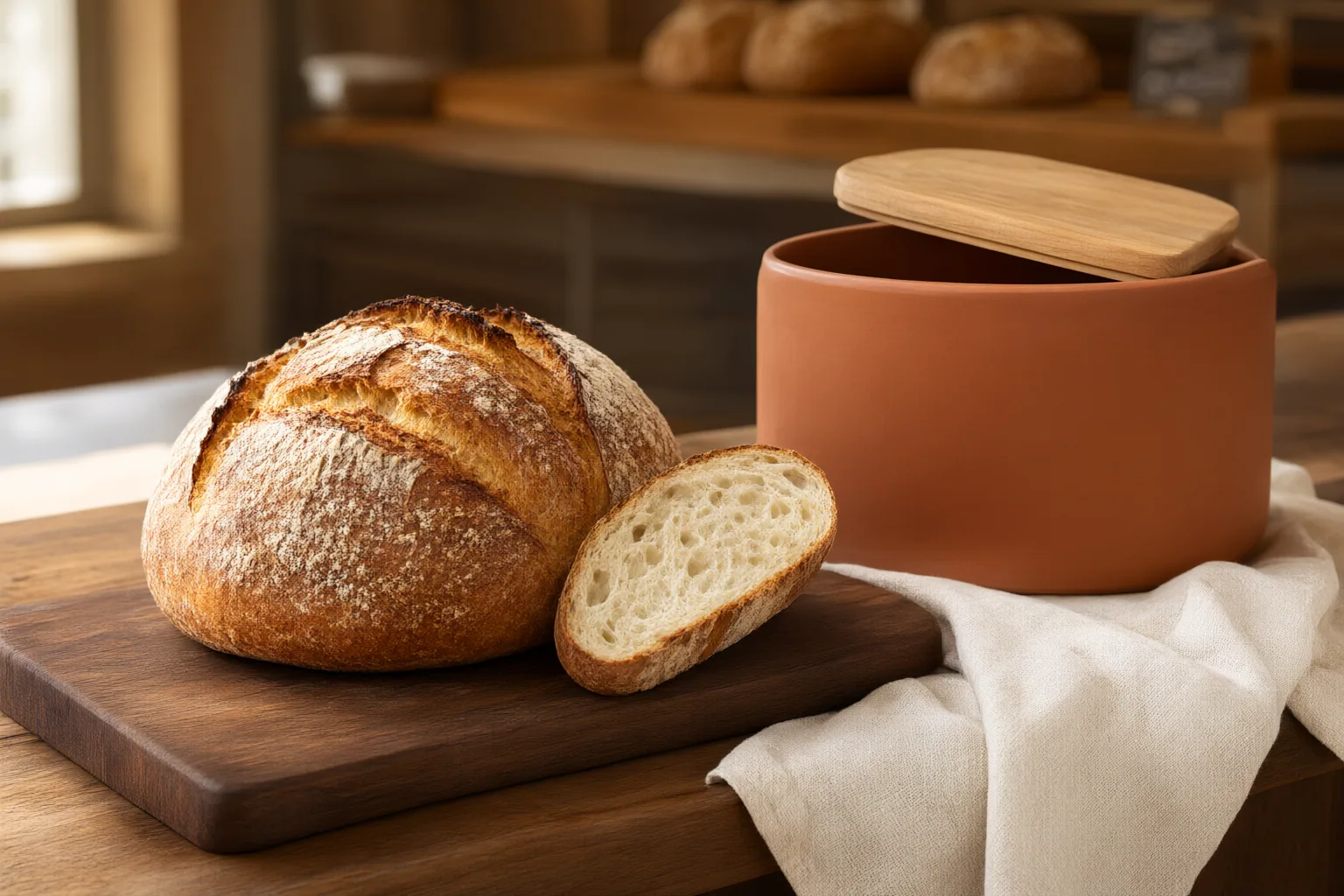
Bread storage should match when you expect to eat the bread and any directions on its packaging. At room temperature, a suitable container balances airflow with protection from drying and pests. Refrigeration can accelerate starch-related staling, while freezing can inhibit that process. The available evidence does not provide Kampoeng Roti-specific shelf-life or storage instructions.
Why Bread Storage Method Matters
Bread becoming stale is not simply the same as losing moisture. The cited evidence distinguishes drying from a starch-related staling process, which matters when comparing storage methods. A refrigerator may appear to be the natural choice for preserving food, but low temperatures above freezing can accelerate this form of bread staling. Freezing works differently: by freezing water, it can inhibit the process.
These principles offer a general framework rather than a product-specific rule. The available sources do not document Kampoeng Roti recipes, packaging requirements, shelf life, or official storage recommendations. Begin with any directions printed on the bread packaging. If none are provided, consider how soon the bread is likely to be eaten and use the tradeoffs below to guide the decision without assigning it an unsupported number of storage days.
Choose Between Room Temperature, Refrigeration, and Freezing
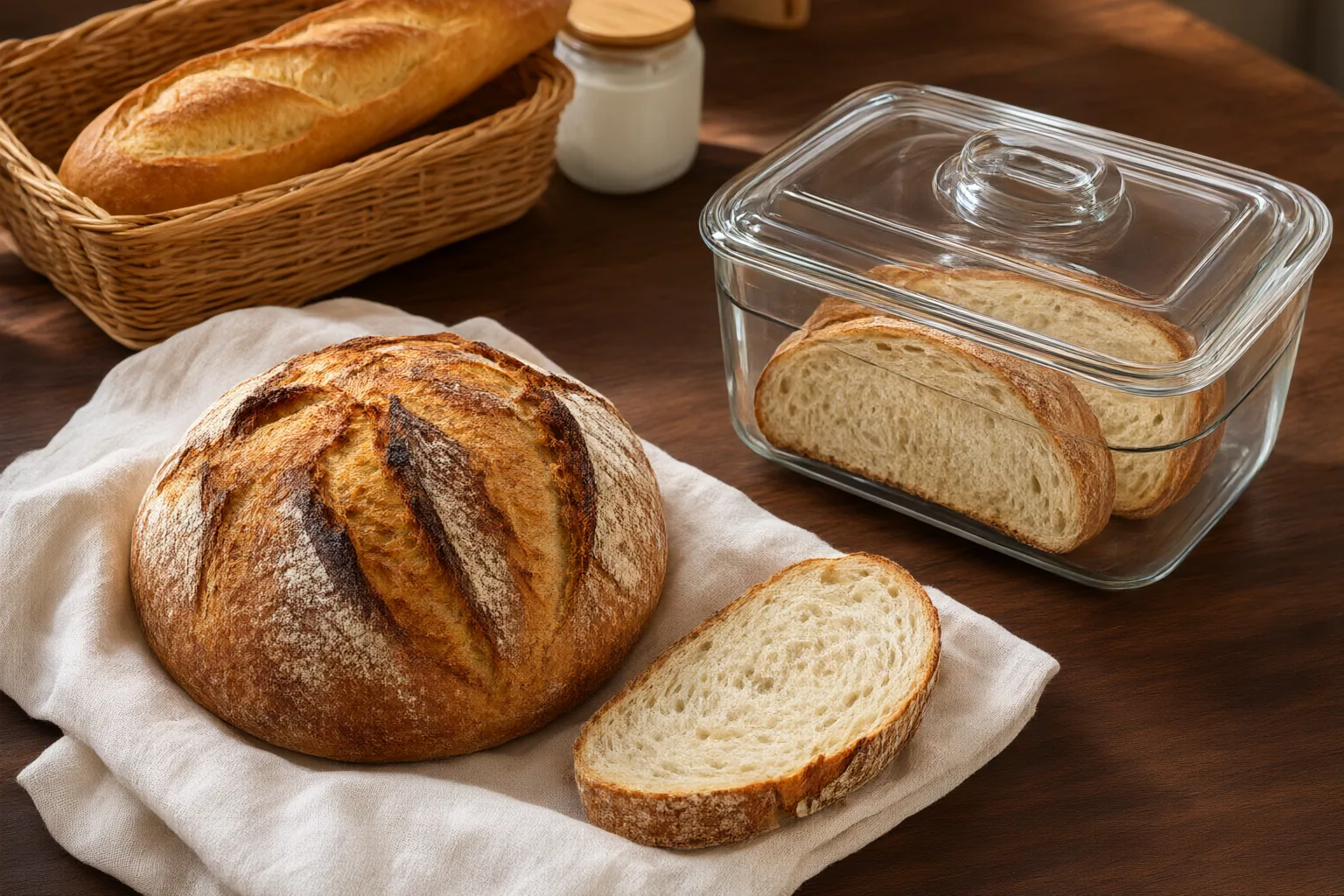
Room-temperature storage calls for a balance between enclosure and ventilation. Some airflow can reduce condensation and the conditions associated with mold formation, while moderate enclosure can slow drying and help keep pests away. A bread box is designed for bread and other baked goods and may provide that balance, depending on its construction.
Refrigeration should not automatically be treated as the best option. According to the cited source, cooling bread in a refrigerator can accelerate starch-related staling even though staling is often mistaken for ordinary moisture loss. That distinction explains why refrigerated bread can present an unwanted texture tradeoff rather than a universally preferable outcome.
Freezing can inhibit the same staling process because the water is frozen. This makes it a method to consider when bread will not be eaten soon, but the evidence supplied here does not establish freezing procedures or timelines for any Kampoeng Roti item. Whichever approach you consider, follow product-specific packaging directions where available and avoid inferring a shelf life from this general guidance.
How to Select a Bread Storage Container
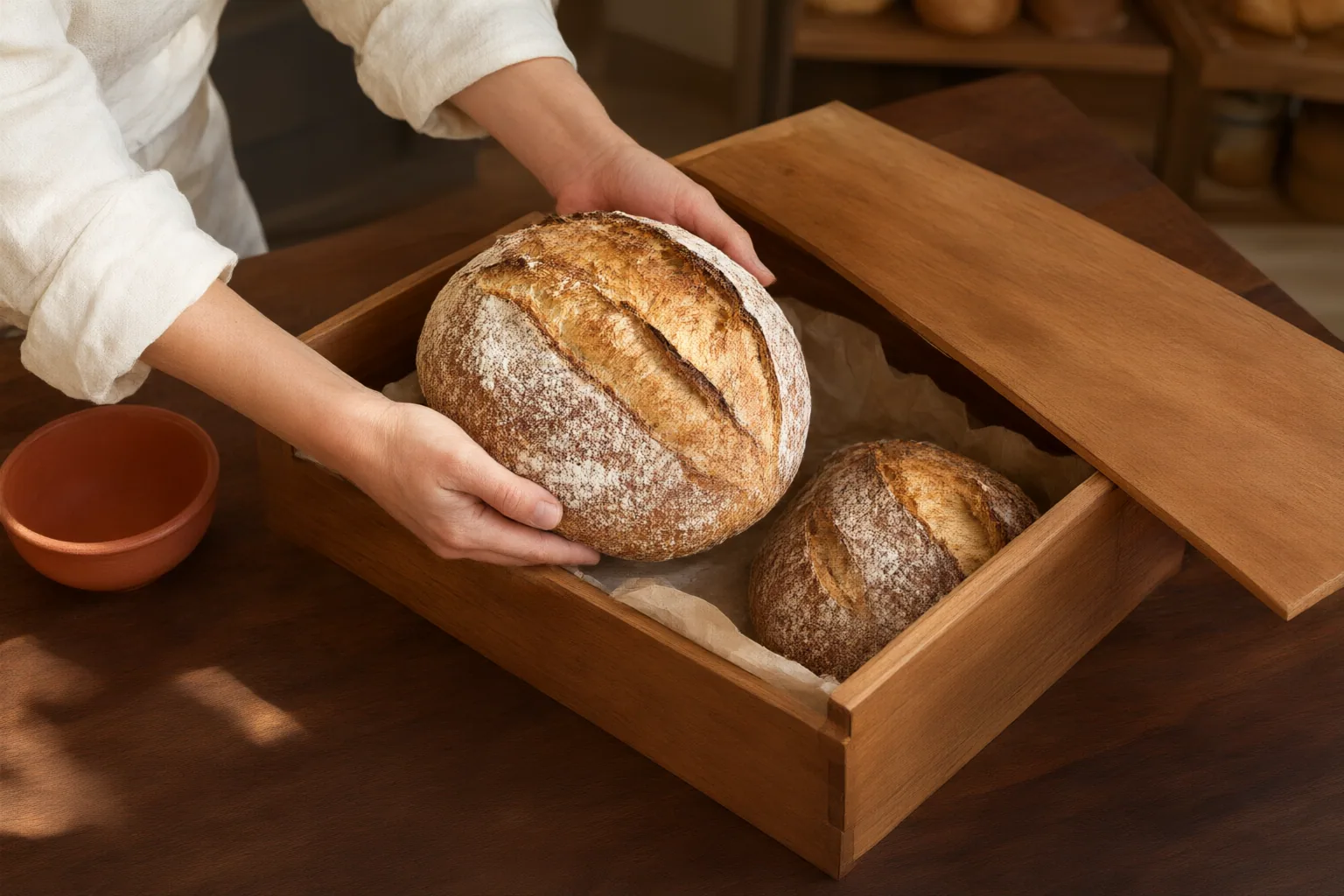
Start with container type. A marketplace category page groups options as bread bags, bread baskets, bread bins, and bread keepers. These labels describe available forms, not endorsements or evidence that one form suits every loaf.
Next, compare the practical selection dimensions supported by the sources:
- Ventilation and closure: Look for a design that allows some air movement to limit condensation while remaining enclosed enough to slow drying and deter pests. A completely open or fully sealed design emphasizes only one side of that tradeoff.
- Material: Bread boxes are commonly made from materials such as metal, wood, or pottery. Marketplace listings also span plastic, ceramic, porcelain, stainless steel, and bamboo descriptions. Material variety alone does not establish storage performance.
- Size: The marketplace organizes containers by size, making capacity a useful way to narrow the field. The supplied evidence does not specify an ideal size or fit for a particular Kampoeng Roti product.
- Condition: Both new and used containers appear in the marketplace data. Condition is therefore another filter to consider, but the source does not provide a standard for evaluating an individual used container.
Treat marketplace categories as a map of choices rather than stable product data. The captured page cannot establish lasting prices, inventory, quantities, or Kampoeng Roti compatibility.
Conclusion
A practical bread-storage choice begins with timing and packaging directions. For room-temperature storage, seek a container that balances limited airflow with protection against drying and pests. Do not assume refrigeration is always preferable, because the cited evidence links it to faster starch-related staling. Consider freezing when inhibiting that process is relevant, while recognizing that no Kampoeng Roti-specific procedure or shelf life is established here. Check the bread packaging for product-specific directions, then choose a storage method and container suited to how soon you expect to eat it.
Frequently asked questions
Is a fully airtight container always better for bread?
Not according to the general design tradeoff described in the cited source. Some airflow can help reduce condensation and mold formation, while sufficient enclosure can slow drying and block pests. The evidence therefore supports balancing ventilation and protection, not prescribing a universally airtight container or a Kampoeng Roti-specific solution.
What types of bread storage containers are available?
The captured marketplace page categorizes bread bags, bread baskets, bread bins, and bread keepers, with listings described as metal, wood, plastic, stainless steel, bamboo, ceramic, or porcelain. These examples show the range of forms and materials available; they do not prove suitability for a particular Kampoeng Roti product or establish stable availability.
Disclosures and limitations
- This article was prepared with AI assistance using only the supplied research sources. It does not contain Kampoeng Roti-specific shelf-life, packaging, ingredient, availability, or official storage data.
- Marketplace categories are included for comparison, not as product endorsements. No affiliate relationship is stated in the supplied materials; any publisher affiliate relationship should be clearly disclosed before publication.
Related reading
Sources
- Breadbox – Wikipedia — en.wikipedia.org
- Collectible Bread Boxes for sale | eBay — eBay
- Reference – breAd. edible bread labels and wafer decorations — breAd. edible bread labels and wafer decorations